
Within the Chinese writing system, radicals play a crucial role in conveying meaning and helping learners recognize how characters are structured. Among the 214 traditional radicals, the person radical in Chinese (亻) is considered one of the most fundamental and frequently used. In this article, Ni Hao Ma will guide you through what the person radical in Chinese is, its core meaning, the correct writing rules, and common vocabulary examples that contain this radical.
What Is the Person Radical in Chinese?
The person radical in Chinese is one of the 214 radicals and is written as 亻, consisting of two strokes. Its original meaning comes from the character 人 (rén), which means “person” or “human.”
This radical represents anything related to human beings—such as actions, behaviors, personality traits, social relationships, or activities involving people. When it appears in a Chinese character, the person radical typically sits on the left side, indicating that the character’s meaning is associated with people.
- Character: 人
- Pinyin: rén
- Meaning: Person, human, individual
- Total strokes: 2
- Stroke pattern: ノ 乀
How to Write the Person Radical in Chinese
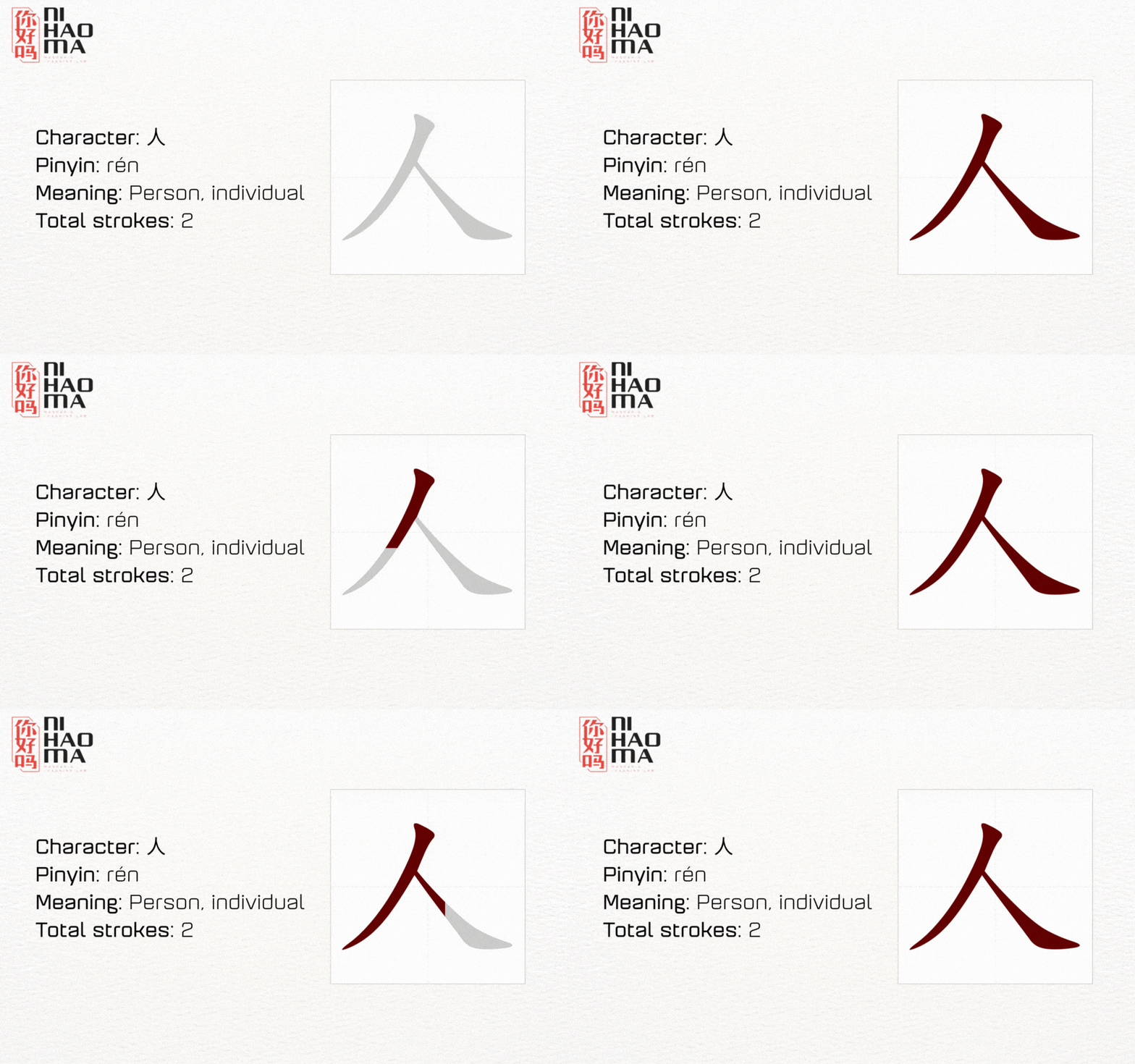
The person radical (人) is composed of two basic strokes, written in the following order:
| Stroke Order | Stroke Name | Writing Direction |
|---|---|---|
| 1 | Left-falling stroke (丿) | A downward diagonal stroke from top to bottom, right to left. |
| 2 | Right-falling stroke (乀) | A downward diagonal stroke from top to bottom, left to right. The end of the stroke is pressed slightly for thickness before lifting the brush quickly to finish. |
See also: 7 Chinese Stroke Order and Basic Strokes
Variants of the Person Radical in Chinese
Because 人 (rén) is one of the most essential radicals in Chinese, it appears in several variant forms depending on the character’s structure.
| Name | Symbol | Common Position | Meaning / Usage | Examples |
|---|---|---|---|---|
| Original form | 人 | Independent, top, or right side | Used alone or within character composition | 人 (rén) – person; 从 (cóng) – follow |
| Left-side form (person radical) | 亻 | Left side of a character | Indicates meanings related to people, actions, personality, or human behavior | 你 (nǐ) – you; 他 (tā) – he |
| Roof-like variant | 𠆢 | Top of a character | Represents imagery of shelter or connection between people or objects | 会 (huì) – to meet; 合 (hé) – to combine |
100 Common Chinese Vocabulary Words Containing the Person Radical in Chinese
The person radical in Chinese is one of the most essential radicals, appearing in thousands of modern Chinese characters. Most words related to people, occupations, actions, habits, and emotions are formed using this radical. Because of this, learners can often predict a character’s meaning—or sometimes even its pronunciation—based on the presence of this radical.
Below are 100 commonly used Chinese vocabulary words that contain the person radical, helping you expand your vocabulary and improve long-term retention.
| No. | Chinese | Pinyin | Meaning |
|---|---|---|---|
| 1 | 人 | rén | person |
| 2 | 他 | tā | he, him |
| 3 | 你 | nǐ | you |
| 4 | 们 | men | plural marker for people |
| 5 | 做 | zuò | to do |
| 6 | 作 | zuò | to do, to create |
| 7 | 住 | zhù | to live, to reside |
| 8 | 什 | shén | what (as in 什么) |
| 9 | 信 | xìn | letter, trust, belief |
| 10 | 件 | jiàn | item, piece, classifier for events |
| 11 | 体 | tǐ | body |
| 12 | 健 | jiàn | healthy |
| 13 | 休 | xiū | to rest |
| 14 | 低 | dī | low |
| 15 | 便 | biàn/pián | convenient; soon |
| 16 | 保 | bǎo | to protect |
| 17 | 候 | hòu | to wait (as in 候车 “wait for the train”) |
| 18 | 依 | yī | to rely on |
| 19 | 使 | shǐ | to make, to cause |
| 20 | 你们 | nǐmen | you (plural) |
| 21 | 他人 | tārén | other people |
| 22 | 人人 | rénrén | everyone |
| 23 | 从 | cóng | from; to follow |
| 24 | 会 | huì | can, will, to meet |
| 25 | 合 | hé | to combine, to join |
| 26 | 似 | sì | to resemble |
| 27 | 令 | lìng | to order, to cause |
| 28 | 仍 | réng | still, yet |
| 29 | 伴 | bàn | companion, partner |
| 30 | 伙 | huǒ | partner, companion; group |

| No. | Chinese | Pinyin | Meaning |
|---|---|---|---|
| 31 | 假 | jiǎ | fake; vacation, leave |
| 32 | 偶 | ǒu | accidental, occasional |
| 33 | 传 | chuán | to pass, to transmit |
| 34 | 停 | tíng | to stop |
| 35 | 值 | zhí | value; worthwhile |
| 36 | 借 | jiè | to borrow |
| 37 | 伤 | shāng | injury, to injure |
| 38 | 任 | rèn | duty, responsibility; to allow |
| 39 | 俗 | sú | custom; common, popular |
| 40 | 作业 | zuòyè | homework, assignment |
| 41 | 作家 | zuòjiā | writer, author |
| 42 | 仁 | rén | benevolence, kindness |
| 43 | 伙食 | huǒshí | meals, food provision |
| 44 | 伴侣 | bànlǚ | life partner, companion |
| 45 | 你自己 | nǐ zìjǐ | yourself |
| 46 | 他自己 | tā zìjǐ | himself |
| 47 | 便利店 | biànlìdiàn | convenience store |
| 48 | 偶尔 | ǒu’ěr | occasionally |
| 49 | 偏 | piān | biased, leaning |
| 50 | 信心 | xìnxīn | confidence |
| 51 | 信用 | xìnyòng | credit |
| 52 | 信息 | xìnxī | information |
| 53 | 休息 | xiūxi | to rest |
| 54 | 保护 | bǎohù | to protect |
| 55 | 依靠 | yīkào | to rely on |
| 56 | 仅 | jǐn | only |
| 57 | 伤心 | shāngxīn | heartbroken, sad |
| 58 | 可靠 | kěkào | reliable |
| 59 | 伤害 | shānghài | to harm, to hurt |
| 60 | 信号 | xìnhào | signal |

| No. | Chinese | Pinyin | Meaning |
|---|---|---|---|
| 61 | 偏见 | piānjiàn | prejudice |
| 62 | 偶然 | ǒurán | accidental, by chance |
| 63 | 假期 | jiàqī | vacation, holiday |
| 64 | 价值 | jiàzhí | value |
| 65 | 似乎 | sìhū | seemingly, as if |
| 66 | 合作 | hézuò | cooperation |
| 67 | 会议 | huìyì | meeting, conference |
| 68 | 合理 | hélǐ | reasonable |
| 69 | 会面 | huìmiàn | to meet, meeting |
| 70 | 作风 | zuòfēng | style, conduct |
| 71 | 人民 | rénmín | people, citizens |
| 72 | 人生 | rénshēng | human life |
| 73 | 人口 | rénkǒu | population |
| 74 | 人类 | rénlèi | mankind, humanity |
| 75 | 他人 | tārén | other people |
| 76 | 个人 | gèrén | individual, personal |
| 77 | 人才 | réncái | talent, skilled person |
| 78 | 使用 | shǐyòng | to use |
| 79 | 代表 | dàibiǎo | representative |
| 80 | 信念 | xìnniàn | belief, conviction |
| 81 | 会话 | huìhuà | conversation |
| 82 | 伙伴 | huǒbàn | partner, companion |
| 83 | 侵害 | qīnhài | to infringe, to harm |
| 84 | 人气 | rénqì | popularity |
| 85 | 人类学 | rénlèixué | anthropology |
| 86 | 会长 | huìzhǎng | chairman of an association |
| 87 | 合同 | hétóng | contract |
| 88 | 偏向 | piānxiàng | tendency, inclination |
| 89 | 体会 | tǐhuì | understanding, experience |
| 90 | 人工 | réngōng | artificial, man-made |
| 91 | 健康 | jiànkāng | health |
| 92 | 休假 | xiūjià | leave, vacation |
| 93 | 保留 | bǎoliú | to retain, to preserve |
| 94 | 作证 | zuòzhèng | to testify |
| 95 | 任意 | rènyì | arbitrary, at will |
| 96 | 任务 | rènwù | task, mission |
| 97 | 信任 | xìnrèn | to trust |
| 98 | 人际 | rénjì | interpersonal relationships |
| 99 | 作主 | zuòzhǔ | to make a decision |
| 100 | 人性 | rénxìng | human nature |
You may also be interested in: A Complete List of 214 Chinese Radicals and Their Meanings
Radicals Similar to the Person Radical in Chinese
When learning Chinese characters, beginners often confuse radicals that have similar shapes. The person radical in Chinese is one of the most frequently used radicals, representing humans and human-related actions. However, several other radicals resemble the person radical, which can lead to confusion. In this section, we will highlight the most commonly confused radicals, along with their meaning, position in characters, and tips for quick recognition.
Radical Chè – 彳
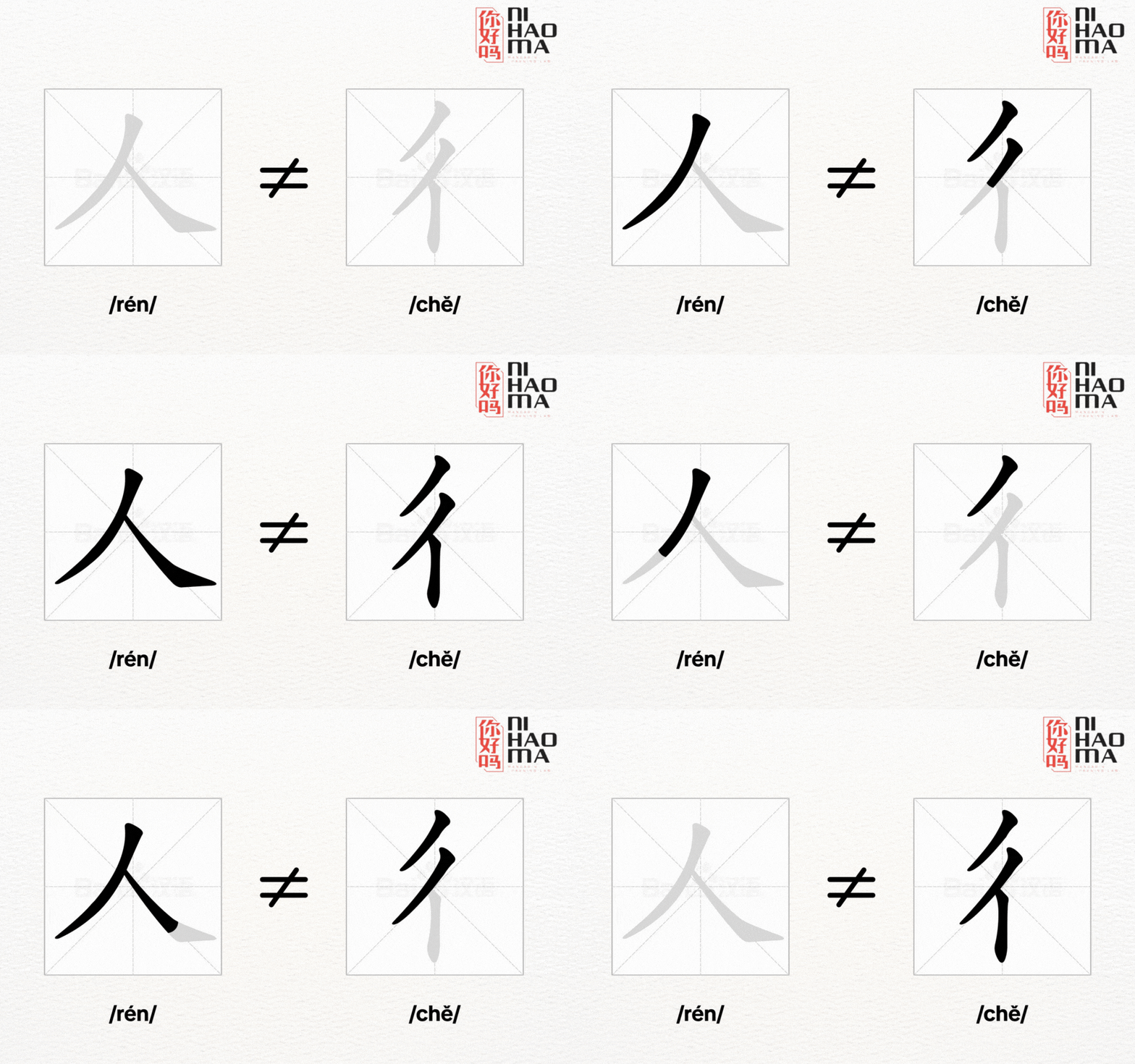
The radical 彳 usually appears on the left side of a character, similar to the left-side variant of the person radical (亻). Its first stroke is a left-falling stroke (丿), the second stroke is a vertical stroke (丨), and the third stroke is another left-falling stroke (丿), which can make it look very similar to the person radical.
- Number of strokes: 3
- Pinyin: chě
- Meaning: related to walking, stepping, or movement (often indicating motion or direction).
- How to distinguish: 亻 has only 2 strokes (vertical then left-falling), while 彳 has 3 strokes (left-falling, vertical, left-falling). 彳 appears longer and more complex than the person radical.
- Example: 很 (hěn – very)
Radical Rù – 入
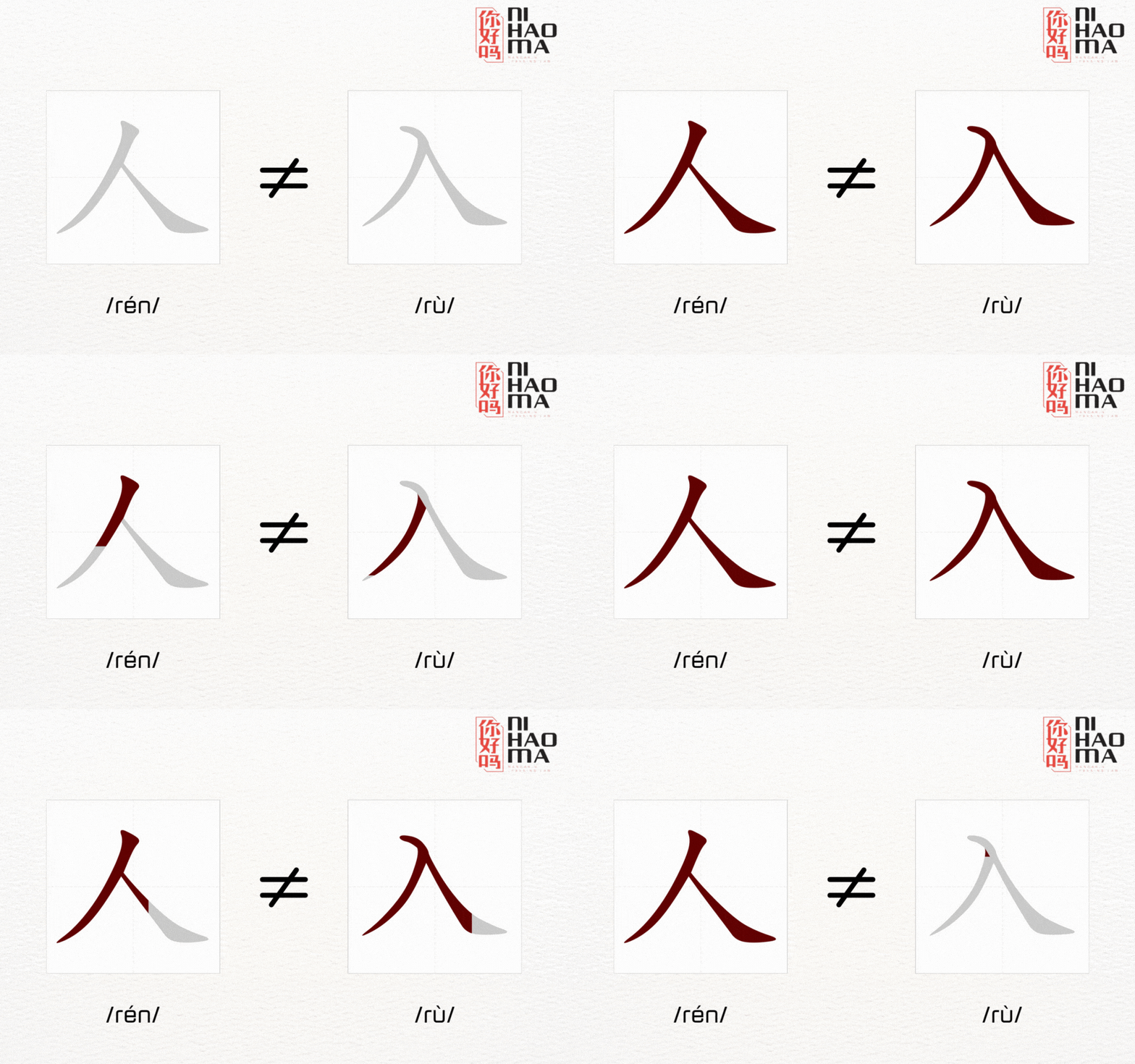
The radical 入 has two slanting strokes, which closely resemble the person radical, causing beginners to confuse them. The strokes of 入 are spread outward, giving the impression of an opening or a “slot” leading inside. In compound characters, learners may mistake it for 亻 due to the similarity of the two-stroke structure.
- Number of strokes: 2
- Pinyin: rù
- Meaning: to enter, to join, to bring in, to participate.
- How to distinguish: The person radical (人/亻) has two strokes that slightly converge, forming a standing figure, whereas 入’s strokes spread outward, giving an “open” appearance. In compound characters, 入 is usually positioned at the top or center rather than on the left.
- Example: 入 (rù – enter)
Radical Bā – 八
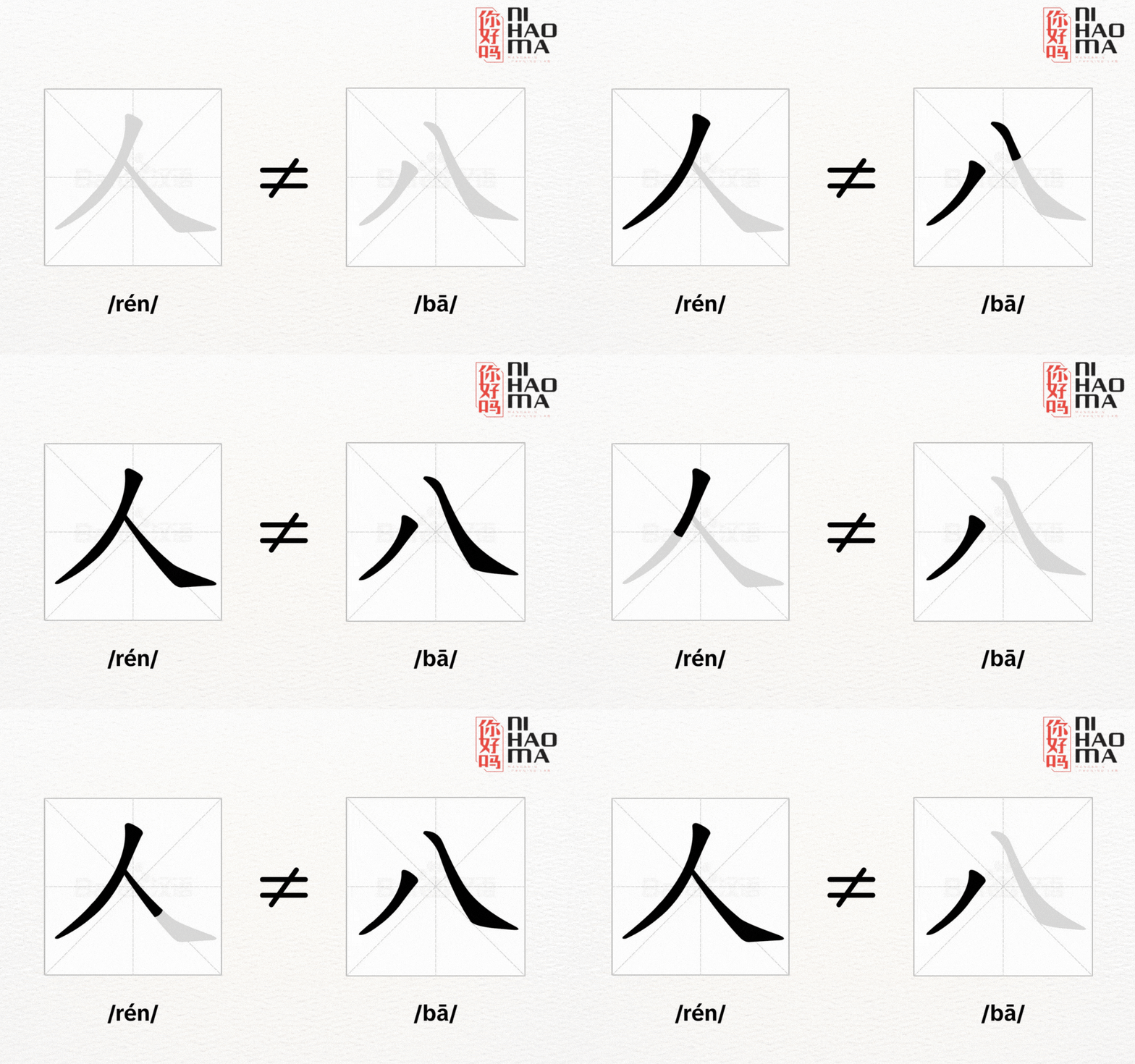
The radical 八 has two slanting strokes that resemble the person radical, especially in cursive writing or calligraphy. Unlike 人, the strokes of 八 spread widely apart, representing the original meaning of “separation.” Its two-stroke structure is similar to 人, which is why it is often confused with the person radical.
- Number of strokes: 2
- Pinyin: bā
- Meaning: originally “eight,” but as a radical, it conveys separation, division, or splitting; it appears in characters related to division or separation.
- How to distinguish: 八’s strokes spread outward to form a wide “V” shape, while 人/亻 converges into a standing figure.
- Example: 分 (fēn – to divide, to separate)
Conversation Using Vocabulary Containing the Person Radical in Chinese
Vocabulary containing the person radical in Chinese appears frequently in daily conversations because most actions, personality traits, and social relationships are represented through this radical. To help you remember more easily and understand how the person radical is used in practical contexts, here is a sample dialogue using Chinese vocabulary containing the person radical.
A: 你来了?
Nǐ lái le?
Have you arrived?
B: 来了。今天人很多。
Lái le. Jīntiān rén hěn duō.
Yes, I’m here. There are a lot of people today.
A: 是啊。我刚才看到有人在帮助你。
Shì a. Wǒ gāngcái kàndào yǒurén zài bāngzhù nǐ.
Yeah. I just saw someone helping you.
B: 对,是朋友。他一直陪我。
Duì, shì péngyǒu. Tā yīzhí péi wǒ.
Yes, it’s my friend. He has been accompanying me.
A: 你最近工作忙吗?每天都在做什么?
Nǐ zuìjìn gōngzuò máng ma? Měitiān dōu zài zuò shénme?
Have you been busy with work lately? What do you do every day?
B: 事情很多。我每天休息不够。
Shìqing hěn duō. Wǒ měitiān xiūxi bùgòu.
I have many things to do. I don’t get enough rest every day.
A: 那你要注意身体。
Nà nǐ yào zhùyì shēntǐ.
Then you should take care of your health.
B: 我知道。朋友也一直提醒我。
Wǒ zhīdào. Péngyǒu yě yīzhí tíxǐng wǒ.
I know. My friends also keep reminding me.
A: 有事就说,不要一个人扛着。
Yǒu shì jiù shuō, búyào yí gè rén kángzhe.
If something comes up, just say it. Don’t carry it alone.
B: 嗯,我会的。以后我也要多帮助你们。
Wǒ huì de. Yǐhòu wǒ yě yào duō bāngzhù nǐmen.
Okay, I will. I also want to help you all more in the future.
Conclusion
We hope this article has helped you gain a deeper understanding of the person radical in Chinese and common vocabulary containing it. By mastering the correct writing rules and familiarizing yourself with its variants, you will be able to remember words more quickly and understand the structure of Chinese characters more effectively. Learning radicals also enhances your ability to guess the meanings of new vocabulary. We hope Ni Hao Ma’s guide has been informative and useful—stay tuned for more engaging and practical Chinese learning content!