
When learning Chinese characters, mastering radicals is an effective way to better understand both the structure and meaning of each character. Among them, radical 104 is a particularly distinctive component, commonly found in characters related to illness, the human body, and health conditions.
So, what is radical 104 in Chinese, what does it represent, how is it written, and what common vocabulary includes it? In this article, we will explore its origin, meaning, stroke order, and practical usage, helping you learn Chinese characters in a more structured and efficient way.
What Is Radical 104 in Chinese?
Radical 104, written as 疒 (nè), is the 104th radical in the set of 214 Kangxi radicals. It commonly appears in characters associated with illness, pain, and physical health conditions.
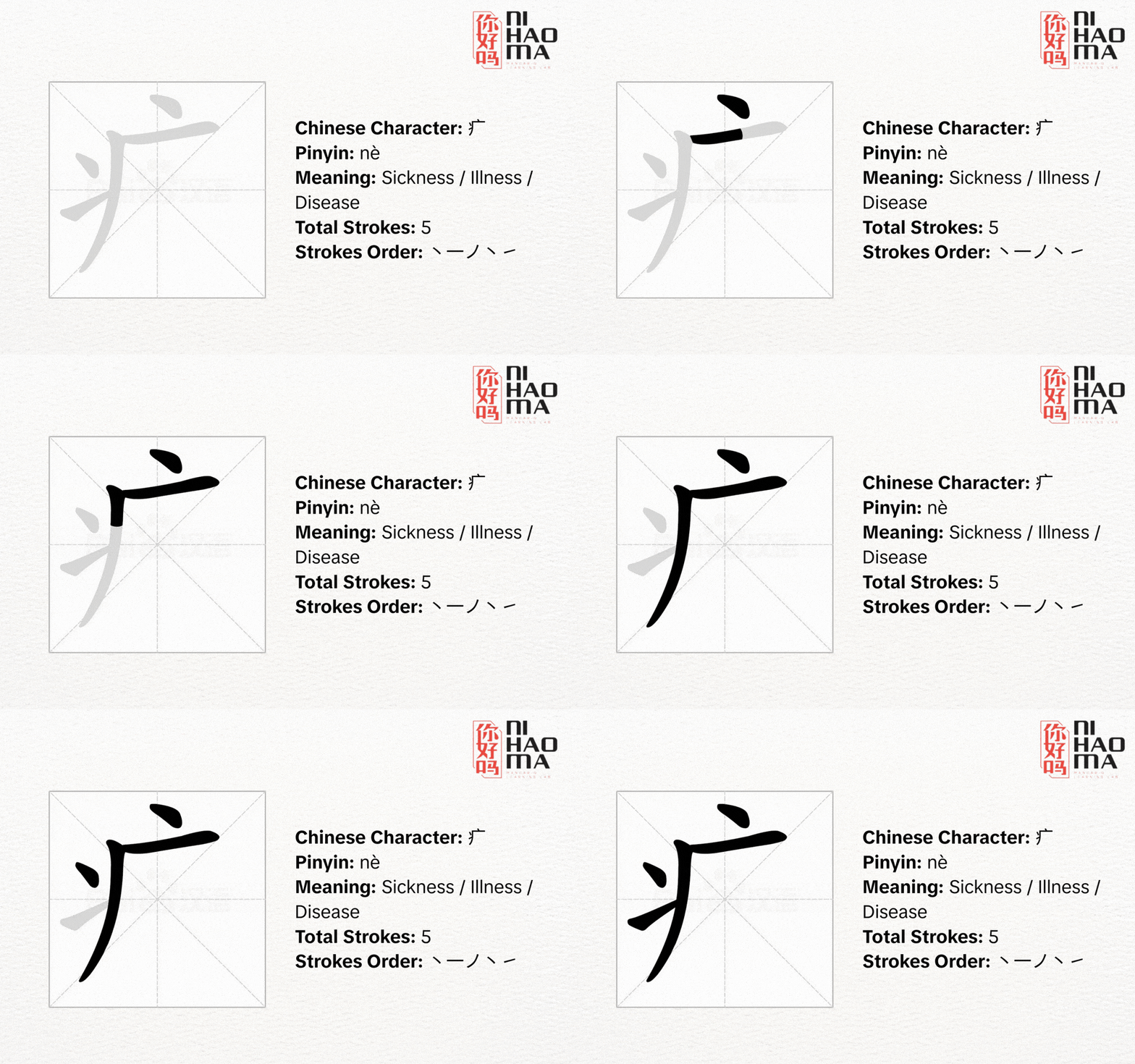
In terms of meaning, radical 104 is highly pictographic. It is believed to represent a person lying sick in bed, symbolizing conditions such as illness, pain, fatigue, or weakness. Because of this, when learners encounter characters containing this radical, they can often associate them with medical topics, health issues, or bodily symptoms.
In practice, radical 104 appears in many commonly used Chinese words, such as:
- 病 (bìng) – illness
- 痛 (tòng) – pain
- 疲 (pí) – fatigue
- 疗 (liáo) – treatment
- 疾 (jí) – disease
Thanks to its clear semantic function, radical 104 helps learners quickly identify the general meaning of unfamiliar characters, especially in topics related to health and medicine.
How to Write Radical 104
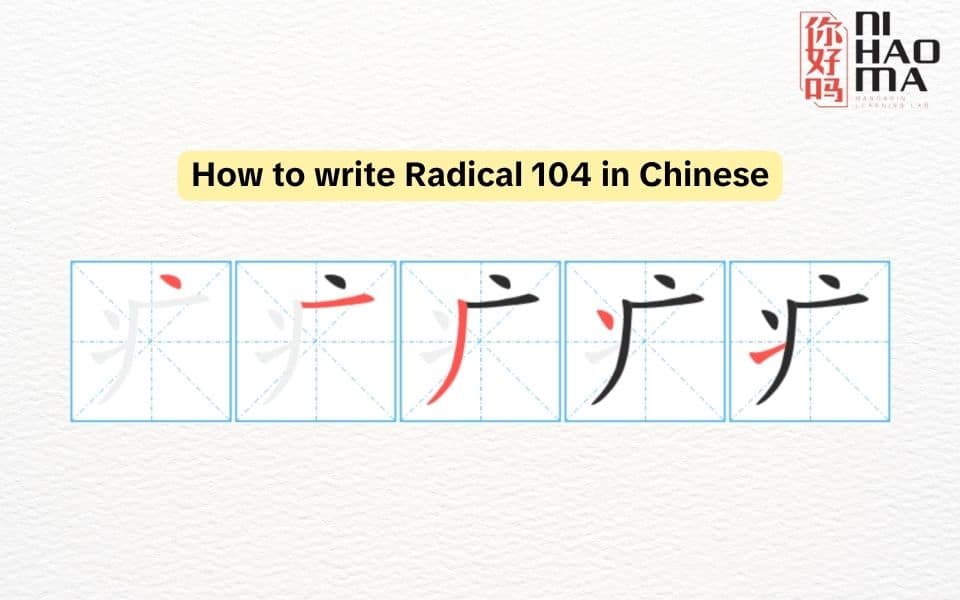
Radical 104 (疒) consists of 5 strokes and usually appears on the left side of a character. The correct stroke order is as follows:
| Stroke Order | Stroke Name | Description |
|---|---|---|
| 1 | Dot (丶) | Start with a small dot at the top center. |
| 2 | Horizontal stroke (一) | Draw a horizontal line from left to right just below the dot. |
| 3 | Left-falling curved stroke (丿) | Extend a long curved stroke downward from the horizontal line to form the left “frame.” |
| 4 | Dot (丶) | Add a small dot on the left side of the inner area. |
| 5 | Rising stroke (㇀) | Finish with a short upward stroke from left to right at the bottom. |
Vocabulary Containing Radical 104
Radical 104 (疒) frequently appears in characters related to diseases, symptoms, and health conditions. Learning vocabulary with this radical not only deepens your understanding of character structure but also proves useful in daily communication, especially when discussing health or visiting a doctor.
Below is a curated list of common vocabulary containing radical 104, organized for easier learning:
| Chinese | Pinyin | Meaning |
|---|---|---|
| 病 | bìng | illness |
| 痛 | tòng | pain |
| 疼 | téng | ache |
| 疲 | pí | tired |
| 痒 | yǎng | itch |
| 痘 | dòu | pimple |
| 痰 | tán | phlegm |
| 癌 | ái | cancer |
| 症 | zhèng | symptom |
| 疤 | bā | scar |
| 痕 | hén | mark, scar |
| 疫 | yì | epidemic |
| 疾 | jí | disease |
| 疯 | fēng | madness |
| 疮 | chuāng | sore |
| 疣 | yóu | wart |
| 痔 | zhì | hemorrhoids |
| 痢 | lì | dysentery |
| 痪 | huàn | paralysis |
| 生病 | shēngbìng | to get sick |
| 看病 | kànbìng | see a doctor |
| 治病 | zhìbìng | treat illness |
| 疼痛 | téngtòng | pain |
| 痛心 | tòngxīn | heartbroken |
| 疲劳 | píláo | fatigue |
| 疾病 | jíbìng | disease |
| 症状 | zhèngzhuàng | symptom |
| 病人 | bìngrén | patient |
| 病毒 | bìngdú | virus |
| 癌症 | áizhèng | cancer |
| 病情 | bìngqíng | condition of illness |
| 病因 | bìngyīn | cause of illness |
| 病房 | bìngfáng | hospital ward |
| 病假 | bìngjià | sick leave |
| 发病 | fābìng | onset of illness |
| 重病 | zhòngbìng | serious illness |
| 小病 | xiǎobìng | minor illness |
| 慢病 | mànbìng | chronic disease |
| 急病 | jíbìng | acute illness |
| 传染病 | chuánrǎnbìng | infectious disease |
| 痊愈 | quányù | recovery |
| 病变 | bìngbiàn | pathological change |
| 病历 | bìnglì | medical record |
| 疟疾 | nüèjí | malaria |
| 癫痫 | diānxián | epilepsy |
| 痼疾 | gùjí | chronic illness |
| 癣病 | xuǎnbìng | skin fungus |
| 疗伤 | liáoshāng | heal wounds |
| 病愈 | bìngyù | recover from illness |
| 疾苦 | jíkǔ | suffering |
| 疼爱 | téng’ài | to love dearly |
Example Dialogues Using Radical 104 Vocabulary
Learning vocabulary through dialogues helps you understand how words are used in real-life situations, such as describing symptoms, visiting a doctor, or asking about someone’s health.
Dialogue 1
A: 你怎么了?脸色不太好。
(Nǐ zěnme le? Liǎnsè bú tài hǎo.)
What’s wrong? You don’t look well.
B: 我生病了,头很痛,还有点发烧。
(Wǒ shēngbìng le, tóu hěn tòng, hái yǒu diǎn fāshāo.)
I’m sick. I have a headache and a slight fever.
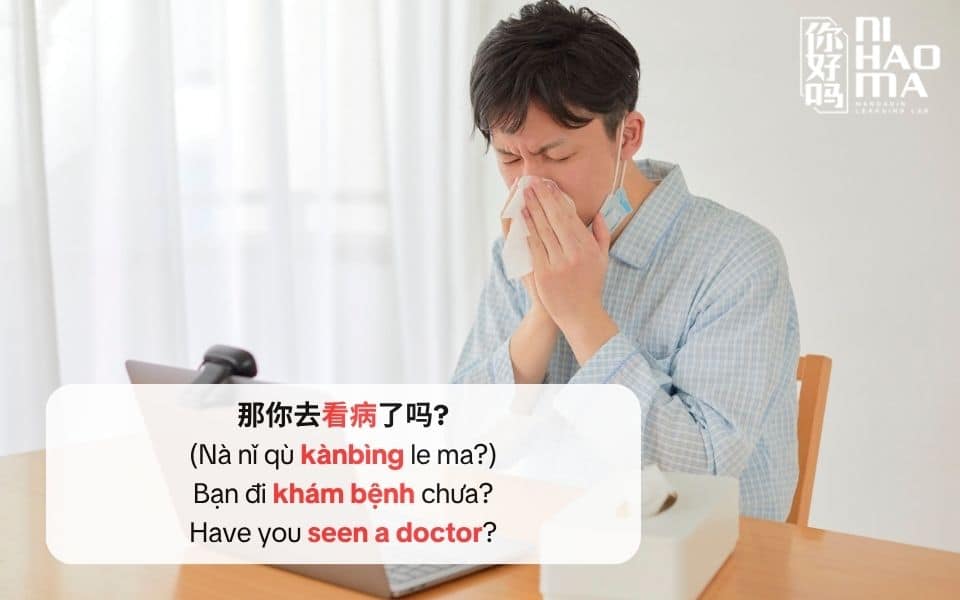
A: 那你去看病了吗?
(Nà nǐ qù kànbìng le ma?)
Have you seen a doctor?
B: 还没有,我打算下午去医院。
(Hái méiyǒu, wǒ dǎsuàn xiàwǔ qù yīyuàn.)
Not yet. I plan to go this afternoon.
A: 你应该请病假,好好休息。
(Nǐ yīnggāi qǐng bìngjià, hǎohǎo xiūxi.)
You should take sick leave and rest well.
Dialogue 2
A: 医生,我最近总是觉得很疲劳。
(Yīshēng, wǒ zuìjìn zǒng shì juéde hěn píláo.)
Doctor, I’ve been feeling very tired lately.
B: 你有什么症状吗?
(Nǐ yǒu shénme zhèngzhuàng ma?)
Do you have any symptoms?
A: 有时候头疼,还会咳嗽,有痰。
(Yǒu shíhou tóuténg, hái huì késòu, yǒu tán.)
Sometimes I have headaches, cough, and phlegm.
B: 可能是小病,不过需要检查一下。
(Kěnéng shì xiǎobìng, búguò xūyào jiǎnchá yíxià.)
It might be minor, but you should get checked.
A: 这种病严重吗?
(Zhè zhǒng bìng yánzhòng ma?)
Is it serious?
B: 不严重,吃点药就会痊愈。
(Bù yánzhòng, chī diǎn yào jiù huì quányù.)
No, you’ll recover after taking some medicine.
Dialogue 3
A: 听说你生病了,现在好点了吗?
(Tīng shuō nǐ shēngbìng le, xiànzài hǎo diǎn le ma?)
I heard you were sick. Are you feeling better now?
B: 好多了,不过还有一点疼痛。
(Hǎo duō le, búguò hái yǒu yìdiǎn téngtòng.)
Much better, but still a bit of pain.
A: 医生怎么说你的病情?
(Yīshēng zěnme shuō nǐ de bìngqíng?)
What did the doctor say?
B: 医生说不是重病,只要多休息。
(Yīshēng shuō bú shì zhòngbìng, zhǐyào duō xiūxi.)
The doctor said it’s not serious, just rest more.
A: 那你一定要注意身体。
(Nà nǐ yídìng yào zhùyì shēntǐ.)
Then take good care of yourself.
Conclusion
Radical 104 (疒) is not only a common Chinese radical but also one with a clear and meaningful connection to health and illness. By understanding its meaning, mastering its stroke order, and learning related vocabulary, you can recognize characters more quickly and use them effectively in real-life communication.
With the knowledge and examples provided above by Ni Hao Ma, you can build a stronger foundation in Chinese, especially when dealing with health-related topics in everyday life.