Among the 214 Kangxi radicals, each radical not only functions as a dictionary indexing component but also conveys semantic clues about the meaning of Chinese characters. Radical 135 in Chinese (舌) is a commonly encountered radical associated with speech, language, and taste.
This article provides a comprehensive overview of radical 135, including its origin, stroke order, and frequently used vocabulary. By understanding how this radical functions within character formation, learners can approach Chinese characters in a more systematic and effective way.
What Is Radical 135 in Chinese?
Radical 135 (舌, shé) is the 135th radical in the traditional Kangxi Dictionary system. Its original meaning is “tongue,” the organ responsible for speech production and taste perception.
From an etymological perspective, 舌 is a pictographic character. In oracle bone script (甲骨文) and bronze inscriptions (金文), its early forms resembled a tongue extending from the mouth, visually emphasizing its physical characteristics.
Over time, the character evolved through seal script (篆书), clerical script (隶书), and eventually into its standardized regular script (楷书) form used today. According to Kangxi classification statistics, more than 100 characters are indexed under radical 135. This reflects its relatively frequent occurrence in characters related to speech, verbal interaction, and physiological concepts.
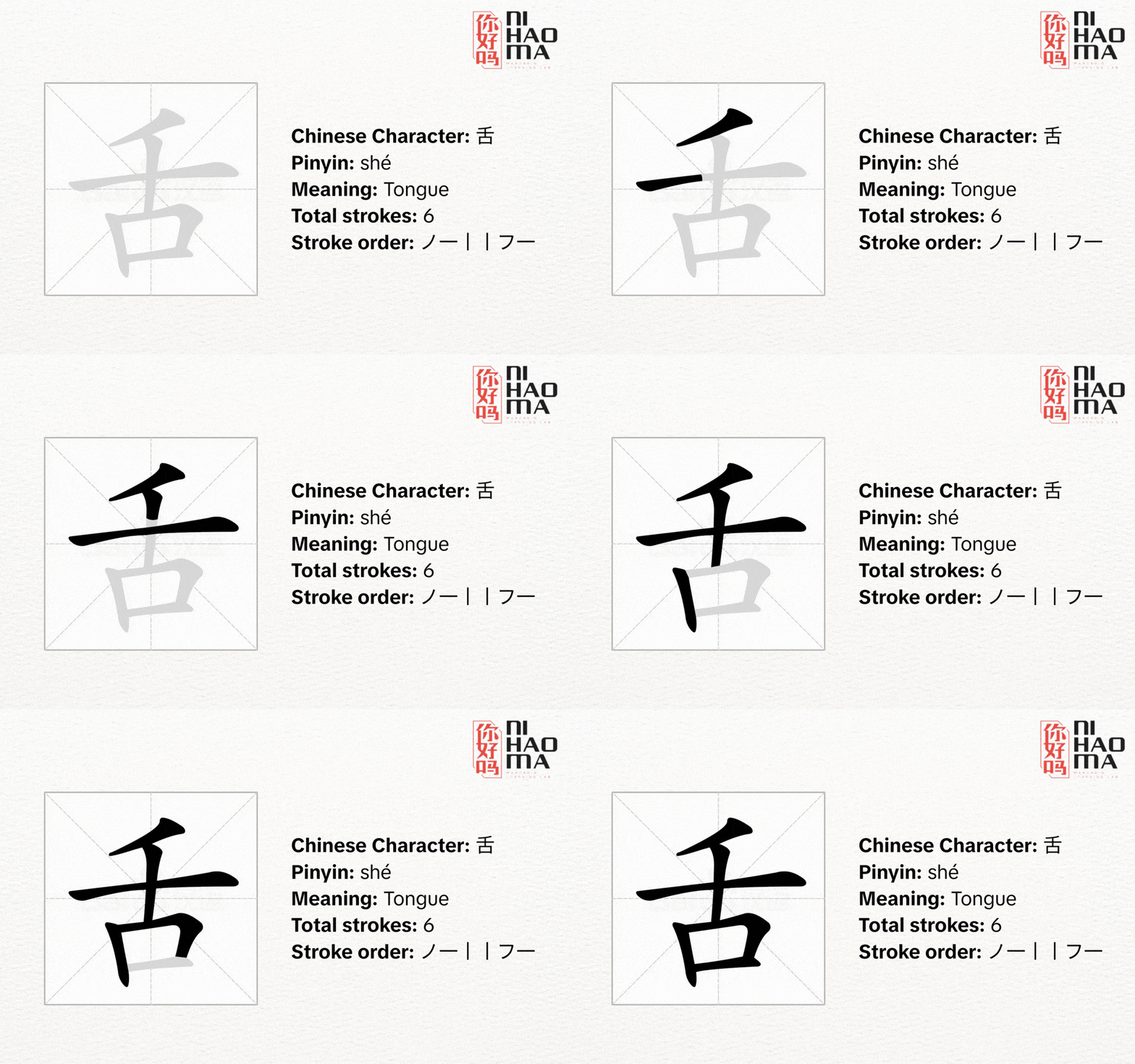
In the structure of Chinese characters, 舌 can function either as an independent character or as a semantic component. When it appears within a compound character, Radical 135 typically suggests that the character is related to:
- Speaking activities, debate, or language
- The sense of taste
- The tongue as an organ or medical conditions associated with it
How to Write Radical 135 in Chinese
Radical 135 consists of 6 strokes and follows the general Chinese writing principle: top to bottom, left to right:
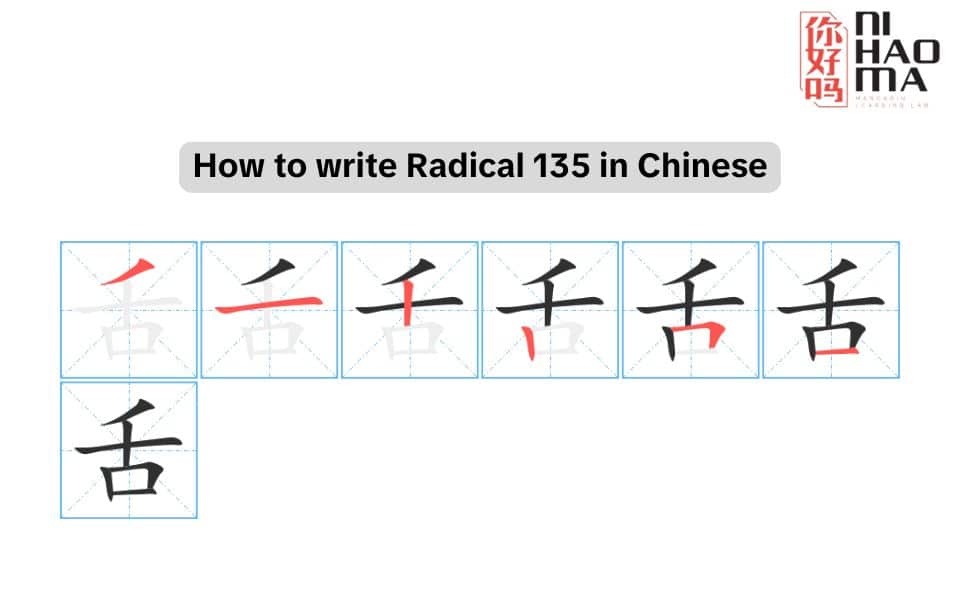
| Stroke Order | Stroke Name | Description |
|---|---|---|
| 1 | 丿 (left-falling) | Write a left-falling stroke from top to bottom, slightly slanted |
| 2 | 一 (horizontal) | Draw a long horizontal stroke beneath the first stroke |
| 3 | 丨 (vertical) | Add a vertical stroke starting from the middle and crossing the horizontal line |
| 4 | 丨 (vertical) | Write a shorter vertical stroke on the lower left |
| 5 | フ (bending stroke) | Draw a downward bending stroke from the short vertical |
| 6 | 一 (horizontal) | Finish with a final horizontal stroke at the bottom |
Mastering the correct stroke order of radical 135 ensures balanced structure and proper handwriting, especially when it appears as a component within more complex characters.
Common Vocabulary Containing Radical 135
Radical 135 reflects practical and concrete thinking in traditional Chinese character formation. Learning vocabulary that includes this radical not only expands your lexicon but also strengthens your understanding of semantic connections.
Below are common words containing radical 135:
| Chinese | Pinyin | Meaning |
|---|---|---|
| 舌 | shé | tongue |
| 甜 | tián | sweet |
| 话 | huà | speech; words |
| 舌炎 | shéyán | glossitis (tongue inflammation) |
| 舌战 | shézhàn | verbal battle |
| 辞职 | cízhí | resign (from a job) |
| 合适 | héshì | suitable |
| 混乱 | hùnluàn | chaos |
| 宿舍 | sùshè | dormitory |
| 铺床 | pūchuáng | make the bed |
| 敌人 | dírén | enemy |
| 说话 | shuōhuà | speak |
| 对话 | duìhuà | dialogue |
| 饭馆 | fànguǎn | restaurant |
| 生活 | shēnghuó | daily life |
| 笑话 | xiàohua | joke |
| 乱说 | luànshuō | talk nonsense |
| 对敌 | duìdí | confront the enemy |
| 甜蜜 | tiánmì | sweet; happy |
| 电话 | diànhuà | telephone |
| 灵活 | línghuó | flexible |
| 舍不得 | shěbude | cannot bear to part with |
| 适应 | shìyìng | adapt |
| 活泼 | huópō | lively |
| 活动 | huódòng | activity |
| 舍弃 | shěqì | abandon |
By analyzing these examples, learners can see how radical 135 frequently appears in characters related to speech (话, 说, 对话), taste (甜), and broader semantic extensions formed through phonetic-semantic compounds.
Sample Dialogues Using Vocabulary with Radical 135
To reinforce practical application, here are three everyday conversational examples using words that contain radical 135.
Dialogue 1
A: 这件衣服很适合你。
Zhè jiàn yīfu hěn shìhé nǐ.
This outfit suits you very well.
B: 你觉得颜色怎么样?
Nǐ juéde yánsè zěnmeyàng?
What do you think about the color?
A: 我觉得这个颜色很适合你的肤色。
Wǒ juéde zhège yánsè hěn shìhé nǐ de fūsè.
I think this color matches your skin tone.
B: 穿起来舒服吗?
Chuān qǐlái shūfu ma?
Is it comfortable to wear?
A: 很舒服,而且也很适合上班穿。
Hěn shūfu, érqiě yě hěn shìhé shàngbān chuān.
It’s very comfortable and also appropriate for work.
Dialogue 2
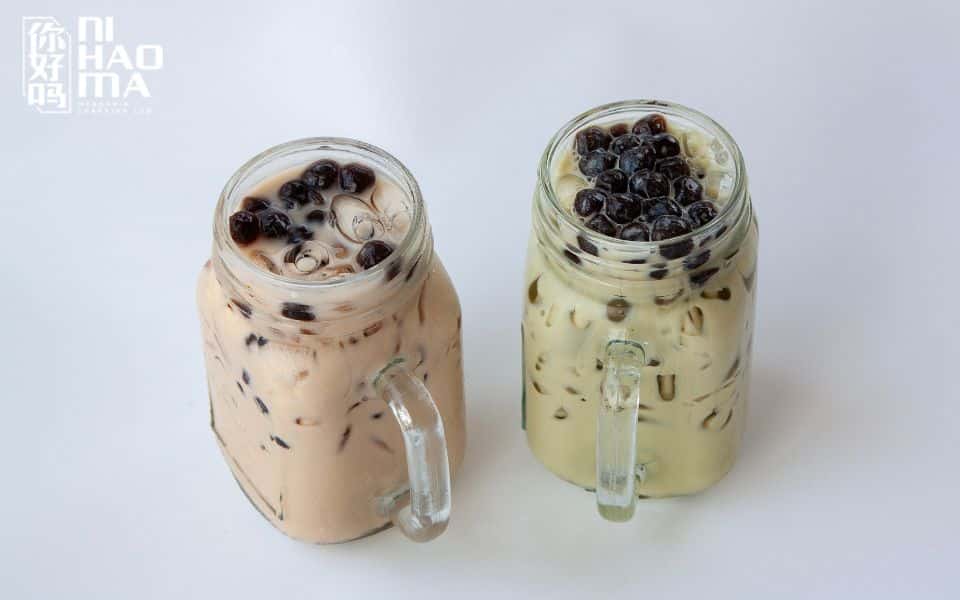
A: 这个奶茶有点太甜了。
Zhège nǎichá yǒudiǎn tài tián le.
This milk tea is a bit too sweet.
B: 你不是喜欢甜的吗?
Nǐ bú shì xǐhuān tián de ma?
Don’t you like sweet drinks?
A: 喜欢是喜欢,可是这个真的太甜了。
Xǐhuān shì xǐhuān, kěshì zhège zhēn de tài tián le.
I do, but this one is really too sweet.
B: 那下次我们点三分糖吧。
Nà xià cì wǒmen diǎn sān fēn táng ba.
Next time let’s order 30% sugar.
A: 好啊,这样比较健康。
Hǎo a, zhèyàng bǐjiào jiànkāng.
Sounds good. That’s healthier.
Dialogue 3
A: 听说你打算辞职,是真的吗?
Tīngshuō nǐ dǎsuàn cízhí, shì zhēn de ma?
I heard you’re planning to resign. Is that true?
B: 是的,我想换一个新的环境。
Shì de, wǒ xiǎng huàn yí gè xīn de huánjìng.
Yes, I want to change to a new environment.
A: 在这里工作不是挺稳定的吗?
Zài zhèlǐ gōngzuò bú shì tǐng wěndìng de ma?
Isn’t this job quite stable?
B: 虽然稳定,但是发展机会不多。
Suīrán wěndìng, dànshì fāzhǎn jīhuì bù duō.
Although it’s stable, there aren’t many opportunities for growth.
A: 我理解你的想法,希望你顺利。
Wǒ lǐjiě nǐ de xiǎngfǎ, xīwàng nǐ shùnlì.
I understand your decision. I wish you success.
Conclusion
Radical 135 (舌) appears in many Chinese characters related to the concept of the “tongue,” extending semantically to speech, communication, and taste. By understanding its historical evolution, mastering its correct stroke order, and studying vocabulary built around it, learners can improve character recognition and retention through logical connections rather than isolated memorization.
When you encounter a new character that contains 舌, you can reasonably infer that it is likely related to speech or taste—this is one of the greatest advantages of learning Chinese characters through radicals. Ni Hao Ma hope this guide has provided you with valuable insights, and be sure to stay tuned for more fascinating radicals in future lessons!