
In the Chinese writing system, each radical carries its own meaning. Radical 170, also known as the Phu radical (阜 / 阝), appears frequently in many familiar Chinese characters. Understanding radical 170 not only helps you memorize characters more effectively but also enables you to infer the meanings of new words in a logical way. This article explores the meaning of radical 170 in Chinese and introduces representative vocabulary that contains this radical.
What Is Radical 170 in Chinese?
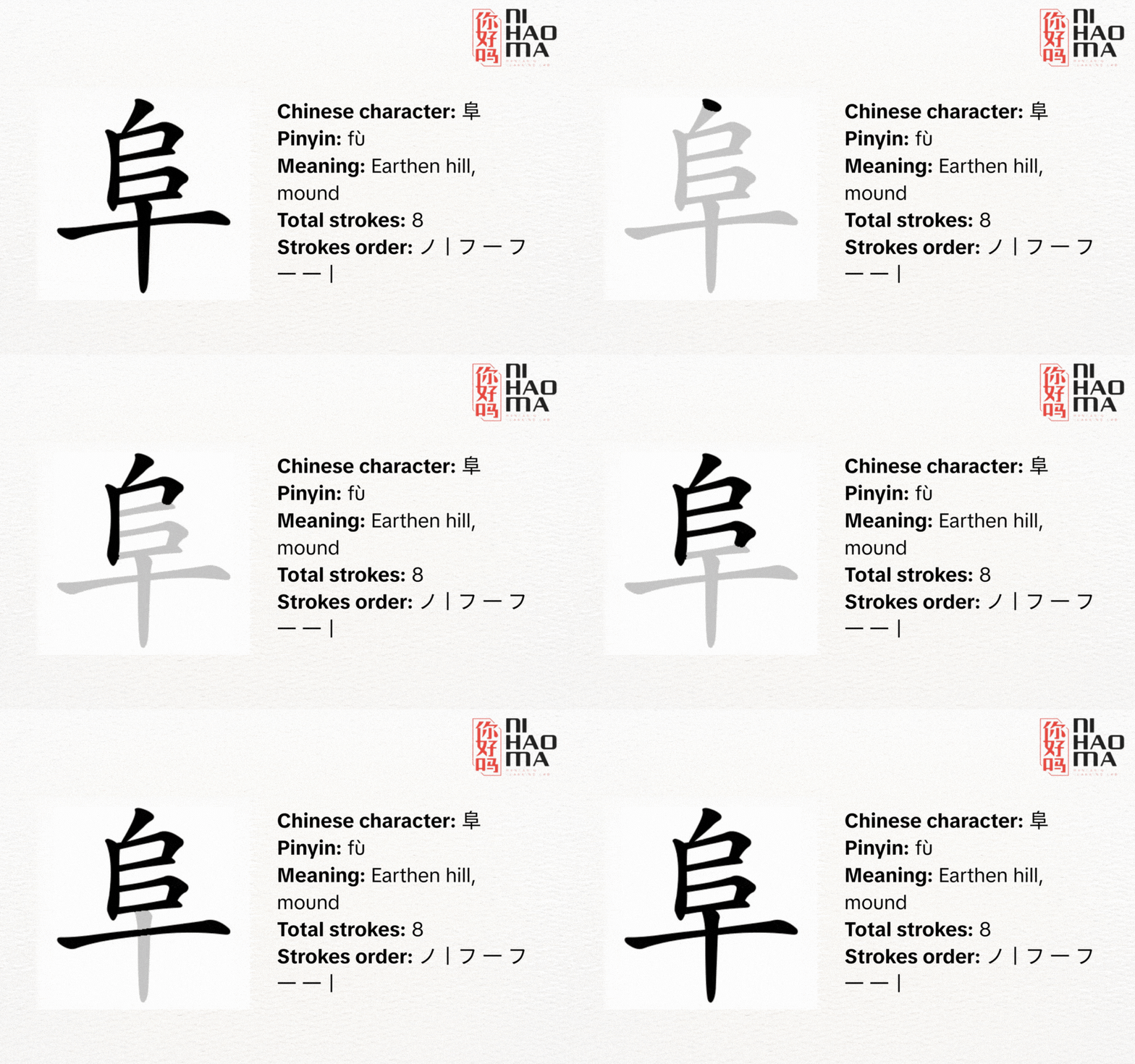
Radical 170 (阜) is the 170th radical among the 214 Kangxi radicals. Its original meaning is related to mounds of earth, hills, elevated land, or raised terrain.
When used as a component in Chinese characters, radical 170 almost always appears on the left side of the character and is written in its simplified form 阝. From a semantic perspective, characters containing radical 170 often convey ideas related to terrain, elevation, separation, or physical and abstract changes linked to landforms.
For example, 陆 (lù – land, mainland) and 阶 (jiē – steps, stairs) directly express physical terrain, while 阴 (yīn) and 阳 (yáng) describe how sunlight interacts with the two sides of a hill.
- Chinese character: 阜
- Pinyin: fù
- Core meaning: Earthen hill, mound
- Stroke count: 8
- Stroke order: ノ丨フ 一 フ 一 一丨
How to Write Radical 170 in Chinese
Radical 170 consists of 8 strokes, written in the following order:
| Stroke order | Stroke symbol | Stroke name | Writing description |
|---|---|---|---|
| 1 | ノ | Left-falling stroke | Write from top to bottom, slightly slanted to the left |
| 2 | 丨 | Vertical stroke | Draw straight down from top to bottom |
| 3 | フ | Turning stroke | Write a downward turn starting from the second stroke |
| 4 | 一 | Horizontal stroke | Write left to right, connecting the end of the turning stroke to the vertical stroke |
| 5 | フ | Turning stroke | Below the fourth stroke, write a downward turn |
| 6 | 一 | Horizontal stroke | Write left to right, connecting the end of the turning stroke to the vertical structure |
| 7 | 一 | Horizontal stroke | Write a longer horizontal stroke below |
| 8 | 丨 | Vertical stroke | Draw a vertical line through the center of the sixth stroke and pass through the seventh stroke |
Distinguishing Radical 170 (阜 / 阝) and the Radical 163 (邑 / 阝)
In Chinese, there are two radicals that share the exact same simplified form 阝: radical 170 (阜) and the Yi radical (邑). The key way to distinguish them is by their position within a character. Radical 170 appears on the left side, while the Yi radical appears on the right side.
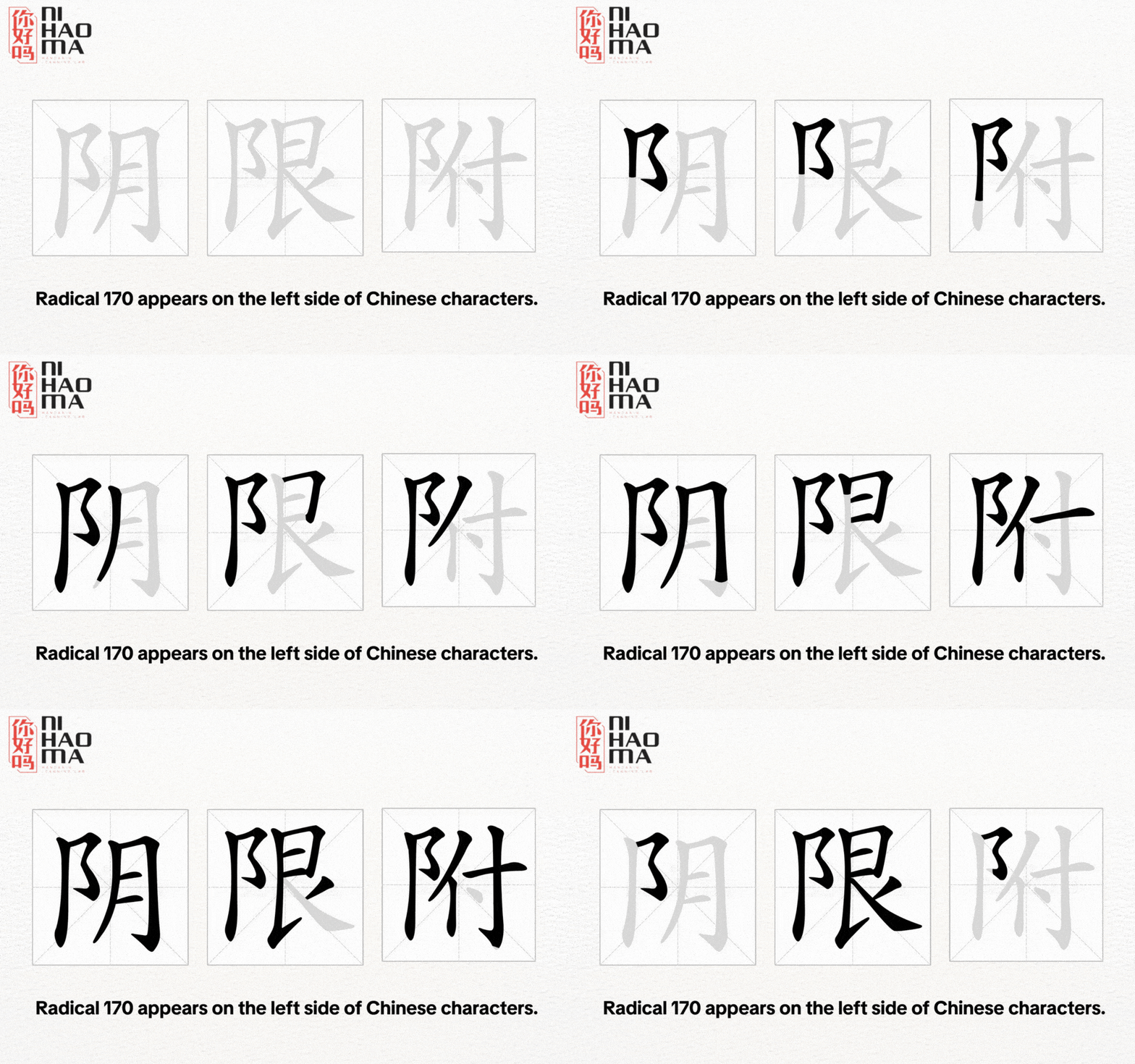
In terms of meaning, radical 170 is commonly related to natural terrain such as hills, uneven land, as well as abstract states like separation, rise, decline, or collapse. Examples include 险 (xiǎn – dangerous) and 降 (jiàng – to descend, fall from a height).
By contrast, the Yi radical is usually associated with place names, administrative regions, human settlements, and social organization, such as 邦 (bāng – ancient state), 郊 (jiāo – suburbs), and 郡 (jùn – prefecture or district).
Read more: What Is the Radical 163 in Chinese? Meaning and Vocabulary
Vocabulary Containing Radical 170 in Chinese
Radical 170 (阜 / 阝) is a commonly used radical that appears in many familiar Chinese characters. It is closely associated with concepts of location, terrain, and upward–downward movement. Mastering vocabulary that contains radical 170 not only helps learners gain a deeper understanding of character structure but also makes it easier to naturally and logically infer the meanings of new words.
Below is a list of common Chinese vocabulary containing radical 170:
| Vocabulary | Pinyin | Meaning |
|---|---|---|
| 队 | duì | team |
| 阶 | jiē | step |
| 阳 | yáng | yang |
| 阴 | yīn | yin |
| 防 | fáng | to prevent |
| 阻 | zǔ | to block |
| 附 | fù | to attach |
| 限 | xiàn | limit |
| 降 | jiàng | to descend |
| 陆 | lù | land |
| 队伍 | duìwǔ | team, troop |
| 阶段 | jiēduàn | stage, phase |
| 阳光 | yángguāng | sunlight |
| 阴天 | yīntiān | cloudy day |
| 防止 | fángzhǐ | to prevent |
| 阻止 | zǔzhǐ | to stop |
| 附近 | fùjìn | nearby |
| 限制 | xiànzhì | restriction |
| 降低 | jiàngdī | to lower |
| 陆地 | lùdì | landmass |
| 阴影 | yīnyǐng | shadow |
| 阳台 | yángtái | balcony |
| 防护 | fánghù | protection |
| 防御 | fángyù | defense |
| 阻碍 | zǔ’ài | obstacle |
| 附加 | fùjiā | to add |
| 附属 | fùshǔ | affiliated |
| 限度 | xiàndù | degree, limit |
| 降落 | jiàngluò | to land |
| 陆军 | lùjūn | army |
| 阴凉 | yīnliáng | cool and shady |
| 阳性 | yángxìng | positive |
| 防火 | fánghuǒ | fire prevention |
| 防水 | fángshuǐ | waterproof |
| 阶梯 | jiētī | staircase |
| 队列 | duìliè | formation |
| 附带 | fùdài | to come with |
| 限期 | xiànqī | time limit |
| 降价 | jiàngjià | price reduction |
| 防范 | fángfàn | to guard against |
| 阴暗 | yīn’àn | dark, gloomy |
| 阳历 | yánglì | solar calendar |
| 队长 | duìzhǎng | team leader |
| 阶级 | jiējí | social class |
| 防疫 | fángyì | epidemic prevention |
| 阻断 | zǔduàn | to cut off |
| 附和 | fùhè | to echo, agree |
| 限额 | xiàn’é | quota |
| 降温 | jiàngwēn | to cool down |
| 防寒 | fánghán | cold protection |
Sample Dialogues Using Vocabulary with Radical 170 in Chinese
The dialogues below are designed to help learners become familiar with vocabulary containing radical 170 (阜 / 阝) through everyday, practical situations. Placing vocabulary into natural conversations helps improve memory retention and allows learners to clearly understand real-life usage, instead of memorizing isolated words.
Dialogue 1
A: 这家店最近在降价吗?
(Zhè jiā diàn zuìjìn zài jiàngjià ma?)
→ Has this shop been offering discounts recently?
B: 是的,但数量有限制。
(Shì de, dàn shùliàng yǒu xiànzhì.)
→ Yes, but the quantity is limited.
A: 那每个人可以买多少?
(Nà měi gè rén kěyǐ mǎi duōshao?)
→ So how much can each person buy?
B: 每人只能买两件。
(Měi rén zhǐ néng mǎi liǎng jiàn.)
→ Each person can only buy two items.

Dialogue 2
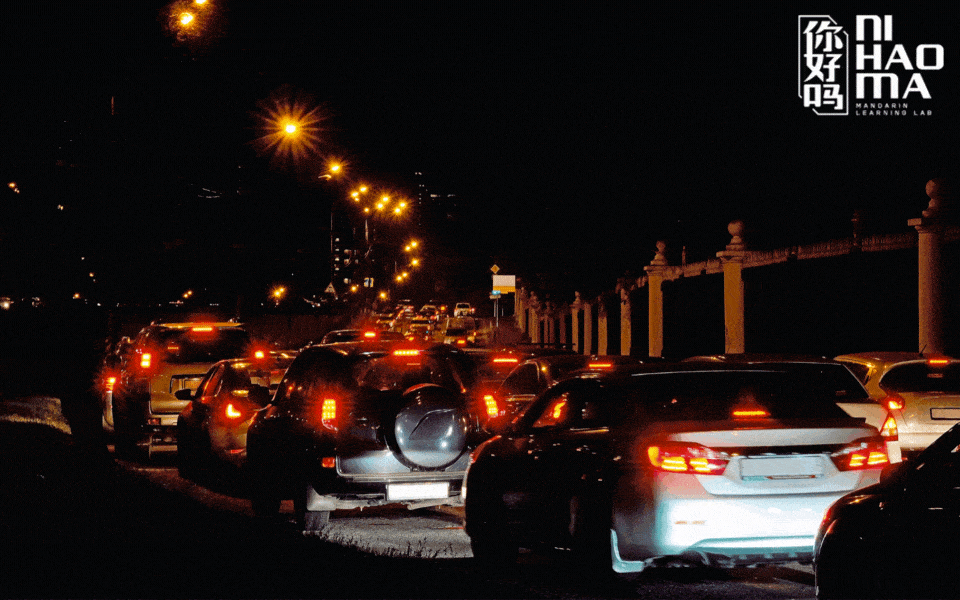
A: 前面怎么不走了?
(Qiánmiàn zěnme bù zǒu le?)
→ Why isn’t traffic moving ahead?
B: 好像发生事故,交通被阻断了。
(Hǎoxiàng fāshēng shìgù, jiāotōng bèi zǔduàn le.)
→ It seems there was an accident, and traffic has been blocked.
A: 那要等很久吗?
(Nà yào děng hěn jiǔ ma?)
→ Will we have to wait a long time?
B: 可能要等一会儿,车速也降下来了。
(Kěnéng yào děng yíhuìr, chēsù yě jiàng xiàlái le.)
→ We may need to wait a bit; the vehicle speed has dropped as well.
A: 雨天开车真不方便。
(Yǔtiān kāichē zhēn bú fāngbiàn.)
→ Driving in the rain is really inconvenient.
B: 是啊,要注意防滑。
(Shì a, yào zhùyì fáng huá.)
→ Yes, be careful to prevent slipping.
Dialogue 3
A: 你今天感觉怎么样?
(Nǐ jīntiān gǎnjué zěnmeyàng?)
→ How are you feeling today?
B: 有点不舒服,怕感冒。
(Yǒudiǎn bú shūfu, pà gǎnmào.)
→ I feel a bit unwell, afraid I might catch a cold.
A: 最近天气一会儿阴一会儿阳。
(Zuìjìn tiānqì yíhuìr yīn yíhuìr yáng.)
→ The weather has been cloudy one moment and sunny the next lately.
B: 对,而且温度变化很大。
(Duì, érqiě wēndù biànhuà hěn dà.)
→ Yes, and the temperature changes a lot.
A: 你晚上要早点休息。
(Nǐ wǎnshang yào zǎodiǎn xiūxi.)
→ You should rest early tonight.
Conclusion
This article has explained what radical 170 (阜 / 阝) is in Chinese, its meanings, and common vocabulary associated with it. When learning Chinese, memorizing radicals and understanding character structure can greatly improve vocabulary comprehension and retention. For more effective learning tips and a structured study path, contact Ni Hao Ma to receive detailed information about our online and offline Chinese courses.