When you first start learning Chinese, the huge system of Chinese characters can feel overwhelming. With thousands of characters to learn, it can be difficult to remember their shapes and meanings individually. However, one of the most effective ways to make Chinese characters easier to understand and memorize is to learn them through Chinese radicals.
Today, let’s explore radical 196 in Chinese with Ni Hao Ma. This pictographic radical is closely associated with birds and appears in many Chinese characters referring to birds and poultry. In this article, you will learn about the structure and meaning of radical 196, how to write it, how to distinguish it from the similar radical 隹, and a useful list of vocabulary containing this radical.
What Is Radical 196 in Chinese?
Radical 196 in Chinese is 鸟 (niǎo), the 196th of the 214 Kangxi radicals. It is a pictographic radical originally derived from the image of a bird.
Radical 196 is a typical pictographic radical that developed from a visual representation of the physical features of a bird. Characters containing this radical are frequently associated with birds, poultry, and other flying animals.
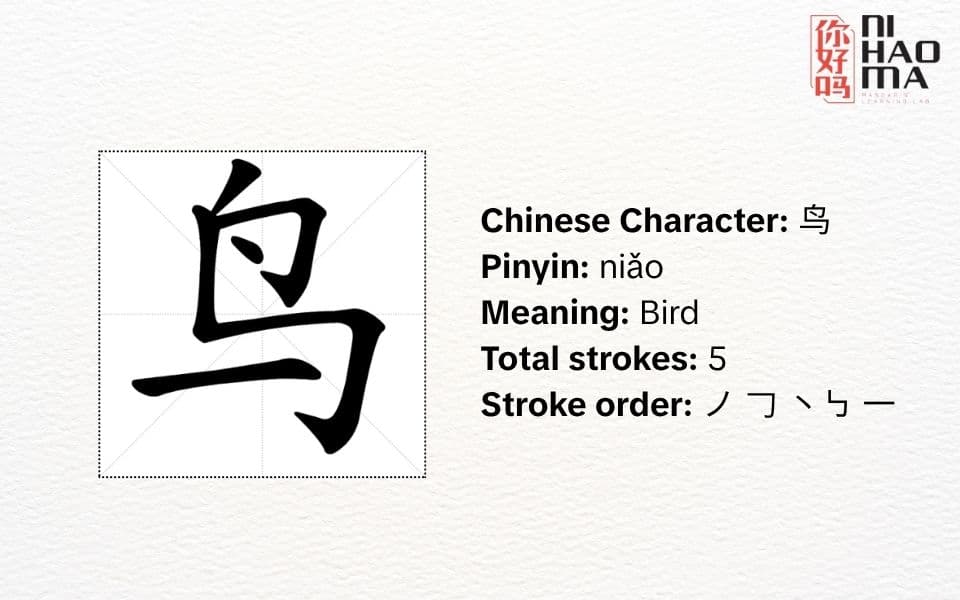
The character 鸟 can stand independently, meaning “bird,” or function as a radical and structural component in other Chinese characters. In compound characters, radical 196 generally serves a semantic function, indicating that the character has some connection with birds, poultry, or flying creatures.
It commonly appears in the following positions:
- On the right side of a character: This is a common position, as seen in characters such as 鸡 (jī – chicken), 鸭 (yā – duck), and 鸽 (gē – pigeon).
- At the bottom of a character: This position can be found in characters referring to certain larger or traditionally named birds, such as 鹰 (yīng – eagle), 鸾 (luán – luan bird), and 鹭 (lù – egret).
How to Write Radical 196 in Chinese
Radical 196, 鸟 (niǎo), consists of 5 strokes. Follow the stroke order below to write it correctly:
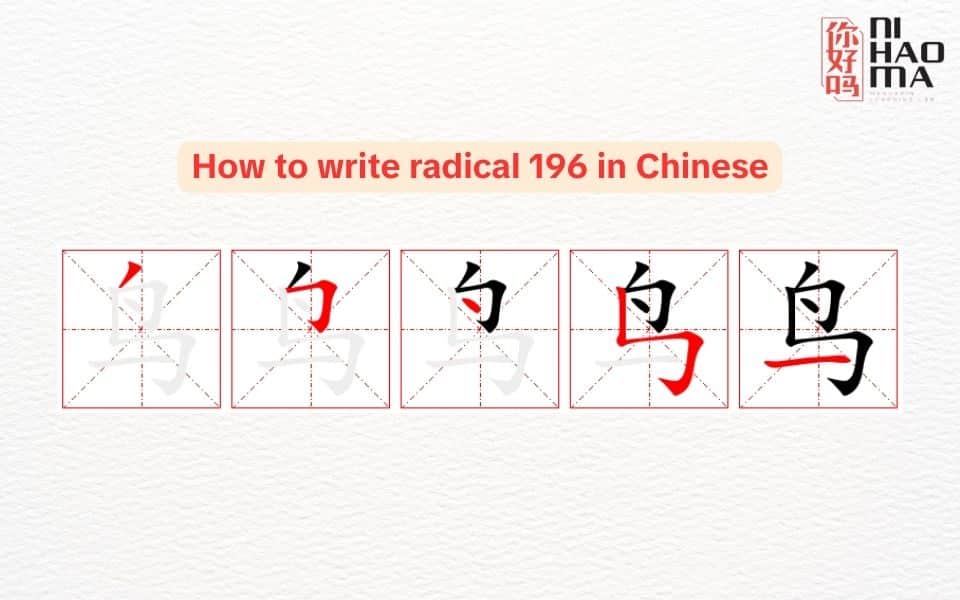
| Stroke order | Stroke name | How to Write |
|---|---|---|
| 1 | ノ (short left-falling stroke) | Write a short left-falling stroke near the upper center. |
| 2 | 𠃌 (horizontal turning hook) | Write a horizontal stroke from left to right, then turn downward and finish with a slight hook toward the upper left. |
| 3 | 丶 (dot) | Add a dot inside the upper-middle area of the character. |
| 4 | ㇉ (vertical turning hook) | Write a vertical stroke on the left, then turn horizontally to the right, turn downward, and finish with a hook. |
| 5 | 一 (horizontal stroke) | Finish with a horizontal stroke across the lower-middle section. |
Learning the correct stroke order is important because it helps you write Chinese characters more naturally and makes it easier to recognize handwritten Chinese.
How to Distinguish Radical 196 from Radical 172 in Chinese
Radical 196 (鸟) and radical 172 (隹) are both associated with birds, so beginners may easily confuse them. However, they differ in their shapes, historical origins, and usage.
- Radical 196 鸟 (niǎo): Originally represents birds with relatively long tails and is commonly associated with birds such as peacocks, crows, and pigeons, as well as poultry such as chickens, ducks, and geese.
- Radical 172 隹 (zhuī): A pictographic character traditionally associated with short-tailed birds. It appears as a component in a number of Chinese characters related to birds and has also developed broader semantic uses in Chinese character formation.
Although both radicals have connections with birds, recognizing their different written forms can help learners identify Chinese characters more accurately.
Common Vocabulary Containing Radical 196 in Chinese
Radical 196 鸟 (niǎo) appears in many Chinese characters associated with birds, poultry, and characteristics or actions related to birds. Learning these characters as vocabulary groups can make it easier to recognize the radical and remember the meaning of new words.
Below is a collection of common Chinese vocabulary containing characters associated with radical 196, together with their pinyin and English meanings.
| Chinese | Pinyin | Meaning |
|---|---|---|
| 鸡蛋 | jīdàn | chicken egg |
| 鸡肉 | jīròu | chicken meat |
| 鸡汤 | jītāng | chicken soup |
| 鸡腿 | jītuǐ | chicken leg |
| 鸡翅 | jīchì | chicken wing |
| 鸡毛 | jīmáo | chicken feather |
| 鸡冠 | jīguān | chicken comb |
| 鸭子 | yāzi | duck |
| 鸭蛋 | yādàn | duck egg |
| 鸭肉 | yāròu | duck meat |
| 鸭毛 | yāmáo | duck feather |
| 鸭嘴 | yāzuǐ | duck bill |
| 鸭舌 | yāshé | duck tongue |
| 鸭掌 | yāzhǎng | duck feet |
| 鸭脖 | yābó | duck neck |
| 烤鸭 | kǎoyā | roast duck |
| 鹅蛋 | édàn | goose egg |
| 鹅肉 | éròu | goose meat |
| 鹅毛 | émáo | goose feather |
| 鸽子 | gēzi | pigeon |
| 鹤群 | hèqún | flock of cranes |
| 鹤鸣 | hèmíng | crane’s call |
| 鹃鸟 | juānniǎo | cuckoo |
| 鹭鸟 | lùniǎo | egret |
| 鹭群 | lùqún | flock of egrets |
| 鹭影 | lùyǐng | silhouette of an egret |
| 驼鸟 | tuóniǎo | ostrich |
| 鸳鸯 | yuānyāng | mandarin ducks |
| 鸣叫 | míngjiào | to chirp; to call |
| 鸣声 | míngshēng | bird call; sound |
| 天鹅 | tiān’é | swan |
| 企鹅 | qǐ’é | penguin |
| 鸟笼 | niǎolóng | birdcage |
| 喜鹊 | xǐquè | magpie |
| 鸦片 | yāpiàn | opium |
| 鸿运 | hóngyùn | great fortune |
| 海鸥 | hǎi’ōu | seagull |
| 鹏程 | péngchéng | promising future |
| 鹤立鸡群 | hè lì jī qún | to stand out from the crowd |
Sample Dialogues Using Vocabulary with Radical 196
Studying vocabulary together with practical examples is one of the most effective ways to turn textbook knowledge into natural language skills. To help you remember vocabulary containing radical 196 in Chinese and understand how these words are used in everyday contexts, here are three sample dialogues.
Dialogue 1
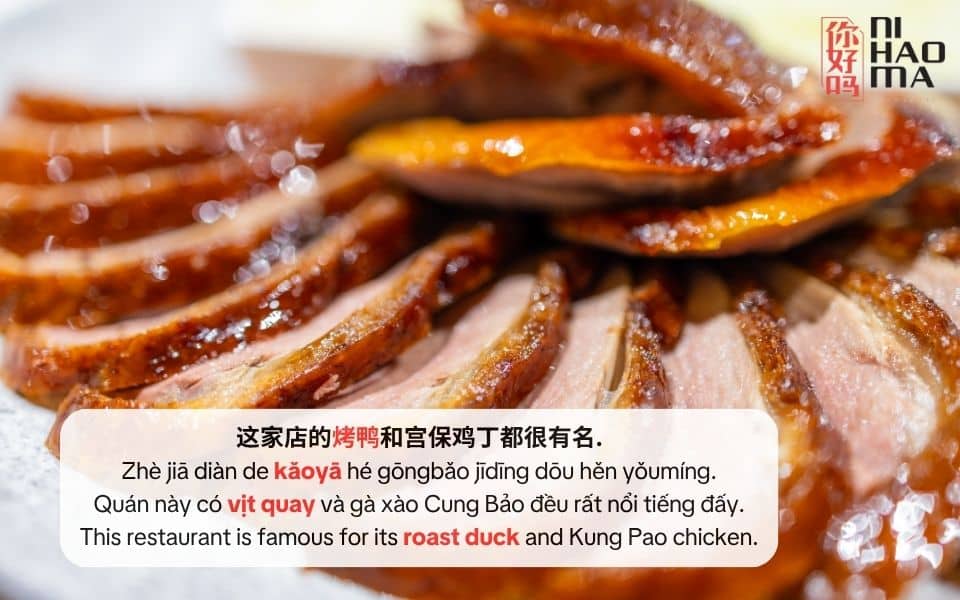
A: 今天想吃什么?这家店的烤鸭和宫保鸡丁都很有名。
(Jīntiān xiǎng chī shénme? Zhè jiā diàn de kǎoyā hé gōngbǎo jīdīng dōu hěn yǒumíng.)
What would you like to eat today? This restaurant is famous for its roast duck and Kung Pao chicken.
B: 我想吃烤鸭!对了,要不要再点一份鸡翅和鸭血粉丝汤?
(Wǒ xiǎng chī kǎoyā! Duìle, yào bú yào zài diǎn yí fèn jīchì hé yāxuě fěnsī tāng?)
I’d like to have roast duck! By the way, should we also order a portion of chicken wings and duck blood vermicelli soup?
A: 可以啊,不过点太多恐怕吃不完,先不要点炒鸭肉了。
(Kěyǐ a, búguò diǎn tài duō kǒngpà chī bù wán, xiān bú yào diǎn chǎo yāròu le.)
Sure, but we might not be able to finish everything if we order too much. Let’s skip the stir-fried duck for now.
B: 没问题,那主食我们就点鸡蛋炒饭吧!
(Méi wèntí, nà zhǔshí wǒmen jiù diǎn jīdàn chǎofàn ba!)
No problem. Then let’s order egg fried rice as our main dish!
A: 行,我再加两杯冰饮,现在就下订单。
(Xíng, wǒ zài jiā liǎng bēi bīngyǐn, xiànzài jiù xià dìngdān.)
Sounds good. I’ll add two iced drinks, and we can place the order now.
Dialogue 2
A: 听说你下周要调到总部担任部门经理了?
(Tīngshuō nǐ xià zhōu yào diào dào zǒngbù dānrèn bùmén jīnglǐ le?)
I heard that you’re being transferred to headquarters next week to become a department manager?
B: 是啊,这次机会很难得,我也准备了很久。
(Shì a, zhè cì jīhuì hěn nándé, wǒ yě zhǔnbèi le hěn jiǔ.)
Yes. It’s a great opportunity, and I’ve been preparing for it for a long time.
A: 恭喜你!祝你鹏程万里,在新的岗位上大展宏图。
(Gōngxǐ nǐ! Zhù nǐ péngchéng wànlǐ, zài xīn de gǎngwèi shàng dàzhǎnhóngtú.)
Congratulations! I wish you a bright and successful future and great achievements in your new position.
B: 谢谢!希望我的加入能给新团队带来更多鸿图伟业。
(Xièxie! Xīwàng wǒ de jiārù néng gěi xīn tuánduì dài lái gèng duō hóngtú wěiyè.)
Thank you! I hope joining the new team will help us achieve even greater things.
A: 没问题,你的能力就像独鹤立于群鸡,大家都很看好你!
(Méi wèntí, nǐ de nénglì jiù xiàng dú hè lì yú qún jī, dàjiā dōu hěn kànhǎo nǐ!)
Absolutely. Your abilities really stand out from the crowd, and everyone has high hopes for you!
Conclusion
Radical 196 in Chinese (鸟) is more than simply a component used to form Chinese characters. It also reflects the importance of birds in the history and culture of the Chinese language. Understanding its meaning and recognizing its role in Chinese characters can help learners remember vocabulary more easily, identify unfamiliar characters, and expand their vocabulary more efficiently.
However, radicals are only one part of the journey toward mastering Chinese. To develop natural speaking skills, understand grammar, and communicate confidently in everyday or professional situations, learners also need a structured and practical learning path.
Are you looking for an effective and easy-to-understand way to learn Chinese that fits your personal goals? Let Ni Hao Ma accompany you on your learning journey! Contact us today for a free level assessment and receive a personalized Chinese learning roadmap designed to help you build confidence and make steady progress.