
Have you ever studied Chinese characters but still found them difficult to remember or understand? Learning Chinese radicals can make a big difference. Radicals help learners recognize patterns, guess meanings, and memorize characters more effectively.
So, what is Radical 23 in Chinese? In this article, Ni Hao Ma will help you explore the meaning of Radical 23, how it is written, and some common vocabulary that contains this radical.
What Is Radical 23 in Chinese?
Radical 23 (匸 – xì) is the 23rd radical in the system of 214 Kangxi radicals, which were standardized in the famous dictionary Kangxi Dictionary. This radical often conveys meanings related to hiding, covering, concealing, or enclosing something.
Visually, Radical 23 looks like a frame that opens toward the right side. Its shape resembles an object used to cover or contain another object, which explains why many Chinese characters containing this radical are associated with ideas such as storing, hiding, containing, or enclosing.
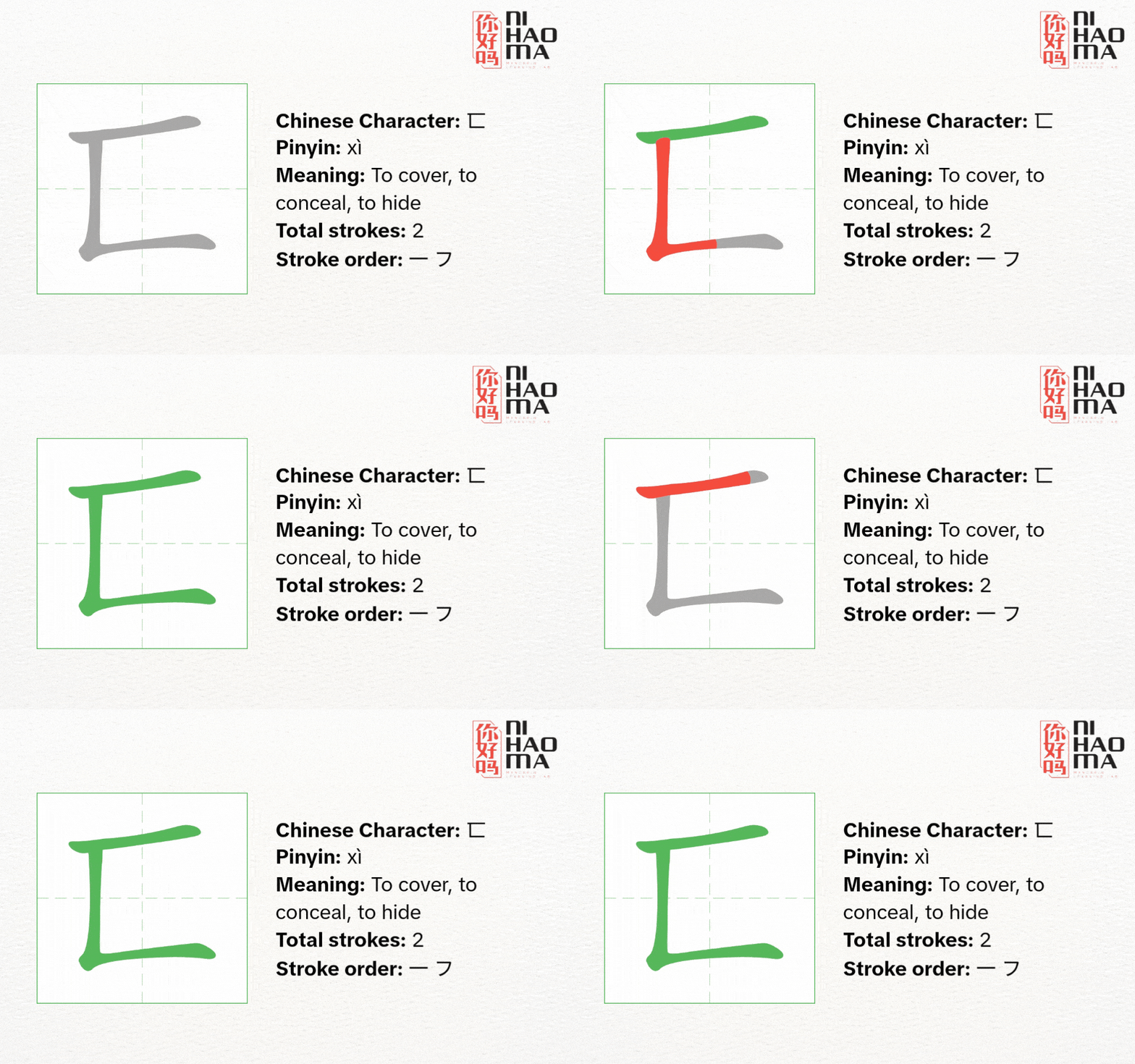
In the structure of Chinese characters, Radical 23 usually appears on the left side or forms a surrounding frame around another component. Although the number of characters containing this radical is relatively small compared with more common radicals, understanding Radical 23 offers valuable insight into the historical structure of Chinese characters.
- Chinese character: 匸
- Pinyin: xì
- Meaning: to cover, hide, or conceal
- Stroke count: 2 strokes (a top horizontal stroke and a bent vertical stroke)
- Core meaning: covering, concealing, or storing something out of sight
Difference Between Radical 23 and Radical 22
Distinguishing Radical 23 (匸) from Radical 22 (匚) can be challenging for many Chinese learners. In modern printed texts and simplified Chinese writing, these two radicals often look nearly identical.
Both radicals resemble a U-shaped frame opening to the right, but the key difference lies in the top horizontal stroke.
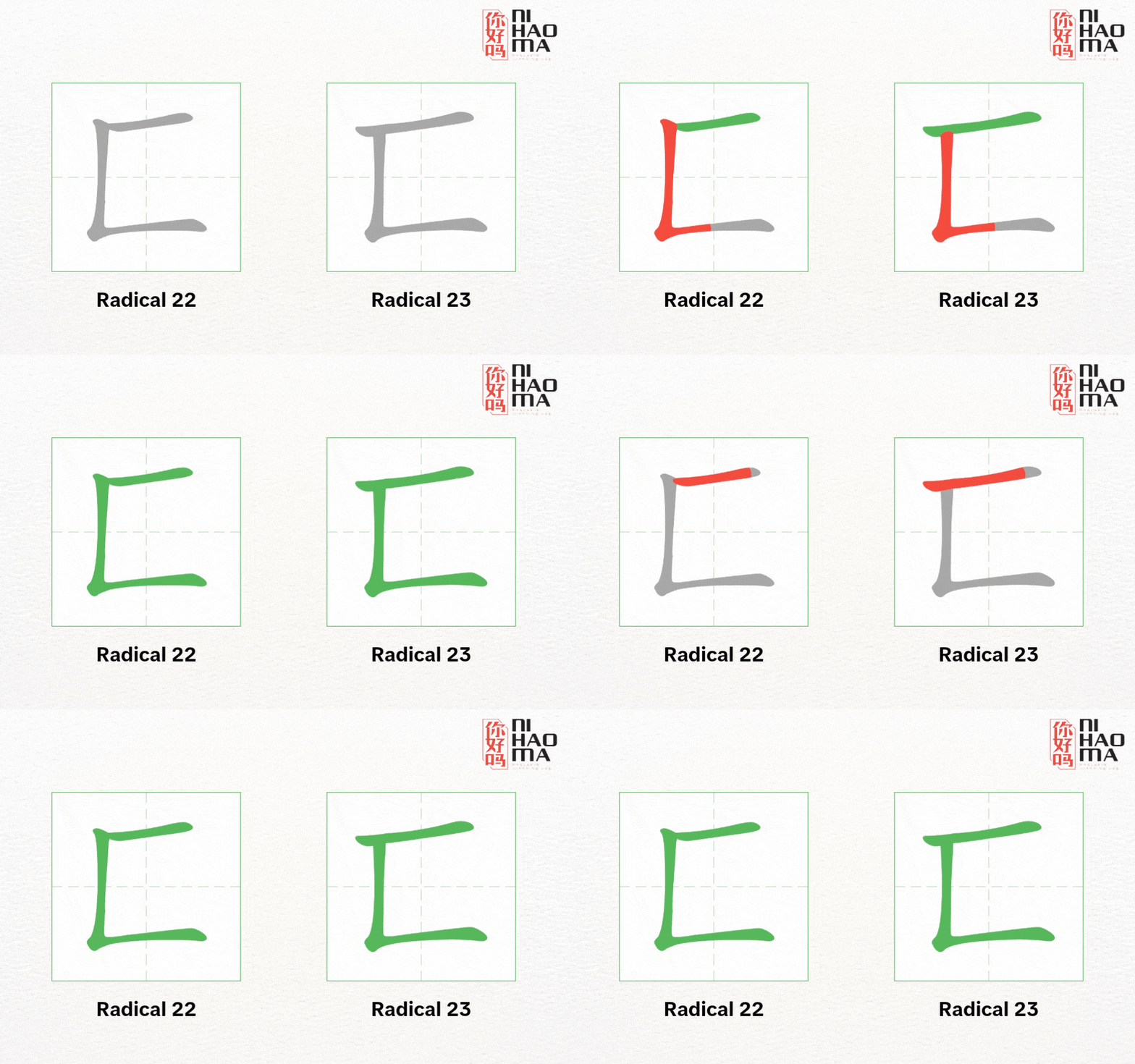
Radical 22 (匚 – fāng)
The top horizontal stroke forms a perfect right angle with the vertical stroke on the left and does not extend outward. Characters containing this radical often relate to box-like containers or square-shaped objects.
Radical 23 (匸 – xì)
The top horizontal stroke is slightly longer and may extend outward to the left compared with the vertical stroke. Historically, this shape represents the idea of wrapping, enclosing, or hiding something.
In classical Chinese writing, this small extension clearly distinguished Radical 23 from Radical 22. However, in modern simplified Chinese typography, the difference is often minimized, and many modern dictionaries group them together to make character lookup easier for learners.
Common Vocabulary Containing Radical 23
Learning vocabulary that contains radicals is an effective way to understand how Chinese characters are formed. It also helps learners remember words more naturally.
Below are some common Chinese words containing Radical 23, ranging from simple characters to frequently used compound words in everyday Chinese communication.
| Chinese | Pinyin | Meaning |
|---|---|---|
| 匹 | pǐ | classifier for horses, bolt of cloth |
| 区 | qū | area, region |
| 匿 | nì | hide, conceal |
| 匾 | biǎn | signboard |
| 马匹 | mǎpǐ | horses |
| 匹配 | pǐpèi | match, correspond |
| 匹敌 | pǐdí | rival, equal opponent |
| 布匹 | bùpǐ | cloth, fabric |
| 区分 | qūfēn | distinguish |
| 区别 | qūbié | difference |
| 地区 | dìqū | region |
| 社区 | shèqū | community |
| 市区 | shìqū | urban area |
| 郊区 | jiāoqū | suburb |
| 景区 | jǐngqū | scenic area |
| 小区 | xiǎoqū | residential complex |
| 扇区 | shànqū | sector |
| 震区 | zhènqū | earthquake zone |
| 匿名 | nìmíng | anonymous |
| 藏匿 | cángnì | hide secretly |
| 匿迹 | nìjì | disappear, vanish |
| 逃匿 | táonì | flee and hide |
| 隐匿 | yǐnnì | conceal |
| 横匾 | héngbiǎn | horizontal signboard |
| 名匾 | míngbiǎn | name plaque |
| 禁区 | jìnqū | restricted area |
| 盲区 | mángqū | blind spot |
| 误区 | wùqū | misconception |
| 特区 | tèqū | special zone |
| 灾区 | zāiqū | disaster area |
| 匹对 | pǐduì | match, pair |
| 区划 | qūhuà | regional division |
| 中区 | zhōngqū | central district |
Sample Dialogues Using Radical 23 Vocabulary
After learning the vocabulary that contains Radical 23 (匸), the best way to remember it is by practicing it in real communication. Instead of memorizing words individually, try learning them through natural conversations.
The following short dialogues demonstrate how Chinese characters containing Radical 23 can appear in everyday situations.
Dialogue 1
A: 这个房间里有什么东西?
(Zhège fángjiān lǐ yǒu shénme dōngxī?)
What is in this room?
B: 有一张桌子,还有一个匣子。
(Yǒu yì zhāng zhuōzi, hái yǒu yí gè xiázi.)
There is a table and a box.
A: 匣子里放的是什么?
(Xiázi lǐ fàng de shì shénme?)
What is inside the box?
B: 里面放着一些旧照片。
(Lǐmiàn fàngzhe yìxiē jiù zhàopiàn.)
There are some old photos inside.
A: 原来如此,难怪你一直保存着。
(Yuánlái rúcǐ, nánguài nǐ yìzhí bǎocún zhe.)
I see. No wonder you’ve kept it for so long.
Dialogue 2
A: 你的戒指很漂亮,是新买的吗?
(Nǐ de jièzhi hěn piàoliang, shì xīn mǎi de ma?)
Your ring is beautiful. Did you buy it recently?
B: 不是,是我妈妈给我的。
(Bú shì, shì wǒ māma gěi wǒ de.)
No, my mom gave it to me.
A: 你平时把它放在哪里?
(Nǐ píngshí bǎ tā fàng zài nǎlǐ?)
Where do you usually keep it?
B: 我把它放在一个小匣子里。
(Wǒ bǎ tā fàng zài yí gè xiǎo xiázi lǐ.)
I keep it in a small box.
A: 这样比较安全。
(Zhèyàng bǐjiào ānquán.)
That’s safer.
Dialogue 3
A: 你看到我的手表了吗?
(Nǐ kàndào wǒ de shǒubiǎo le ma?)
Have you seen my watch?
B: 没有,你是不是放在那个匣子里了?
(Méiyǒu, nǐ shìbúshì fàng zài nàgè xiázi lǐ le?)
No. Did you leave it in that box?
A: 我看看……真的在这里。
(Wǒ kànkan… zhēn de zài zhèlǐ.)
Let me check… It’s really here.
B: 以后记得收好。
(Yǐhòu jìde shōu hǎo.)
Remember to keep it safe next time.
A: 好的,谢谢你提醒我。
(Hǎo de, xièxie nǐ tíxǐng wǒ.)
Okay, thanks for reminding me.
Conclusion
This article by Ni Hao Ma let us know that Radical 23 (匸) is not one of the most frequently used radicals in modern Chinese. However, learning it still plays an important role in understanding the structure and logic behind Chinese characters.
Practicing vocabulary and conversations that contain Radical 23 is an effective way to apply radical knowledge in real communication. When you repeatedly encounter characters that share the same radical, you will gradually develop the ability to guess meanings and remember characters more naturally.
For long-term progress in Chinese, try combining radical study, vocabulary learning, and contextual practice. This approach will significantly improve your ability to read, write, and understand Chinese characters more efficiently.