Among the 214 Kangxi radicals, radical 25 in Chinese is a distinctive radical. Although its structure is simple, consisting of just two strokes, it opens a window into ancient Chinese spiritual culture, particularly the practices of divination, fortune-telling, and interpreting signs to understand the future. In this article, let’s explore what radical 25 in Chinese is, its meaning, and some commonly used vocabulary.
What Is Radical 25 in Chinese?
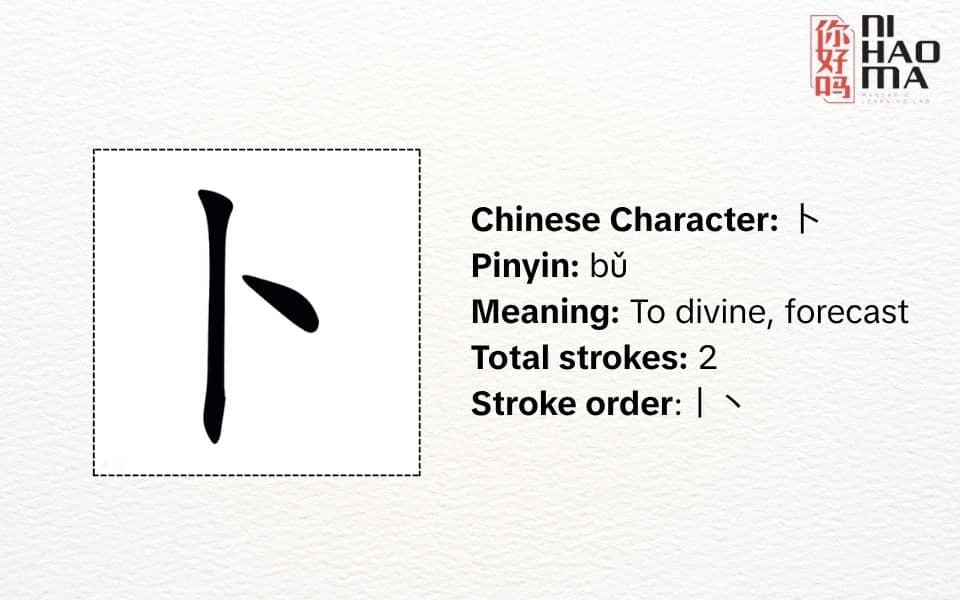
Radical 25 in Chinese (卜 – bǔ) is the 25th radical in the 214 Kangxi radicals. Its primary meaning is divination, fortune-telling, and predicting future events.
The Bǔ radical (卜) originates from the image of cracks that appeared on tortoise shells or animal bones during ancient divination rituals. In ancient Chinese culture, people would heat tortoise shells or animal bones to create cracks, then interpret their shapes and patterns to predict future events.
Based on this origin, the Bǔ radical carries several key meanings:
- Divination and fortune-telling: This is the original and most common meaning of the Bǔ radical. The character 卜 is used to refer to the practice of reading fortunes and interpreting signs to uncover the unknown or predict the future.
- Prediction: The radical is associated with the idea of identifying signs and making judgments about events that may happen in the future.
The Bǔ radical has a simple structure consisting of two basic strokes:
- Stroke 1: Vertical stroke (丨), written from top to bottom.
- Stroke 2: Dot stroke (丶), written diagonally downward to the right.
Common Chinese Vocabulary Containing Radical 25
Once you understand the basic theory, applying what you have learned to vocabulary practice can help you remember Chinese characters more effectively. In Chinese, radical 25 does not only appear in words related to its original meaning of divination and prediction. It also appears in many vocabulary items used in modern everyday life.
Below is a detailed list of common Chinese vocabulary containing radical 25, helping you expand your vocabulary and recognize Chinese characters more easily.
| Chinese Character | Pinyin | Meaning |
|---|---|---|
| 占卜 | zhānbǔ | Divination; fortune-telling |
| 占据 | zhànjù | To occupy; to take possession of |
| 占有 | zhànyǒu | To possess; to own |
| 占领 | zhànlǐng | To occupy; to capture |
| 占用 | zhànyòng | To use; to occupy |
| 占地 | zhàndì | To occupy land or space |
| 补充 | bǔchōng | To supplement; to add |
| 补课 | bǔkè | To take a make-up class |
| 补习 | bǔxí | To receive extra lessons; to attend tutoring |
| 补助 | bǔzhù | Financial assistance; subsidy |
| 补贴 | bǔtiē | Allowance; subsidy |
| 补偿 | bǔcháng | Compensation; to compensate |
| 补救 | bǔjiù | To remedy; to make up for |
| 补考 | bǔkǎo | Make-up examination; retake an exam |
| 补办 | bǔbàn | To reapply for; to complete missing procedures |
| 补发 | bǔfā | To issue or distribute additionally |
| 朴素 | pǔsù | Simple; plain |
| 朴实 | pǔshí | Simple and honest; down-to-earth |
| 朴厚 | pǔhòu | Sincere; honest and kind |
| 朴直 | pǔzhí | Upright; straightforward |
| 处置 | chǔzhì | To handle; to dispose of |
| 处理 | chǔlǐ | To handle; to deal with |
| 处罚 | chǔfá | To punish; punishment |
| 处分 | chǔfèn | Disciplinary action; to discipline |
| 处境 | chǔjìng | Situation; circumstances |
| 处方 | chǔfāng | Prescription |
| 处事 | chǔshì | To handle affairs; to deal with matters |
| 外套 | wàitào | Coat; jacket |
| 外国 | wàiguó | Foreign country |
| 外卖 | wàimài | Takeout; food delivery |
| 外语 | wàiyǔ | Foreign language |
| 外公 | wàigōng | Maternal grandfather |
| 外婆 | wàipó | Maternal grandmother |
| 点菜 | diǎncài | To order food |
| 点心 | diǎnxin | Snack; pastry |
| 点火 | diǎnhuǒ | To light a fire; to ignite |
| 卧室 | wòshì | Bedroom |
| 卧底 | wòdǐ | Undercover agent; informant |
Chinese Conversation Examples Using Vocabulary Containing Radical 25
To remember radical 25 and related vocabulary more effectively, learners should combine Chinese character recognition with practical communication exercises. The following conversations cover familiar everyday situations, helping you review vocabulary containing radical 25, become familiar with natural expressions, and improve your Chinese communication skills.
Conversation 1
A: 今天中午我们吃什么?
(Jīntiān zhōngwǔ wǒmen chī shénme?)
What should we have for lunch today?
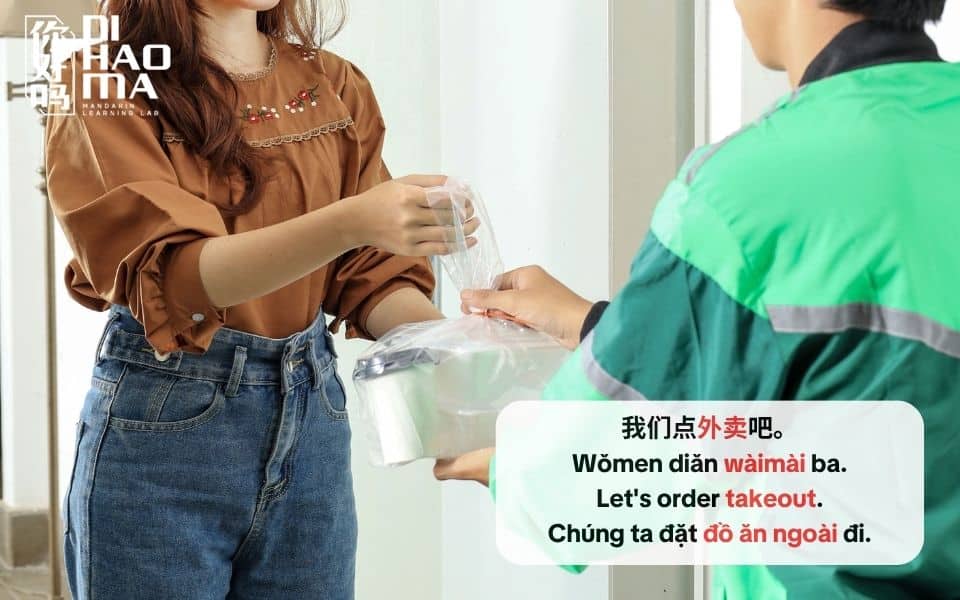
B: 我们点外卖吧,不想出去。
(Wǒmen diǎn wàimài ba, bù xiǎng chūqù.)
Let’s order takeout. I don’t feel like going out.
A: 好啊,你想吃什么?
(Hǎo a, nǐ xiǎng chī shénme?)
Sounds good! What would you like to eat?
B: 我想吃中国菜,你帮我点菜吧。
(Wǒ xiǎng chī Zhōngguó cài, nǐ bāng wǒ diǎn cài ba.)
I’d like some Chinese food. Could you order for me?
A: 好的,外面下雨了,点外卖比较方便。
(Hǎo de, wàimiàn xiàyǔ le, diǎn wàimài bǐjiào fāngbiàn.)
Sure. It’s raining outside, so ordering takeout is more convenient.
B: 太好了,到了以后我们一起吃。
(Tài hǎo le, dào le yǐhòu wǒmen yìqǐ chī.)
Great! Let’s eat together when the food arrives.
Conversation 2
A: 这个文件你处理好了吗?
(Zhège wénjiàn nǐ chǔlǐ hǎo le ma?)
Have you finished handling this document?
B: 还没有,有几个重要的信息需要补充。
(Hái méiyǒu, yǒu jǐ ge zhòngyào de xìnxī xūyào bǔchōng.)
Not yet. There is some important information that needs to be added.
A: 那你今天下班前可以完成吗?
(Nà nǐ jīntiān xiàbān qián kěyǐ wánchéng ma?)
Can you finish it before leaving work today?
B: 应该可以,不过需要占用一点休息时间。
(Yīnggāi kěyǐ, búguò xūyào zhànyòng yìdiǎn xiūxi shíjiān.)
I think so, but I’ll need to use some of my break time.
A: 没关系,先把最重要的问题处理好。
(Méi guānxi, xiān bǎ zuì zhòngyào de wèntí chǔlǐ hǎo.)
That’s okay. Just deal with the most important issues first.
B: 好的,我完成以后马上发给你。
(Hǎo de, wǒ wánchéng yǐhòu mǎshàng fā gěi nǐ.)
Sure. I’ll send it to you as soon as I finish.
Conversation 3
A: 这次旅行因为天气原因取消了,旅行社怎么说?
(Zhè cì lǚxíng yīnwèi tiānqì yuányīn qǔxiāo le, lǚxíngshè zěnme shuō?)
This trip was canceled due to the weather. What did the travel agency say?
B: 他们说会给我们一定的补偿。
(Tāmen shuō huì gěi wǒmen yídìng de bǔcháng.)
They said they would offer us some compensation.
A: 是退还全部费用,还是提供其他服务?
(Shì tuìhuán quánbù fèiyòng, háishì tígōng qítā fúwù?)
Will they refund the full amount or provide other services?
B: 可以选择退款,也可以免费参加下次旅行。
(Kěyǐ xuǎnzé tuìkuǎn, yě kěyǐ miǎnfèi cānjiā xià cì lǚxíng.)
We can either request a refund or join the next trip for free.
A: 那我觉得退款比较方便。
(Nà wǒ juéde tuìkuǎn bǐjiào fāngbiàn.)
Then I think getting a refund would be more convenient.
B: 好的,我帮你联系旅行社确认补偿方式。
(Hǎo de, wǒ bāng nǐ liánxì lǚxíngshè quèrèn bǔcháng fāngshì.)
Okay, I’ll contact the travel agency to confirm the compensation method.
Frequently Asked Questions About Radical 25 in Chinese
Radical 25 in Chinese is 卜 (bǔ), the 25th radical in the 214 Kangxi radicals. It consists of two strokes and is associated with divination, fortune-telling, and predicting the future.
The Bǔ radical 卜 has two strokes: a vertical stroke and a dot stroke. It is one of the simplest radicals in the Chinese writing system.
The Bǔ component can appear in different positions within Chinese characters, including:
– At the top: For example, 占 (zhān – to divine or occupy) and 卡 (kǎ – card; to get stuck).
– On the right: For example, 赴 (fù – to go to) and 朴 (pǔ – simple; plain).
– At the bottom: For example, 卦 (guà – a divination hexagram).
Yes! The Bǔ radical 卜 consists of only two strokes, making it relatively easy to recognize and remember. Beginners can start by identifying its shape, practicing the correct stroke order, and learning simple Chinese characters containing this component to become more familiar with Chinese character structures.
Here are some commonly used Chinese idioms and expressions containing characters associated with the Bǔ component:
– 卜昼卜夜 (bǔ zhòu bǔ yè): To spend both day and night indulging in entertainment or pleasure.
– 吉凶未卜 (jíxiōng wèibǔ): The outcome is still uncertain; whether something will bring good or bad fortune remains unknown.
– 前途未卜 (qiántú wèibǔ): An uncertain future; an unknown prospect.
Conclusion
Radical 25 in Chinese (卜) is a simple two-stroke radical with a fascinating cultural background and meaning. Learning about this radical helps you better understand the origins, meanings, and structures of Chinese characters while making vocabulary acquisition more logical and effective.
Through the vocabulary list and practical conversation examples, we hope you have gained useful knowledge that you can apply to your everyday Chinese learning. Take time to practice writing the characters, review new vocabulary, and create your own sentences to help you remember what you have learned.
Don’t forget to follow Ni Hao Ma for more lessons on Chinese radicals, vocabulary, and grammar. Let Ni Hao Ma support you in making your Chinese learning journey easier, more enjoyable, and more rewarding!