When you first start learning Chinese characters, getting familiar with radicals is an essential step. Radicals help learners recognize characters more easily, guess their meanings, and practice correct stroke order. Among the most commonly used radicals, radical 38 (女) appears very frequently in modern Chinese. Understanding radical 38 not only gives you deeper insight into how Chinese characters are formed, but also helps you build vocabulary in a more natural and efficient way.
What is radical 38 in Chinese?
Radical 38 (女 – nǚ) is the 38th radical in the system of 214 Chinese radicals. It generally represents concepts related to women, females, or feminine characteristics and actions.
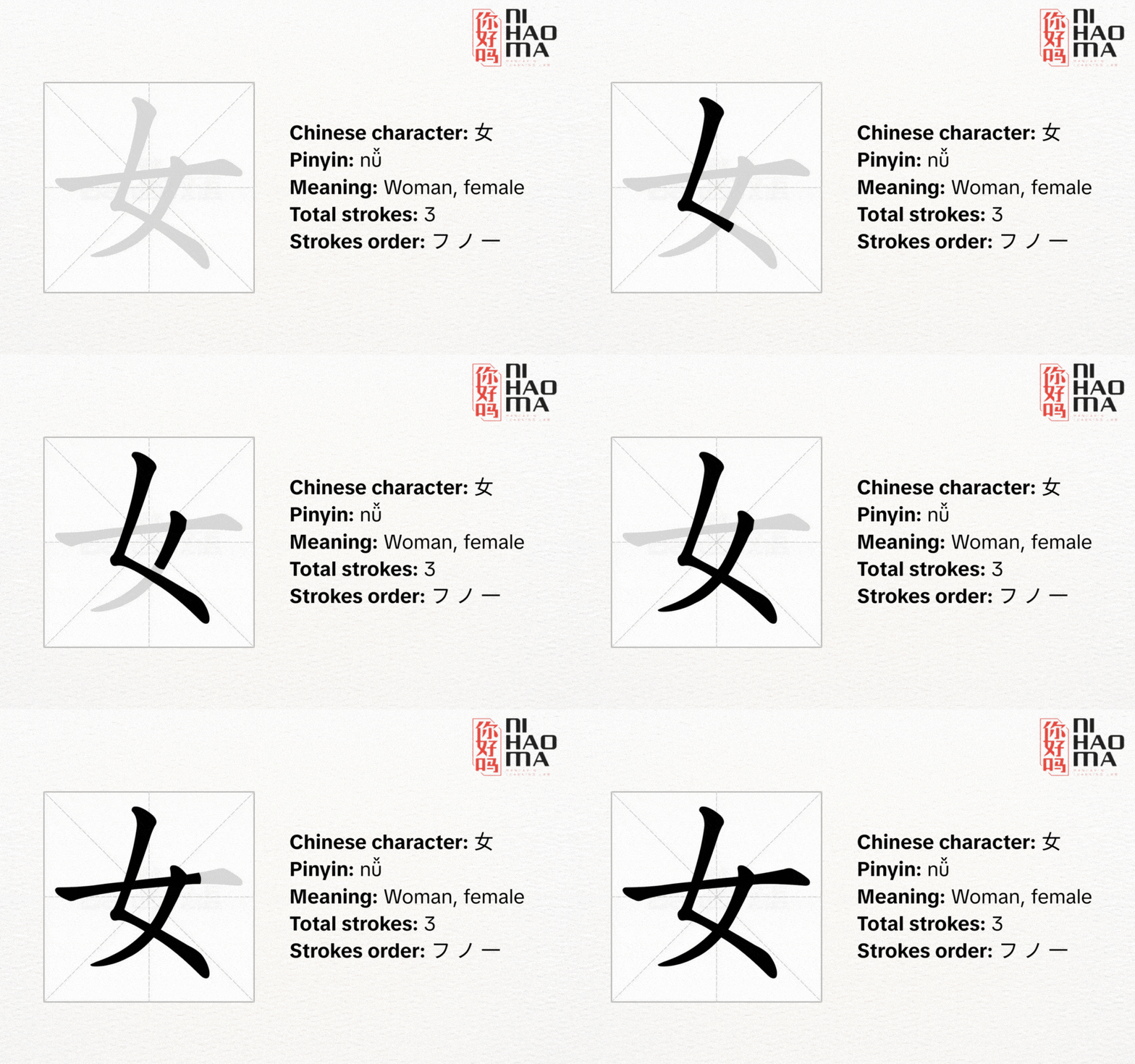
Radical 38 is one of the highest-frequency radicals in Chinese. According to statistics from the Kangxi Dictionary, there are 1,022 Chinese characters classified under this radical, accounting for a notable portion of more than 47,000 recorded characters. In modern usage, although fewer characters are used regularly, radical 38 still appears in approximately 150–200 common vocabulary items, making it highly relevant for everyday learning.
Chinese character: 女
Pinyin: nǚ
Meaning: Woman, female, girl
Number of strokes: 3
Stroke order: フ ノ 一
Position and role of radical 38 in Chinese characters
In Chinese characters, radical 38 usually appears on the left side or at the bottom of a character. When it is present, it often hints at meanings related to people, family roles, relationships, or qualities associated with softness, gentleness, and femininity.
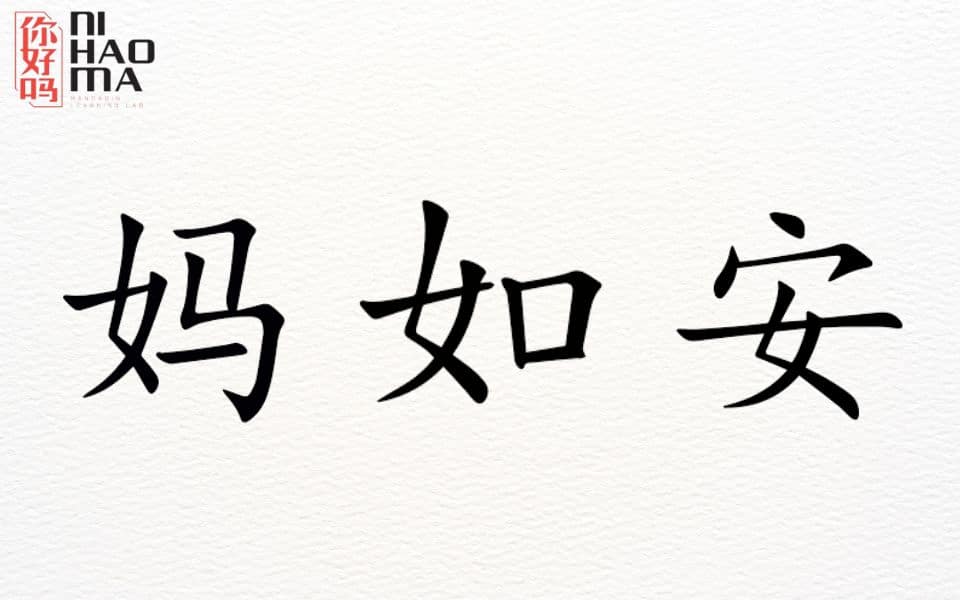
For example, in the character 好 /hǎo/ meaning “good,” radical 38 appears on the left and combines with 子 (child). Traditionally, this reflects the idea that “good” comes from a mother caring for her child. In another example, 妈 /mā/ meaning “mother,” radical 38 immediately signals the concept of a woman in a family role. By recognizing the position of radical 38, learners can quickly infer the general meaning of a character—even when encountering it for the first time.
Vocabulary with radical 38 in Chinese
Radical 38 appears very frequently in Chinese vocabulary, especially in words related to people, family relationships, emotions, and personal qualities. Once you become familiar with common words that include this radical, you will not only expand your vocabulary but also improve your ability to recognize and guess the meanings of new characters in real-life contexts.
The table below compiled by Ni Hao Ma includes 50 commonly used Chinese words containing radical 38, which often appear in daily communication, written texts, and beginner to intermediate Chinese textbooks.
| Chinese | Pinyin | Meaning |
|---|---|---|
| 妈妈 | māma | Mother |
| 姐姐 | jiějie | Older sister |
| 妹妹 | mèimei | Younger sister |
| 奶奶 | nǎinai | Paternal grandmother |
| 姑娘 | gūniang | Girl, young woman |
| 如果 | rúguǒ | If |
| 需要 | xūyào | To need |
| 开始 | kāishǐ | To begin |
| 结婚 | jiéhūn | To get married |
| 安全 | ānquán | Safe |
| 重要 | zhòngyào | Important |
| 要求 | yāoqiú | To request |
| 主要 | zhǔyào | Main, primary |
| 老婆 | lǎopó | Wife (informal) |
| 安排 | ānpái | To arrange |
| 安静 | ānjìng | Quiet |
| 姓名 | xìngmíng | Full name |
| 婚姻 | hūnyīn | Marriage |
| 如意 | rúyì | As wished |
| 美好 | měihǎo | Beautiful, wonderful |
| 巧妙 | qiǎomiào | Clever |
| 姿势 | zīshì | Posture |
| 嫉妒 | jídù | Jealous |
| 妨碍 | fáng’ài | To hinder |
| 委屈 | wěiqu | Wronged, upset |
| 娱乐 | yúlè | Entertainment |
| 化妆 | huàzhuāng | To put on makeup |
| 媒体 | méitǐ | Media |
| 奴隶 | núlì | Slave |
| 威信 | wēixìn | Prestige |
| 妥协 | tuǒxié | To compromise |
| 嫌弃 | xiánqì | To dislike |
| 娇气 | jiāoqì | Delicate, spoiled |
| 嫩绿 | nènlǜ | Light green |
| 撒娇 | sājiāo | To act cute |
| 婚礼 | hūnlǐ | Wedding |
| 姑妈 | gū | Paternal aunt |
| 姨妈 | yí | Maternal aunt |
| 妥当 | tuǒdang | Appropriate |
| 妇女 | fùnǚ | Women |
| 如何 | rúhé | How |
Sample dialogues using vocabulary with radical 38 in Chinese
Learning Chinese vocabulary through real-life dialogues helps learners remember words faster and use them in the correct context, instead of memorizing isolated meanings. Vocabulary that contains radical 38 (女) appears frequently in familiar topics such as family, relationships, emotions, and daily life. Practicing these words in dialogues helps learners better understand subtle meanings and develop more natural speaking reflexes.
Dialogue 1
A: 这是你妈妈吗?
(Zhè shì nǐ māma ma?)
Is this your mother?
B: 是的,我妈妈是老师。
(Shì de, wǒ māma shì lǎoshī.)
Yes, my mother is a teacher.
A: 你还有姐姐或者妹妹吗?
(Nǐ hái yǒu jiějie huòzhě mèimei ma?)
Do you have an older or younger sister?
B: 我有一个妹妹。
(Wǒ yǒu yí gè mèimei.)
I have a younger sister.
A: 她今年多大?
(Tā jīnnián duō dà?)
How old is she this year?

Dialogue 2
A: 你结婚了吗?
(Nǐ jiéhūn le ma?)
Are you married?
B: 结婚了,我妻子很好。
(Jiéhūn le, wǒ qīzi hěn hǎo.)
Yes, I am. My wife is very kind.
A: 她是做什么工作的?
(Tā shì zuò shénme gōngzuò de?)
What does she do for a living?
B: 她是医生。
(Tā shì yīshēng.)
She is a doctor.
A: 你们的婚姻一定很幸福。
(Nǐmen de hūnyīn yídìng hěn xìngfú.)
Your marriage must be very happy.
Dialogue 3
A: 这个女孩是谁?
(Zhège nǚhái shì shéi?)
Who is this girl?
B: 她是我姐姐的朋友。
(Tā shì wǒ jiějie de péngyǒu.)
She is my older sister’s friend.
A: 她看起来很好看。
(Tā kàn qǐlái hěn hǎokàn.)
She looks very pretty.
B: 是啊,人也很好。
(Shì a, rén yě hěn hǎo.)
Yes, she also has a great personality.
A: 你们关系不错吧?
(Nǐmen guānxì búcuò ba?)
You must get along well, right?
Conclusion
Radical 38 in Chinese is one of the most fundamental radicals and plays a key role in learning Chinese characters. By understanding its meaning, mastering correct stroke order, and practicing vocabulary and dialogues that include radical 38, learners can remember characters more quickly, accurately guess the meanings of new words, and gain greater confidence in daily communication.
If you are just starting to learn Chinese, try applying the radical-based learning method today to experience the difference. Don’t forget to follow Ni Hao Ma for more articles on Chinese radicals, vocabulary, and dialogues to steadily improve your Chinese skills and shorten your journey toward mastering Chinese characters.