
In the system of 214 Chinese radicals, radical 44 (尸) is a fundamental component that appears frequently in characters related to the human body and human form. Understanding radical 44 not only helps you learn Chinese characters more effectively, but also allows you to recognize meaning clues in many words that contain this radical. In this article, we’ll explore what radical 44 is, its meaning, how to write it correctly, and some common Chinese characters that include it.
What Is Radical 44?
Radical 44 (尸) is the 44th radical in the traditional system of 214 Chinese radicals. It is composed of three basic strokes and originally carried the meaning of “corpse” or “human body” in ancient Chinese writing. When used as a radical in modern characters, 尸 often conveys meanings related to position, body parts, posture, or the human form.
Although the original character 尸 literally means “corpse,” its meaning becomes much broader when it appears as a component in compound characters. In most cases, it does not imply death. Instead, it serves as a visual or semantic hint, suggesting shape, structure, or location related to the human body.
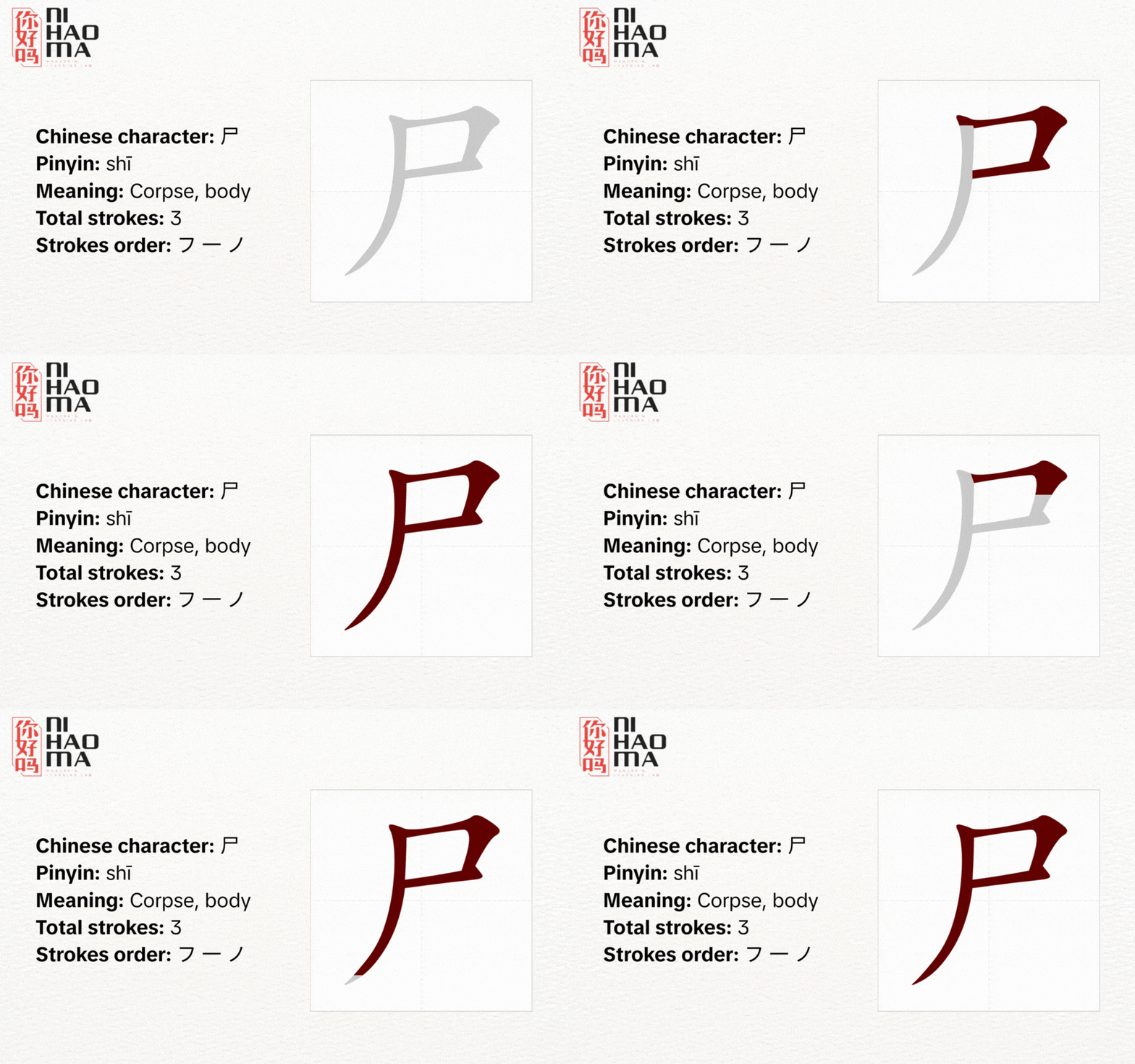
Radical 44 appears in many commonly used characters, such as:
- 尾 (wěi) – tail
- 居 (jū) – to live, reside
- 屈 (qū) – to bend
- 屋 (wū) – house
These characters reflect the original pictographic idea of radical 44 combined with other components to form new meanings. The radical often contributes a sense of posture, enclosure, or physical position.
- Chinese character: 尸
- Pinyin: shī
- Meaning: corpse, body
- Total strokes: 3
- Strokes: フ 一 ノ
How to Write Radical 44 Correctly
Radical 44 consists of three strokes, written in the following order:
| Stroke order | Stroke name | Description |
| 1 | Bend (フ) | Viết một nét ngang ngắn từ trái sang phải, sau đó gập thẳng xuống dưới (như hình chữ L ngược và không có móc). |
| 2 | Horizontal (一) | Viết một nét ngang từ trái sang phải, kết thúc ở điểm cuối của nét gập đầu tiên. |
| 3 | Left-falling (ノ) | Viết một nét phẩy từ trên xuống dưới, đi qua phần đầu nét thứ 1 và nét thứ 2. |
Position of Radical 44 in Chinese Characters
Radical 44 (尸) most commonly appears on the left side of Chinese characters and usually functions as the main semantic radical. In this position, radical 44 often suggests meanings related to the human body, posture, or physical form, as well as space or location where the body exists.
In Chinese characters, 尸 generally retains its original shape and does not undergo significant visual changes, unlike some other radicals that may transform depending on position.
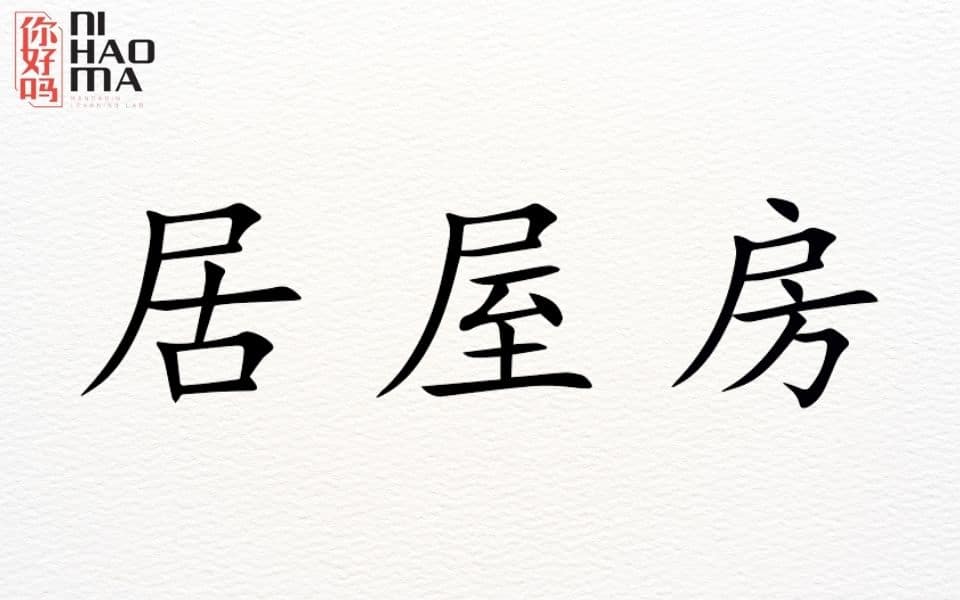
For example, in the character 居 (jū – to live, reside), radical 44 appears on the left and combines with 古, creating the idea of “staying in one place.” Similarly, the character 屋 (wū – house) contains radical 44 on the left, with 至 (zhì) below it, forming the image of a sheltered space—hence the meaning “home” or “house.”
50 Common Vocabulary Words Containing Radical 44
Although radical 44 is not the most frequent radical, it appears in many commonly used words and is very helpful for learning Chinese characters in a systematic and logical way. Radical 44 is involved in the formation of hundreds of Chinese characters, many of which are familiar at the beginner to intermediate level and remain widely used in modern daily life.
Below are 50 common Chinese vocabulary items that contain radical 44:
| No. | Vocabulary | Pinyin | Meaning |
|---|---|---|---|
| 1 | 尸体 | shītǐ | corpse, body |
| 2 | 尸骨 | shīgǔ | remains, bones |
| 3 | 尸检 | shījiǎn | autopsy |
| 4 | 居住 | jūzhù | to reside, live |
| 5 | 居民 | jūmín | resident |
| 6 | 居然 | jūrán | unexpectedly |
| 7 | 屋子 | wūzi | house |
| 8 | 屋顶 | wūdǐng | roof |
| 9 | 屋内 | wūnèi | inside the house |
| 10 | 局面 | júmiàn | situation |
| 11 | 局长 | júzhǎng | bureau director |
| 12 | 局部 | júbù | part, local |
| 13 | 层次 | céngcì | level, hierarchy |
| 14 | 楼层 | lóucéng | floor (of a building) |
| 15 | 层面 | céngmiàn | aspect |
| 16 | 届时 | jièshí | at that time |
| 17 | 本届 | běnjiè | current term/session |
| 18 | 尾巴 | wěiba | tail |
| 19 | 结局 | jiéjú | ending, outcome |
| 20 | 尾声 | wěishēng | finale |
| 21 | 尿液 | niàoyè | urine |
| 22 | 局面 | júmiàn | state of affairs |
| 23 | 履历 | lǚlì | résumé, background |
| 24 | 屁股 | pìgu | buttocks |
| 25 | 放屁 | fàngpì | to pass gas |
| 26 | 屏幕 | píngmù | screen |
| 27 | 屏障 | píngzhàng | barrier |
| 28 | 展开 | zhǎnkāi | to unfold, launch |
| 29 | 展示 | zhǎnshì | to display |
| 30 | 展览 | zhǎnlǎn | exhibition |
| 31 | 屠杀 | túshā | massacre |
| 32 | 屠夫 | túfū | butcher |
| 33 | 履行 | lǚxíng | to carry out |
| 34 | 履历 | lǚlì | work history |
| 35 | 属于 | shǔyú | to belong to |
| 36 | 直属 | zhíshǔ | directly under |
| 37 | 家属 | jiāshǔ | family member |
| 38 | 屡次 | lǚcì | repeatedly |
| 39 | 屡屡 | lǚlǚ | again and again |
| 40 | 屈服 | qūfú | to submit |
| 41 | 委屈 | wěiqu | feel wronged |
| 42 | 屈辱 | qūrǔ | humiliation |
| 43 | 尽力 | jìnlì | do one’s best |
| 44 | 发展 | fāzhǎn | development |
| 45 | 尽量 | jǐnliàng | as much as possible |
| 46 | 尼龙 | nílóng | nylon |
| 47 | 尼姑 | nígū | Buddhist nun |
| 48 | 房间 | fángjiān | room |
| 49 | 房屋 | fángwū | house, building |
| 50 | 屠杀 | túshā | slaughter |
Sample Dialogues Using Vocabulary Containing Radical 44
To effectively remember and apply vocabulary that contains radical 44 (尸), learners should not stop at memorizing individual characters or isolated meanings. Instead, these words need to be placed in real communication contexts.
The following Chinese dialogue examples are based on familiar situations in daily life and the workplace. They help you understand how the words are used naturally, improve speaking reflexes, and retain vocabulary more effectively.
Dialogue 1
A: 你现在是一个人居住吗,还是和家人一起?
Nǐ xiànzài shì yí gè rén jūzhù ma, háishì hé jiārén yìqǐ?
→ Are you living alone now, or with your family?
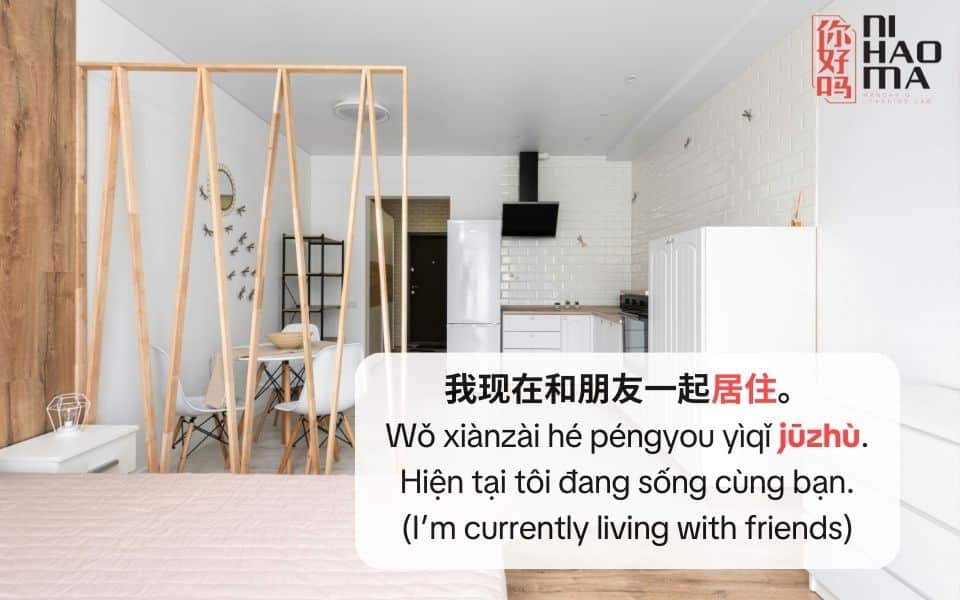
B: 我现在和朋友一起居住,在市中心租了一间小屋。
Wǒ xiànzài hé péngyou yìqǐ jūzhù, zài shì zhōngxīn zū le yì jiān xiǎo wū.
→ I’m currently living with friends. We rented a small house in the city center.
A: 那里的生活环境怎么样?
Nàlǐ de shēnghuó huánjìng zěnmeyàng?
→ How is the living environment there?
B: 环境还不错,周围很安静,屋里采光也很好。
Huánjìng hái búcuò, zhōuwéi hěn ānjìng, wū lǐ cǎiguāng yě hěn hǎo.
→ It’s pretty good. The surroundings are quiet, and the house has great natural light.
A: 听起来挺舒服的,有机会我想去看看。
Tīng qǐlái tǐng shūfu de, yǒu jīhuì wǒ xiǎng qù kànkan.
→ That sounds very comfortable. I’d like to visit sometime.
Dialogue 2
A: 最近公司的项目有点复杂,现在是什么局面?
Zuìjìn gōngsī de xiàngmù yǒudiǎn fùzá, xiànzài shì shénme júmiàn?
→ The company’s project has been a bit complicated lately. What’s the current situation?
B: 目前的局势还算稳定,不过压力不小。
Mùqián de júshì hái suàn wěndìng, búguò yālì bú xiǎo.
→ It’s relatively stable for now, but the pressure is quite high.
A: 那这个项目属于哪个部门负责?
Nà zhège xiàngmù shǔyú nǎge bùmén fùzé?
→ Which department is responsible for this project?
B: 主要属于市场部,我们只负责配合。
Zhǔyào shǔyú shìchǎng bùmén, wǒmen zhǐ fùzé pèihé.
→ It mainly belongs to the marketing department. We’re just supporting them.
A: 分工清楚的话,工作会顺利很多。
Fēngōng qīngchu de huà, gōngzuò huì shùnlì hěn duō.
→ Clear division of work makes everything go much more smoothly.

Dialogue 3
A: 公司明年的发展计划定下来了吗?
Gōngsī míngnián de fāzhǎn jìhuà dìng xiàlái le ma?
→ Has the company’s development plan for next year been finalized?
B: 基本定了,重点是业务的扩展。
Jīběn dìng le, zhòngdiǎn shì yèwù de kuòzhǎn.
→ It’s mostly finalized. The focus will be on business expansion.
A: 会同时展开多个新项目吗?
Huì tóngshí zhǎnkāi duō gè xīn xiàngmù ma?
→ Will multiple new projects be launched at the same time?
B: 会的,但会分阶段进行,避免压力太大。
Huì de, dàn huì fēn jiēduàn jìnxíng, bìmiǎn yālì tài dà.
→ Yes, but they’ll be carried out in phases to avoid excessive pressure.
A: 这样安排比较合理。
Zhèyàng ānpái bǐjiào hélǐ.
→ That arrangement sounds reasonable.
Conclusion
This article has provided a comprehensive overview of radical 44 in Chinese (尸), including its meaning, position in Chinese characters, common vocabulary, and practical dialogue examples. Mastering radicals like radical 44 can make learning Chinese faster, more structured, and more intuitive.
If you’re looking for systematic guidance, focused learning paths, and practical application, feel free to contact Ni Hao Ma for consultation on Chinese courses that match your current level.