
When learning Chinese, mastering radicals is one of the most effective ways to understand and remember characters. Among them, radical 45 in Chinese is a unique and lesser-known component that appears in a number of characters.
So, what exactly is radical 45 in Chinese, how do you write it correctly, and how is it used in everyday vocabulary? This guide will walk you through its meaning, stroke order, and common examples to help you recognize and use Chinese characters more effectively.
What Is Radical 45 in Chinese?
Radical 45 in Chinese (屮 – chè) is the 45th radical in the traditional Kangxi radical system, which consists of 214 components. Its shape represents a young sprout emerging from the ground, symbolizing growth and the beginning of life.
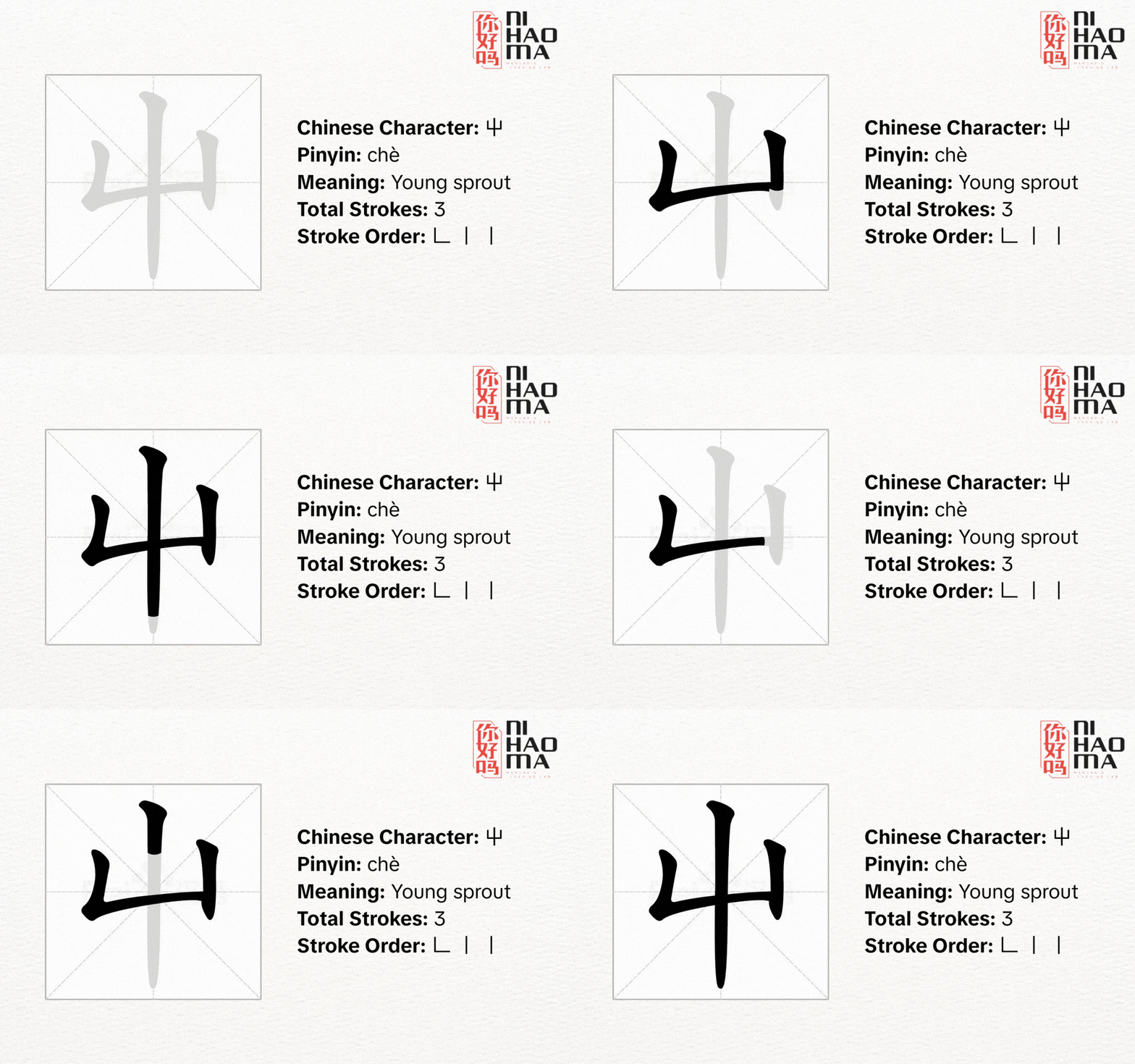
In terms of meaning, this radical visually mimics a plant just starting to grow, with a central vertical stroke and two supporting strokes on the sides—similar to a sprout with small leaves. This imagery reflects natural development, vitality, and upward movement from the earth.
In modern Chinese, radical 45 rarely appears as an independent character in daily communication. Instead, it mainly functions as a structural component within more complex characters. When it does appear, it is often positioned at the top or left side, contributing to meanings related to nature or growth.
How to Write Radical 45 in Chinese
Radical 45 (屮) consists of 3 strokes written in the following order:
| Stroke Order | Stroke Name | Description |
|---|---|---|
| 1 | Horizontal turning stroke (𠃊) | Start from top to bottom, then turn slightly to the right |
| 2 | Short vertical stroke (丨) | Write a short downward line on the left side |
| 3 | Long vertical stroke (丨) | Finish with a longer vertical line in the center, extending downward |
Difference Between Radical 45 (屮) and Radical 46 (山)
Although both radical 45 (屮) and radical 46 (山) have three strokes, they differ significantly in both form and meaning.
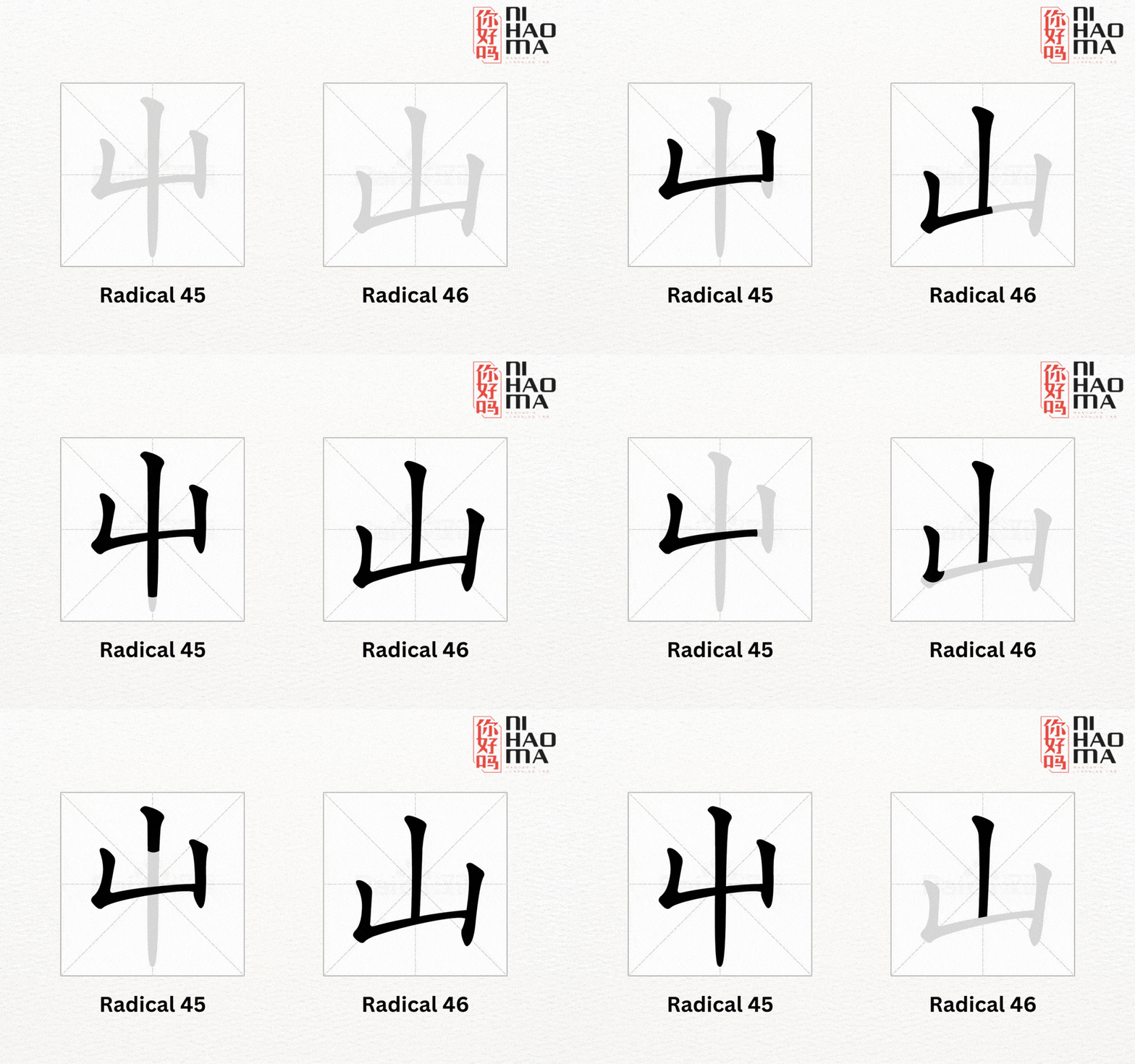
Radical 45 represents a sprouting plant, emphasizing growth and emergence. In contrast, the mountain radical (山) depicts peaks rising from the earth, symbolizing natural terrain.
Visually, radical 45 has a longer central vertical stroke and resembles a sprout. Meanwhile, radical 46 features a structured shape with a middle peak that does not intersect the base stroke in the same way. Understanding this distinction helps avoid confusion when learning Chinese characters.
Vocabulary with Radical 45 in Chinese
In modern usage, radical 45 in Chinese is relatively rare. Although it is part of the Kangxi system, the number of commonly used characters containing this radical is limited.
One of its most important roles is as the historical foundation of the grass radical 140 (艹), which is widely used in characters related to plants. Structurally, combining two 屮 forms creates 艸, which later evolved into the simplified 艹 seen in many everyday words.
Additionally, radical 45 appears in some very common characters that learners often misinterpret. A typical example is 出 (chū – to go out): Many learners assume this is two 山 radicals stacked together, but etymologically, it is actually composed of two 屮 elements, representing a sprout pushing upward and outward.
| Chinese | Pinyin | Meaning |
|---|---|---|
| 出 | chū | to go out |
| 出口 | chū kǒu | exit; export |
| 出发 | chū fā | to depart |
| 出现 | chū xiàn | to appear |
| 出来 | chū lái | to come out |
| 出去 | chū qù | to go out |
| 出名 | chū míng | famous |
| 出差 | chū chāi | business trip |
| 出席 | chū xí | to attend |
| 出院 | chū yuàn | to be discharged from hospital |
| 屯 | tún | to store; to station troops |
| 屯田 | tún tián | to cultivate land |
| 屯兵 | tún bīng | to station soldiers |
| 屯子 | tún zi | small village |
| 屯粮 | tún liáng | to store grain |
| 屯集 | tún jí | to gather; to assemble |
| 屯积 | tún jī | to accumulate |
| 屯垦 | tún kěn | to reclaim land |
| 屯守 | tún shǒu | to guard; to garrison |
| 屯驻 | tún zhù | to be stationed long-term |
| 屯落 | tún luò | small settlement |
| 出道 | chū dào | to debut (entertainment) |
| 出生 | chū shēng | to be born |
| 出国 | chū guó | to go abroad |
| 出门 | chū mén | to go out (of the house) |
| 出口处 | chū kǒu chù | exit area |
| 出价 | chū jià | to make an offer (price) |
| 出手 | chū shǒu | to take action |
| 出局 | chū jú | to be eliminated |
| 出神 | chū shén | to be absent-minded |
| 出路 | chū lù | way out |
| 出力 | chū lì | to make an effort |
Sample Dialogues Using Radical 45 Vocabulary
Learning vocabulary becomes much easier when placed in real-life contexts. Since radical 45 in Chinese is not very common and can be hard to recognize, practicing through dialogues is especially helpful.
Dialogue 1
A: 你明天要出差吗?
Nǐ míngtiān yào chūchāi ma?
→ Are you going on a business trip tomorrow?
B: 对,我要去上海出差三天。
Duì, wǒ yào qù Shànghǎi chūchāi sān tiān.
→ Yes, I’ll be in Shanghai for three days.
A: 你几点出发?
Nǐ jǐ diǎn chūfā?
→ What time will you depart?
B: 早上八点从公司出发。
Zǎoshang bā diǎn cóng gōngsī chūfā.
→ I’ll leave from the company at 8 a.m.
A: 一路顺风!
Yí lù shùnfēng!
→ Have a safe trip!
B: 谢谢,我会按时回来。
Xièxie, wǒ huì ànshí huílái.
→ Thanks, I’ll be back on time.

Dialogue 2
A: 我们一起出去吃饭吧!
Wǒmen yìqǐ chūqù chīfàn ba!
→ Let’s go out to eat together!
B: 好啊,你想去哪里?
Hǎo a, nǐ xiǎng qù nǎlǐ?
→ Sure, where do you want to go?
A: 附近有一家新开的餐厅,很出名。
Fùjìn yǒu yì jiā xīn kāi de cāntīng, hěn chūmíng.
→ There’s a newly opened restaurant nearby. It’s quite famous.
B: 那我们几点出去?
Nà wǒmen jǐ diǎn chūqù?
→ What time should we go out?
A: 六点吧,下班后直接出去。
Liù diǎn ba, xiàbān hòu zhíjiē chūqù.
→ Let’s go at 6, right after work.
B: 好的,我等你。
Hǎo de, wǒ děng nǐ.
→ Okay, I’ll wait for you.
Dialogue 3
A: 你以前住在哪里?
Nǐ yǐqián zhù zài nǎlǐ?
→ Where did you live before?
B: 我住在一个小屯子里。
Wǒ zhù zài yí gè xiǎo túnzi lǐ.
→ I lived in a small village.
A: 那里生活方便吗?
Nàlǐ shēnghuó fāngbiàn ma?
→ Was life convenient there?
B: 不太方便,买东西要走很远才能出去。
Bú tài fāngbiàn, mǎi dōngxi yào zǒu hěn yuǎn cái néng chūqù.
→ Not really. I had to walk a long way just to go out and buy things.
A: 那你现在习惯城市生活了吗?
Nà nǐ xiànzài xíguàn chéngshì shēnghuó le ma?
→ Have you gotten used to city life now?
B: 已经习惯了,出门很方便。
Yǐjīng xíguàn le, chūmén hěn fāngbiàn.
→ Yes, I’m used to it now. It’s very convenient to go out.
Conclusion
This article by Ni Hao Ma has given you a clearer and deeper understanding of radical 45 in Chinese. By learning its meaning, stroke order, and role in character formation, you can build a stronger foundation in Chinese character analysis and improve your vocabulary retention. Even less common radicals like this one play an important role in helping you understand the structure of the language. To explore more Chinese radicals and boost your learning journey, stay tuned for more content!