
Are you learning Chinese and curious about the radical 34 in Chinese? Although this radical isn’t very common today, it carries an interesting historical meaning. Mastering radicals not only helps you remember Chinese characters more easily, but also deepens your understanding of how characters are formed and where they came from.
In this article, we’ll explore what radical 34 is, how to write it correctly, what it means, and a collection of vocabulary words that contain this unique radical — making it easier for you to learn and remember.
What Is Radical 34 in Chinese?
Radical 34 in Chinese (夂) is one of the 214 Kangxi radicals, listed as the 34th radical. It consists of three strokes and expresses the idea of moving forward or heading toward something.
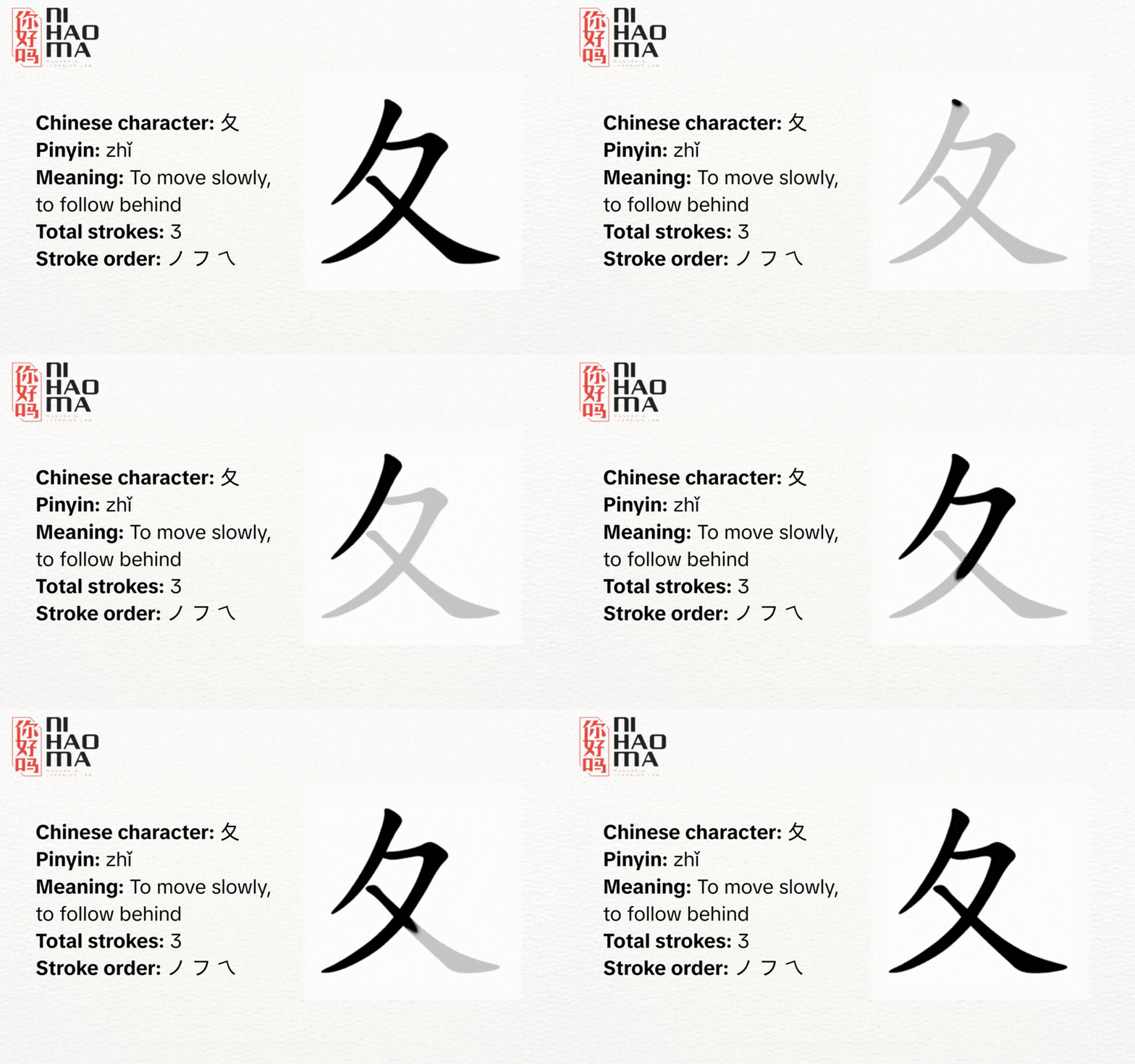
Although radical 34 (夂) is not commonly seen in modern Chinese characters, it holds historical importance in the development of traditional Chinese writing. Many ancient characters containing this radical were used to describe forms of labor, movement, or sequential actions in daily life. The presence of radical 34 gives us valuable insight into how ancient people observed human motion and turned these observations into symbolic written forms.
Character: 夂
Pinyin: zhǐ
Meaning: To move slowly, to follow behind
Total strokes: 3
Stroke Order: ノ フ 乀
How to Write Radical 34 in Chinese
Radical 34 is made up of three strokes written in the following order:
| Stroke Order | Stroke Name | Description |
|---|---|---|
| 1 | Right-falling (ノ) | Written from top to bottom with a slight curve to the left. |
| 2 | Hook (フ) | A short horizontal line that bends downward, slanting slightly to the left. |
| 3 | Left-falling (乀) | A sweeping stroke starting from the intersection of the first two strokes, moving from left to right. |
How to Distinguish Radical 34 From Similar Radicals
Although radical 34 (夂 – zhǐ) consists of only three simple strokes, it is often confused with a few other look-alike radicals. Below, we’ll break down the key differences so you can easily recognize and remember them.
The Suī Radical (夊)
The radical 夊 is listed as the 35th radical in the set of 214 Kangxi radicals, right after radical 34. Like radical 34, it also has three strokes and looks very similar at first glance.
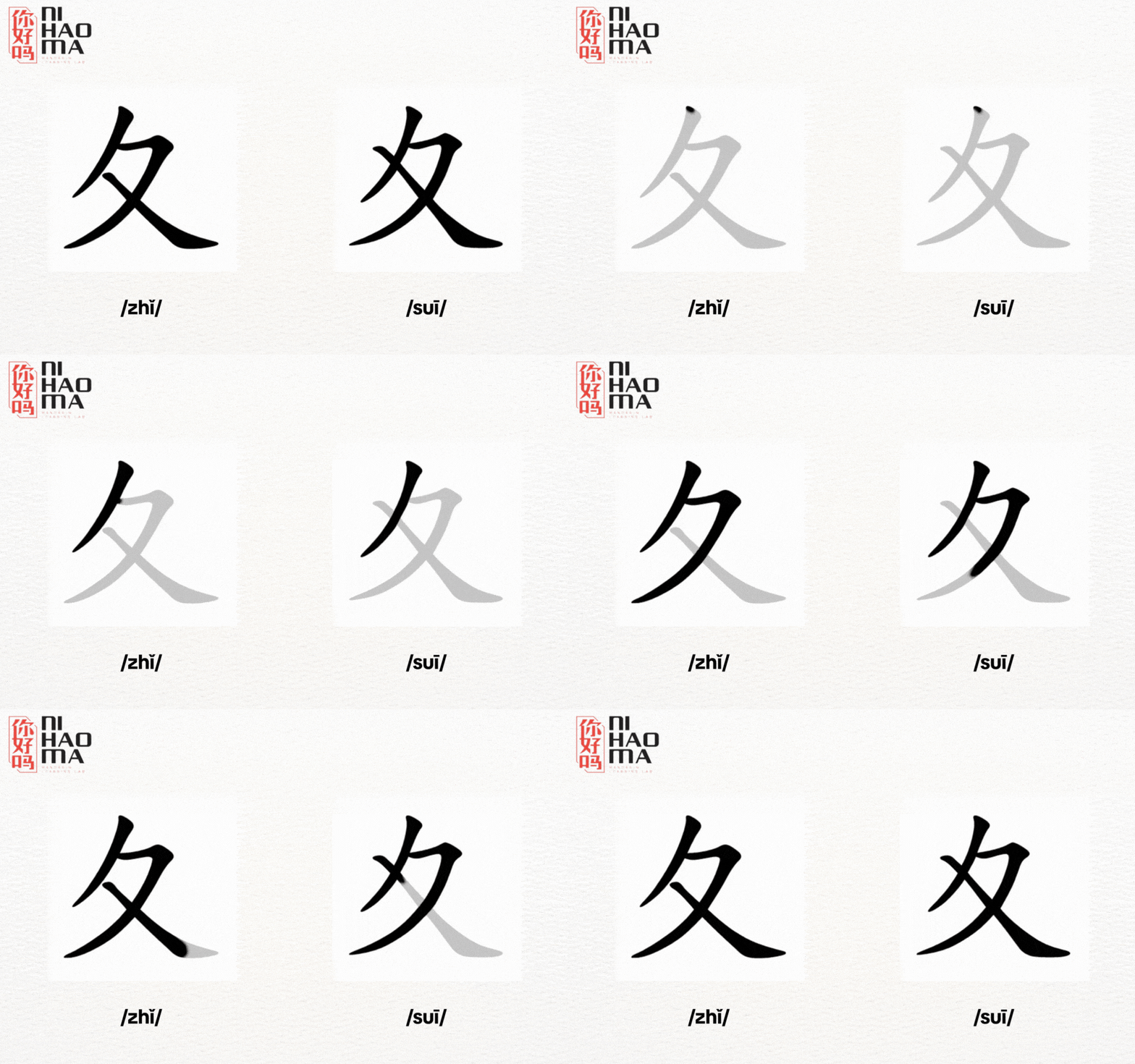
While both radicals share ancient origins related to walking or movement, the main difference lies in the final stroke:
- In radical 34 (夂), the two strokes on the left do not cross. The second stroke bends downward, curving slightly.
- In radical 夊, the two left strokes cross each other, resembling two feet stepping over one another.
Confusion between the two often arises from:
- Their nearly identical shapes.
- Their shared meaning related to movement.
Since both radicals rarely appear in modern Chinese, learners don’t encounter them often, making it even easier to mix them up in classical texts or traditional characters.
The Xī Radical (夕)
The Xī radical (夕) is more common and still retains its original meaning in many modern characters. Derived from the image of a crescent moon and the onset of night, it symbolizes evening or dusk.
This radical also has three strokes, but its last stroke is longer, curved, and resembles the shape of a crescent moon. In handwriting or calligraphy, 夕 appears softer and fuller while radical 34 (夂) looks slimmer and sharper.
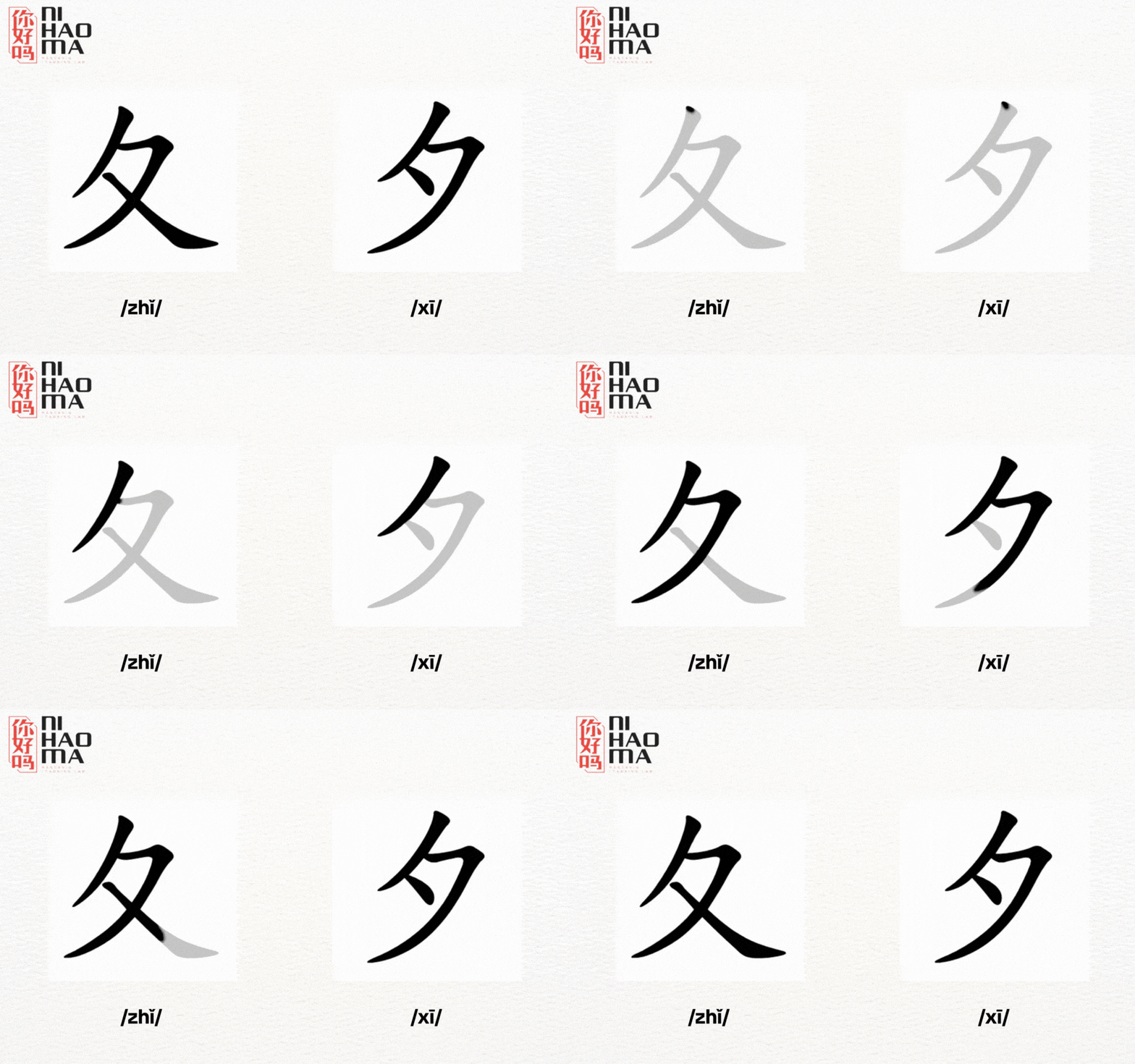
In meaning, the two are entirely unrelated:
- Radical 34 conveys actions like walking or moving forward.
- 夕 relates to night, moonlight, or twilight.
Examples of characters with the Xī radical (夕):
- 多 (duō) – many
- 外 (wài) – outside
- 名 (míng) – name, reputation
The Pò Radical (攴 / 攵)
The Pò radical appears frequently in Chinese characters and is associated with actions such as hitting, tapping, or intentional physical movements. It has two variants: 攴 and 攵. The simplified form 攵 appears in many modern characters.
Placement and structure also help distinguish it:
- The Pò radical usually appears on the right side of a character.
- Radical 34 is typically positioned at the top or bottom of characters.
- Structurally, 攴/攵 has four strokes, while radical 34 has only three.
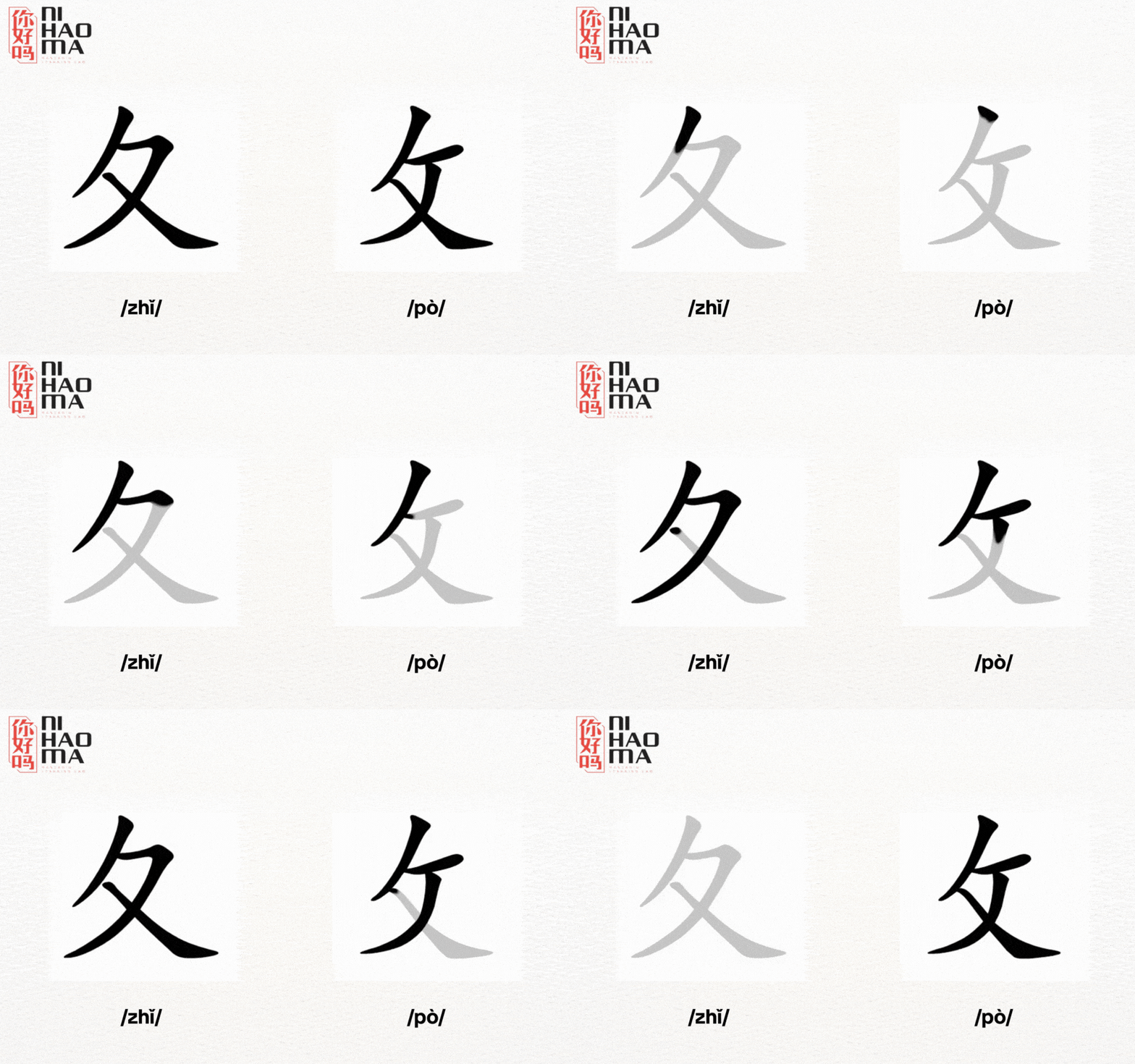
Examples of characters with the Pò radical:
- 教 (jiāo) – to teach
- 改 (gǎi) – to change or modify
- 收 (shōu) – to receive, to collect
Vocabulary Containing Radical 34 in Chinese
Today, radical 34 is no longer common in everyday vocabulary, so the number of simplified Chinese characters containing this radical is relatively small. However, several characters still appear in modern usage or in classical texts. Below is a useful list:
| Chinese | Pinyin | Meaning |
|---|---|---|
| 处 | chǔ | to handle; place |
| 备 | bèi | to prepare; to equip |
| 复 / 復 | fù | to repeat; to restore |
| 冬 | dōng | winter |
| 各 | gè | each; various |
| 修 | xiū | to repair; to study |
| 夅 | jiàng | to fall; to descend |
| 夆 | féng | to meet |
| 夋 | qūn | leisurely; to move slowly |
| 夌 | líng | to cross over |
| 夐 | xiòng | distant; isolated |
| 夗 | yuàn | to bend |
| 夘 | mǎo | the 4th Earthly Branch |
| 夙 | sù | early; from before |
| 夞 | yì | to escape; to flee |
| 夡 | qì | to lean on |
| 夠 / 够 | gòu | enough |
| 夏 | xià | summer |
| 处事 | chǔshì | to handle affairs |
| 处于 | chǔyú | to be in (a situation) |
| 处境 | chǔjìng | circumstance; condition |
| 处处 | chùchù | everywhere |
| 处理 | chǔlǐ | to handle; to deal with |
| 处方 | chǔfāng | prescription |
| 到处 | dàochù | everywhere |
| 好处 | hǎochù | benefit |
| 准备 | zhǔnbèi | to prepare |
| 备注 | bèizhù | notes; remarks |
| 备用 | bèiyòng | backup; spare |
| 备课 | bèikè | lesson planning |
| 备考 | bèikǎo | exam preparation |
| 复习 | fùxí | to review |
| 反复 | fǎnfù | repeatedly |
| 重复 | chóngfù | to repeat |
| 复杂 | fùzá | complex |
| 复合 | fùhé | compound |
| 复仇 | fùchóu | revenge |
| 冬天 | dōngtiān | winter |
| 夏天 | xiàtiān | summer |
| 霜降 | shuāngjiàng | “Frost’s Descent” (solar term) |
Sample Dialogues Using Vocabulary With Radical 34
To make learning easier, here are some short dialogues that include vocabulary containing radical 34. Although this radical is not as common as others, you will still encounter it in a number of modern Chinese characters.
Dialogue 1
A: 你觉得他处事怎么样?
Nǐ juéde tā chǔshì zěnmeyàng?
What do you think of the way he handles things?
B: 我觉得他做事很冷静,处理问题也很快。
Wǒ juéde tā zuòshì hěn lěngjìng, chǔlǐ wèntí yě hěn kuài.
I think he works very calmly, and he solves problems quickly.
A: 难怪大家都相信他。
Nánguài dàjiā dōu xiāngxìn tā.
No wonder everyone trusts him.
B: 是啊,有他在,我们更放心。
Shì a, yǒu tā zài, wǒmen gèng fàngxīn.
Yes, having him around makes us feel more at ease.
A: 我也要向他学习。
Wǒ yě yào xiàng tā xuéxí.
I want to learn from him too.

Dialogue 2
A: 冬天快到了,你准备好了吗?
Dōngtiān kuài dàole, nǐ zhǔnbèi hǎo le ma?
Winter is coming soon. Are you ready?
B: 衣服准备得差不多了,就是还在备考。
Yīfu zhǔnbèi de chàbuduō le, jiùshì hái zài bèikǎo.
I’ve almost finished preparing my clothes, I’m just still studying for exams.
A: 备考很辛苦吧?
Bèikǎo hěn xīnkǔ ba?
Studying for exams must be tough, right?
B: 是啊,不过我会坚持。
Shì a, búguò wǒ huì jiānchí.
Yes, but I’ll keep going.
A: 加油,我相信你能考好!
Jiāyóu, wǒ xiāngxìn nǐ néng kǎo hǎo!
You’ve got this! I believe you’ll do well!
Dialogue 3
A: 明天我们一起复习好吗?
Míngtiān wǒmen yìqǐ fùxí hǎo ma?
Shall we review together tomorrow?
B: 好啊,这样准备考试会更有效果。
Hǎo a, zhèyàng zhǔnbèi kǎoshì huì gèng yǒu xiàoguǒ.
Sure, preparing for the exam together will be more effective.
A: 而且一起学习有很多好处。
Érqiě yìqǐ xuéxí yǒu hěn duō hǎochù.
Besides, studying together has many benefits.
B: 比如可以互相解释难点。
Bǐrú kěyǐ hùxiāng jiěshì nándiǎn.
For example, we can explain the difficult parts to each other.
A: 那我们就约下午两点吧。
Nà wǒmen jiù yuē xiàwǔ liǎng diǎn ba.
Then let’s meet at 2 p.m.
Conclusion
In this article, we explored the meaning and usage of radical 34 in Chinese. Although it’s not as common in modern characters, understanding radicals helps you recognize patterns, distinguish similar components, and strengthen your overall Chinese vocabulary. We hope this guide by Ni Hao Ma has been helpful and stay tuned for more fascinating radicals in upcoming lessons!