Radical 154 in Chinese is one of the most interesting Chinese radicals. It not only helps learners recognize and memorize Chinese characters but also reflects an important part of the history of trade and currency in ancient China. So, what is Radical 154 in Chinese? Where does it come from, how is it written, and which common Chinese vocabulary words contain it? Let’s explore Radical 154 in detail and discover how understanding Chinese radicals can make vocabulary learning more systematic and effective.
What Is Radical 154 in Chinese?
Radical 154 in Chinese (贝 / 貝 – bèi) is the 154th radical in the 214 Kangxi radicals. Its original meaning is “shell” or “seashell,” and it later became associated with “currency, wealth, assets, and valuables.”
In ancient China, particularly during the Shang and Zhou dynasties, metal coins had not yet become widely used. Rare and valuable seashells were used as a medium of exchange for goods. Because of this historical connection, many Chinese characters containing Radical 154 are associated with money, wealth, assets, value, commerce, buying and selling, or precious things.
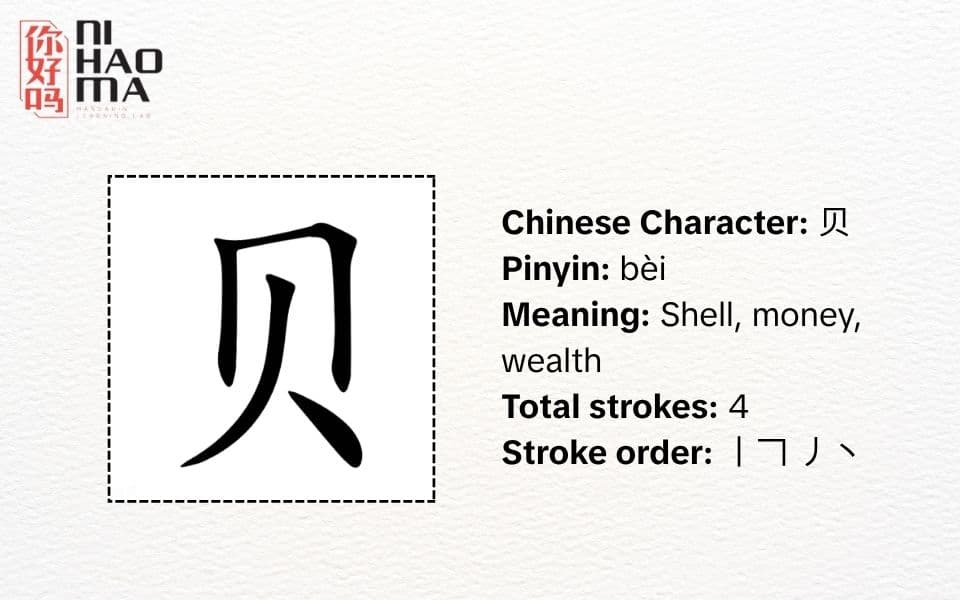
When learning Chinese characters, students may encounter the component 贝 in many familiar characters, such as 财 (cái – wealth, money), 货 (huò – goods, commodities), and 贵 (guì – expensive, valuable). However, it is important to remember that the meaning associated with Radical 154 is not preserved literally in every character. The meaning of each character can develop and vary depending on its structure and historical evolution.
How to Write Radical 154 in Chinese
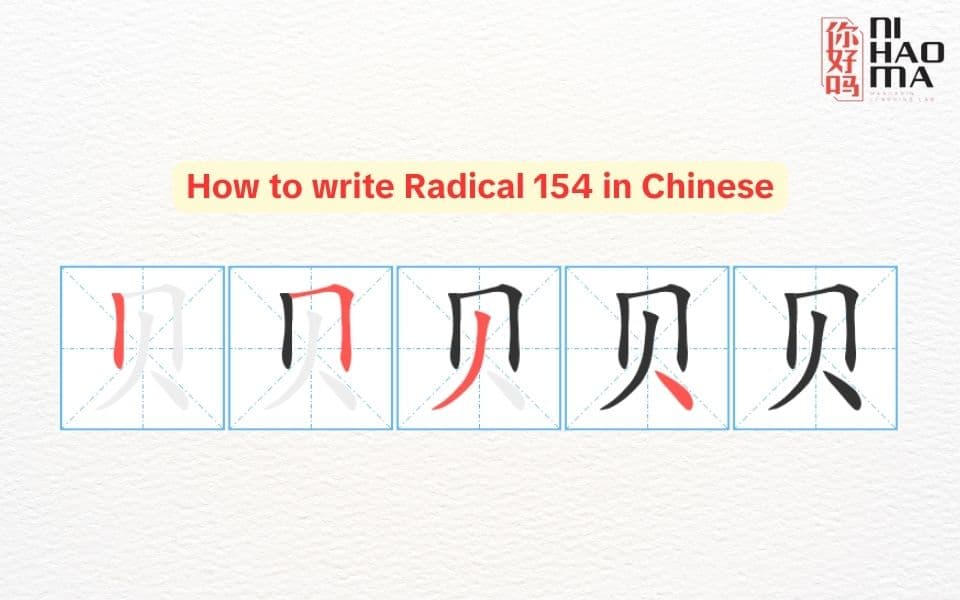
Radical 154 in Chinese, 贝, consists of four strokes. Follow the correct stroke order below:
| Stroke order | Stroke Name | How to Write |
|---|---|---|
| Stroke 1 | 丨 (Vertical stroke) | Start at the top and draw a straight vertical stroke downward on the left side. |
| Stroke 2 | 𠃍 (Horizontal-turn stroke) | Starting from the top of the first stroke, move horizontally from left to right, then turn downward parallel to the first stroke. |
| Stroke 3 | 丿 (Left-falling stroke) | From inside the character, draw a light diagonal stroke toward the lower left. |
| Stroke 4 | 丶 (Dot) | Add a dot on the lower right side of the third stroke to complete the character. |
Memory tip: You can visualize 贝 as the front view of a seashell. When practicing the character, pay attention to keeping the upper structure balanced and distributing the two lower strokes evenly so that the character does not look tilted or unbalanced.
Vocabulary Containing Radical 154 in Chinese
Radical 154, 贝 (bèi), appears in many Chinese characters and commonly used vocabulary words. Learning vocabulary by radicals can help learners recognize character structures, build meaningful associations, and memorize new words more effectively.
Here are some useful Chinese vocabulary words containing Radical 154 that you can encounter in everyday communication:
| Chinese Character | Pinyin | Meaning |
|---|---|---|
| 宝贝 | bǎobèi | Treasure; darling; baby |
| 买卖 | mǎimài | Buying and selling; business |
| 质量 | zhìliàng | Quality |
| 免费 | miǎnfèi | Free of charge |
| 工资 | gōngzī | Salary; wages |
| 赚钱 | zhuànqián | To make money |
| 投资 | tóuzī | Investment; to invest |
| 费用 | fèiyòng | Cost; expense |
| 货物 | huòwù | Goods; cargo |
| 浪费 | làngfèi | To waste; waste |
| 采购 | cǎigòu | Procurement; to purchase |
| 财务 | cáiwù | Finance; financial affairs |
| 财产 | cáichǎn | Property; assets |
| 财力 | cáilì | Financial resources |
| 赔偿 | péicháng | Compensation; to compensate |
| 赞助 | zànzhù | Sponsorship; to sponsor |
| 账号 | zhànghào | Account; user account |
| 账户 | zhànghù | Account; bank account |
| 贵姓 | guìxìng | Your surname (polite) |
| 贵客 | guìkè | Honored guest |
| 消费 | xiāofèi | Consumption; to spend |
| 贪污 | tānwū | Embezzlement; corruption |
| 贵重 | guìzhòng | Precious; valuable |
| 贫穷 | pínqióng | Poor; poverty-stricken |
| 贬值 | biǎnzhí | To depreciate; devaluation |
| 贵宾 | guìbīn | VIP; distinguished guest |
| 进货 | jìnhuò | To purchase stock; to restock |
| 退货 | tuìhuò | To return goods |
| 换货 | huànhuò | To exchange goods |
| 学费 | xuéfèi | Tuition fee |
| 外贸 | wàimào | Foreign trade |
| 珍贵 | zhēnguì | Precious; valuable |
| 购票 | gòupiào | To purchase a ticket |
| 邮费 | yóufèi | Postage; shipping fee |
| 现金 | xiànjīn | Cash |
| 信誉 | xìnyù | Reputation; credibility |
| 费钱 | fèiqián | To cost money; expensive |
| 费心 | fèixīn | To take effort; to trouble oneself |
| 费时 | fèishí | Time-consuming |
| 小费 | xiǎofèi | Tip; gratuity |
| 财富 | cáifù | Wealth; fortune |
| 货币 | huòbì | Currency |
| 退费 | tuìfèi | Refund; reimbursement |
| 会费 | huìfèi | Membership fee |
| 资本 | zīběn | Capital |
| 资源 | zīyuán | Resources |
| 补偿 | bǔcháng | Compensation; to compensate |
| 网购 | wǎnggòu | Online shopping |
| 结账 | jiézhàng | To pay the bill; to check out |
| 转账 | zhuǎnzhàng | To transfer money |
| 坏账 | huàizhàng | Bad debt |
| 债权 | zhàiquán | Creditor’s rights; claim |
| 债务 | zhàiwù | Debt; liability |
| 告贷 | gàodài | To ask for a loan |
| 筹资 | chóuzī | To raise funds |
| 贪婪 | tānlán | Greedy; greed |
| 尊贵 | zūnguì | Noble; honorable |
| 扶贫 | fúpín | Poverty alleviation |
| 赎金 | shújīn | Ransom |
| 赎回 | shúhuí | To redeem; to buy back |
| 资格 | zīgé | Qualification; eligibility |
| 运费 | yùnfèi | Shipping fee; freight |
| 资料 | zīliào | Materials; information |
| 奖赏 | jiǎngshǎng | Reward; prize |
| 贱卖 | jiànmài | To sell cheaply; to sell at a loss |
| 现货 | xiànhuò | Goods in stock; available goods |
Dialogues Using Vocabulary Containing Radical 154
Understanding the meaning of Radical 154 in Chinese and the vocabulary associated with it can help learners recognize character structures more easily. However, placing these words into real-life sentences and dialogues is essential for long-term retention and accurate usage.
Below are several Chinese dialogue examples featuring vocabulary containing Radical 154. The conversations focus on familiar situations such as shopping, expenses, and goods, making the vocabulary easier to remember and apply.
Dialogue 1
A: 你觉得这个包贵吗?
Nǐ juéde zhège bāo guì ma?
→ Do you think this bag is expensive?
B: 有一点贵,但是质量很好。
Yǒu yìdiǎn guì, dànshì zhìliàng hěn hǎo.
→ It’s a little expensive, but the quality is very good.
A: 多少钱?
Duōshao qián?
→ How much is it?
B: 五百块。
Wǔ bǎi kuài.
→ 500 yuan.
A: 那我考虑一下再购买。
Nà wǒ kǎolǜ yíxià zài gòumǎi.
→ Then I’ll think about it before buying it.
Dialogue 2
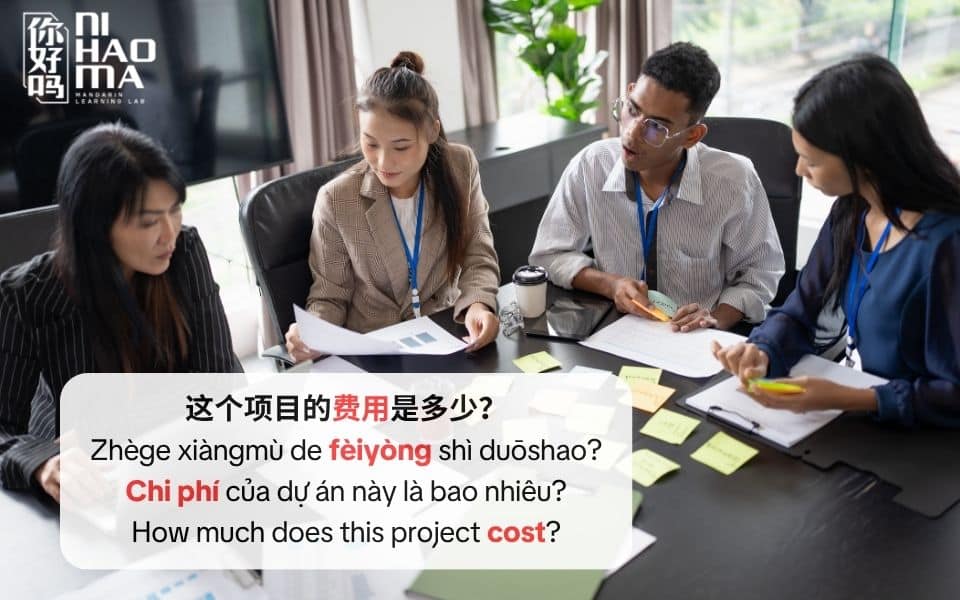
A: 这个项目的费用是多少?
Zhège xiàngmù de fèiyòng shì duōshao?
→ How much does this project cost?
B: 总费用大概是五万元。
Zǒng fèiyòng dàgài shì wǔ wàn yuán.
→ The total cost is approximately 50,000 yuan.
A: 费用有点高,可以便宜一点吗?
Fèiyòng yǒudiǎn gāo, kěyǐ piányi yìdiǎn ma?
→ The cost is a little high. Could you make it cheaper?
B: 如果现在购买,可以打九折。
Rúguǒ xiànzài gòumǎi, kěyǐ dǎ jiǔ zhé.
→ If you purchase it now, we can offer a 10% discount.
A: 好的,我再考虑一下。
Hǎo de, wǒ zài kǎolǜ yíxià.
→ Okay, I’ll think about it.
Dialogue 3
A: 这些货物什么时候可以到?
Zhèxiē huòwù shénme shíhou kěyǐ dào?
→ When will these goods arrive?
B: 大概明天上午可以到。
Dàgài míngtiān shàngwǔ kěyǐ dào.
→ They should arrive tomorrow morning.
A: 数量和账单都确认了吗?
Shùliàng hé zhàngdān dōu quèrèn le ma?
→ Have the quantity and invoice both been confirmed?
B: 已经确认了,货物也没有问题。
Yǐjīng quèrèn le, huòwù yě méiyǒu wèntí.
→ Yes, they have been confirmed, and there are no problems with the goods.
A: 好的,那就按照计划安排吧。
Hǎo de, nà jiù ànzhào jìhuà ānpái ba.
→ Okay, let’s proceed according to the plan.
Conclusion
Hopefully, this guide has helped you understand Radical 154 in Chinese, including its meaning, origin, stroke order, and common vocabulary containing 贝 (bèi). Learning the history and meaning behind Chinese radicals can help you recognize character structures and organize vocabulary into meaningful groups rather than memorizing individual words in isolation.
For Chinese learners, understanding radicals is a practical way to build a stronger foundation in Chinese characters. Continue exploring other Chinese radicals to gradually improve your character recognition, reading, writing, and vocabulary skills.
For more useful Chinese learning resources, explore Ni Hao Ma and discover more practical lessons on Chinese characters, vocabulary, pronunciation, and grammar.