
Among the 214 Chinese radicals, radical 156 plays an essential role in forming many commonly used Chinese characters. Understanding the meaning of this radical not only helps learners memorize characters more efficiently but also enables a deeper understanding of how words are used in real contexts. In this article, let’s explore what radical 156 is in Chinese, its meaning, how to write it correctly, and common vocabulary that contains this radical.
What Is Radical 156 in Chinese?
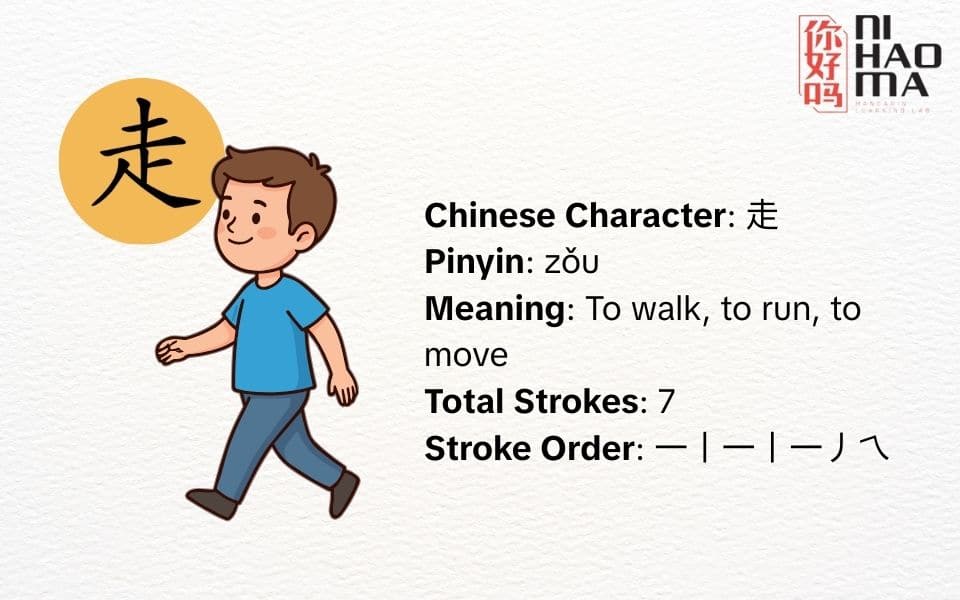
Radical 156 in Chinese is written as 走 (zǒu). It is the 156th radical in the Kangxi radical system and carries meanings related to walking, running, movement, or physical motion.
Radical 156 can function as an independent character or appear as a component within other Chinese characters. Many characters containing radical 156 are introduced as early as HSK levels 1 – 3, highlighting its importance for beginners learning Chinese. In modern Chinese character structure, radical 156 typically serves as a semantic component, appearing in characters associated with movement, direction, or changes in state.
- Chinese character: 走
- Pinyin: zǒu
- Meaning: to walk, to run, to move
- Total strokes: 7
How to Write Radical 156 Correctly
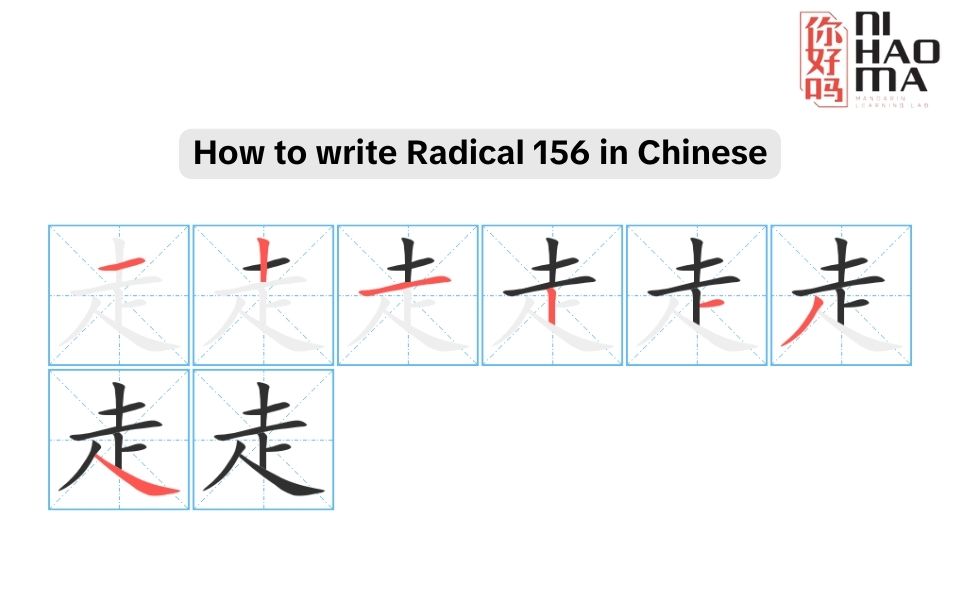
Radical 156 consists of 7 strokes and follows a fixed stroke order. Writing it correctly helps improve handwriting accuracy and character recognition.
| Stroke Order | Stroke Name | Description |
|---|---|---|
| 1 | 一 (horizontal stroke) | A short horizontal line at the top |
| 2 | 丨 (vertical stroke) | A vertical line cutting through the first stroke |
| 3 | 一 (horizontal stroke) | Parallel to stroke 1, slightly longer |
| 4 | 丨 (vertical stroke) | A straight vertical line forming the main axis |
| 5 | 一 (horizontal stroke) | A short horizontal stroke starting from the middle of stroke 4 |
| 6 | 丿 (left-falling stroke) | Slants to the left from stroke 3, slightly separated from stroke 4 |
| 7 | 乀 (right-falling stroke) | Curves to the right and extends to complete the character |
Common Vocabulary Containing Radical 156
After understanding the meaning and writing rules of radical 156, the next essential step is expanding vocabulary that includes this radical. Most Chinese characters containing radical 156 are closely related to movement, direction, progress, or transitions, and they appear frequently in both spoken and written Chinese.
Learning vocabulary through radicals allows learners to recognize patterns more easily, guess meanings of unfamiliar characters, and build a stronger foundation for long-term Chinese language study.
| Chinese Character | Pinyin | Meaning |
|---|---|---|
| 走 | zǒu | to walk, to run |
| 赴 | fù | to go to, to attend |
| 赶 | gǎn | to chase, to hurry |
| 起 | qǐ | to stand up, to begin |
| 超 | chāo | to surpass, super |
| 越 | yuè | to cross, to exceed, the more… |
| 趁 | chèn | to take advantage of |
| 赵 | zhào | Zhao (a Chinese surname) |
| 趋 | qū | to move toward, a trend |
| 趟 | tàng | trip, round (measure word) |
| Chinese Character | Pinyin | Meaning |
|---|---|---|
| 走路 | zǒu lù | to walk |
| 走开 | zǒu kāi | to move away |
| 走过 | zǒu guò | to walk past |
| 奔走 | bēn zǒu | to rush about |
| 赶快 | gǎn kuài | quickly |
| 赶紧 | gǎn jǐn | hurriedly, at once |
| 赶上 | gǎn shàng | to catch up |
| 起床 | qǐ chuáng | to get up |
| 一起 | yī qǐ | together |
| 起来 | qǐ lái | to stand up |
| 超级 | chāo jí | super |
| 超过 | chāo guò | to exceed |
| 超越 | chāo yuè | to surpass |
| 超市 | chāo shì | supermarket |
| 越过 | yuè guò | to cross over |
| 越南 | yuè nán | Vietnam |
| 趁机 | chèn jī | to seize an opportunity |
| 趁早 | chèn zǎo | as early as possible |
| 趋势 | qū shì | trend |
| 趋向 | qū xiàng | tendency |
| 赴宴 | fù yàn | to attend a banquet |
| 走访 | zǒu fǎng | to visit |
| 走私 | zǒu sī | smuggling |
| 赶集 | gǎn jí | to go to a rural market |
| 赶忙 | gǎn máng | to hurry |
| 起源 | qǐ yuán | origin |
| 起点 | qǐ diǎn | starting point |
| 越轨 | yuè guǐ | to break rules |
| 超人 | chāo rén | superhero |
| 趋于 | qū yú | to tend toward |
| 走动 | zǒu dòng | to move around |
| 走运 | zǒu yùn | to have good luck |
| 走出 | zǒu chū | to walk out of |
| 赶走 | gǎn zǒu | to drive away |
| 起到 | qǐ dào | to play a role |
| 崛起 | jué qǐ | to rise |
| 超速 | chāo sù | speeding |
| 越野 | yuè yě | off-road |
| 越权 | yuè quán | abuse of power |
| 赵国 | zhào guó | State of Zhao |
| 走神 | zǒu shén | to lose focus |
Sample Dialogues Using Vocabulary with Radical 156
To help learners remember and apply vocabulary containing radical 156 naturally, placing words into real-life contexts is essential. The following dialogues are based on everyday situations, allowing learners to better understand usage, nuance, and how radical 156 functions flexibly in daily Chinese communication.
Dialogue 1
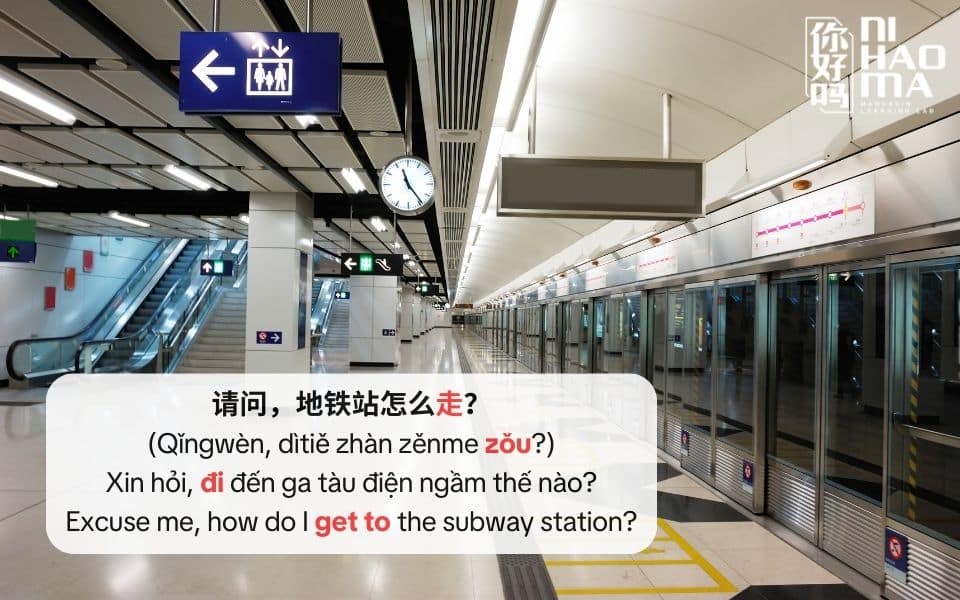
A: 请问,地铁站怎么走?
(Qǐngwèn, dìtiě zhàn zěnme zǒu?)
Excuse me, how do I get to the subway station?
B: 一直走,走到前面的路口再右转。
(Yìzhí zǒu, zǒu dào qiánmiàn de lùkǒu zài yòu zhuǎn.)
Go straight, then turn right at the intersection ahead.
A: 远不远?
(Yuǎn bu yuǎn?)
Is it far?
B: 不远,走五分钟就到了。
(Bù yuǎn, zǒu wǔ fēnzhōng jiù dào le.)
Not far. It’s a five-minute walk.
Dialogue 2
A: 你怎么这么早就走了?
(Nǐ zěnme zhème zǎo jiù zǒu le?)
Why are you leaving so early?
B: 我得赶路,今天事情比较多。
(Wǒ děi gǎn lù, jīntiān shìqing bǐjiào duō.)
I need to hurry; I have a lot to do today.
A: 你是走路去,还是坐地铁?
(Nǐ shì zǒu lù qù, háishì zuò dìtiě?)
Are you walking or taking the subway?
B: 地铁站不远,我走过去就行。
(Dìtiě zhàn bù yuǎn, wǒ zǒu guòqù jiù xíng.)
The station isn’t far. I’ll just walk there.
A: 那你慢慢走,路上注意安全。
(Nà nǐ mànman zǒu, lùshang zhùyì ānquán.)
Alright, take care and stay safe.

Dialogue 3
A: 这个项目现在走到哪一步了?
(Zhège xiàngmù xiànzài zǒu dào nǎ yí bù le?)
What stage is this project at now?
B: 总体来说,一切都在按计划走。
(Zǒngtǐ lái shuō, yíqiè dōu zài àn jìhuà zǒu.)
Overall, everything is progressing according to plan.
A: 有没有遇到什么问题?会不会走得太慢?
(Yǒu méiyǒu yùdào shénme wèntí? Huì bú huì zǒu de tài màn?)
Have you run into any problems? Is it moving too slowly?
B: 有一点小问题,不过已经走出来了。
(Yǒu yìdiǎn xiǎo wèntí, búguò yǐjīng zǒu chūlái le.)
There were some minor issues, but we’ve already overcome them.
Conclusion
Radical 156 is not only one of the fundamental Chinese radicals but also one that appears very frequently in both everyday communication and written texts. By mastering its core meanings related to movement and action, along with correct writing rules and common vocabulary, learners can memorize Chinese characters more efficiently and understand them more deeply.
We hope this guide from Ni Hao Ma has provided you with practical and valuable knowledge about radical 156. Don’t forget to save this article for future reference as you continue your Chinese learning journey.