Are you learning Chinese characters but struggling to remember meanings or recognize patterns? Understanding radical 17 in Chinese can make a big difference. By exploring its meaning, structure, and common vocabulary, you’ll be able to memorize characters faster, think more logically, and improve your overall learning efficiency.
What Is Radical 17 in Chinese?
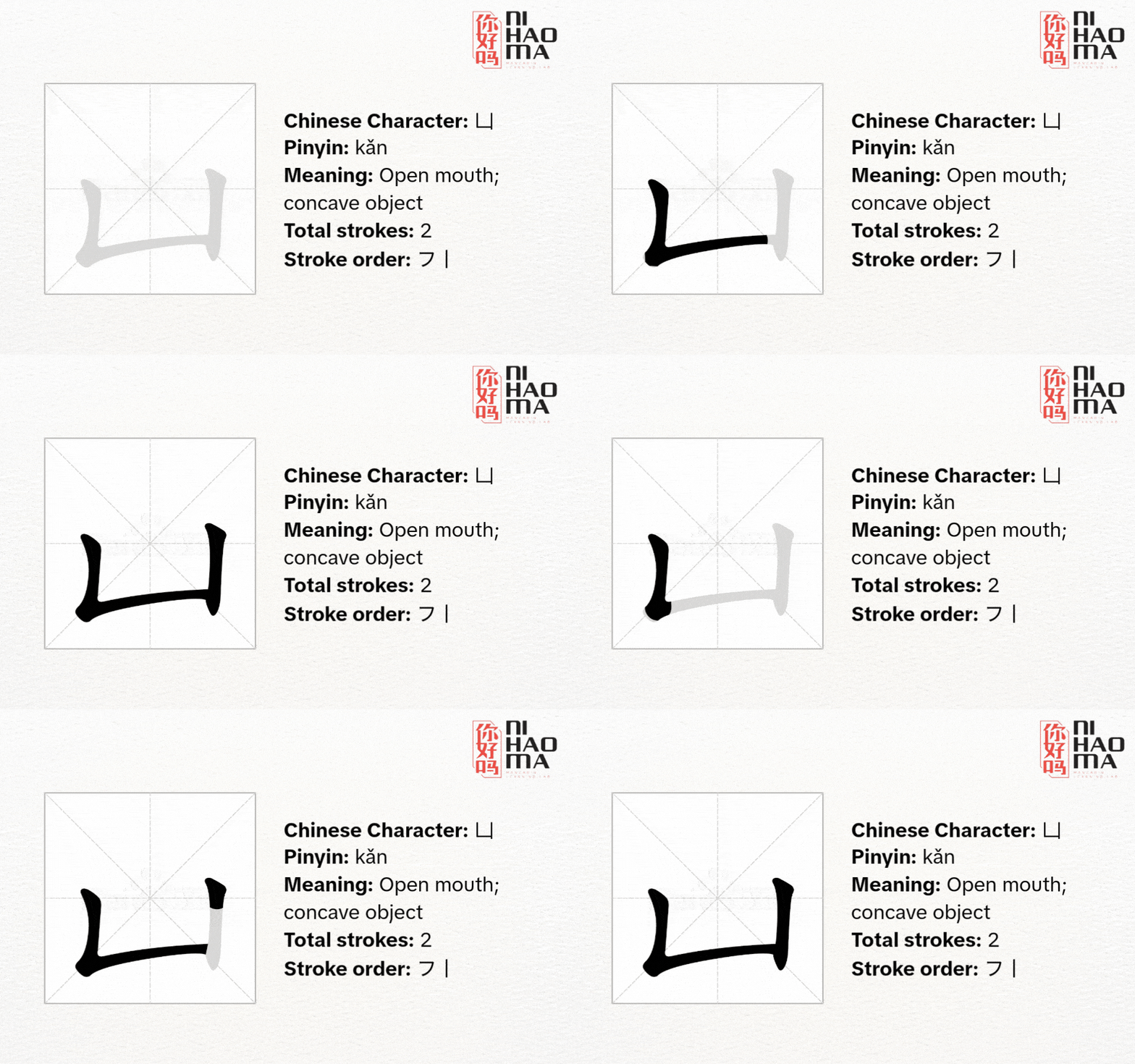
Radical 17 (凵 – kǎn) is one of the 214 Kangxi radicals in the Chinese writing system. Although it is not among the most frequently used radicals, it plays an important role in forming and suggesting the meanings of certain characters.
Radical 17 consists of 2 strokes and looks like an open frame at the top, similar to the shape of a “U.” This visual form suggests something that is holding, enclosing, or containing an object inside. Therefore, its original meaning is often associated with containers, hollows, pits, or enclosed spaces.
In complex Chinese characters, radical 17 usually appears at the bottom or partially surrounds other components, functioning as a structural “container.” When used in characters, it often conveys meanings related to enclosure, containment, or empty space.
Some common examples include:
- 凶 (xiōng): fierce, ominous
- 凹凸 (āo tū): uneven, concave and convex
- 函 (hán): box, envelope
How to Distinguish Radical 17 from Similar Radicals
Radical 17 (凵) is one of the radicals that learners often confuse because of its simple shape and similarity to other radicals. To distinguish it accurately, you should focus on the direction of opening, position, and pictographic meaning of each radical.
First, radical 17 (凵) opens upward, resembling the letter “U.” It often evokes the image of a hollow space, container, or empty area, and usually appears at the bottom of characters. This is the key feature that helps you recognize it quickly.
Radical 冂
One of the most easily confused radicals is 冂. It has a similar shape but opens downward, like an upside-down frame. If 凵 represents “holding something inside,” then 冂 represents “covering from above but open at the bottom.”
Radical 匚
Another similar-looking radical is 匚, which has an angular shape and opens to the right. This radical is associated with containers or enclosed areas. Unlike radical 17 (凵), which opens upward, 匚 opens sideways, even though both have a box-like appearance.
Vocabulary with Radical 17
After understanding the meaning and identifying features of radical 17 (凵), learning vocabulary becomes easier and more logical. Instead of memorizing words randomly, you can rely on the visual idea of space, containment, or hollowness to connect and infer meanings.
Below are common vocabulary items containing radical 17 to help you expand your vocabulary and improve your ability to recognize Chinese characters effectively:
| Chinese | Pinyin | Meaning |
|---|---|---|
| 出 | chū | to go out, to appear |
| 凶 | xiōng | fierce, dangerous |
| 凸 | tū | convex |
| 凹 | āo | concave |
| 出来 | chū lái | to come out |
| 出去 | chū qù | to go out |
| 出口 | chū kǒu | exit, export |
| 出发 | chū fā | to set off |
| 出现 | chū xiàn | to appear |
| 出门 | chū mén | to go out |
| 出生 | chū shēng | to be born |
| 出名 | chū míng | to be famous |
| 出差 | chū chāi | business trip |
| 出席 | chū xí | to attend |
| 出院 | chū yuàn | to leave hospital |
| 凶手 | xiōng shǒu | murderer |
| 凶猛 | xiōng měng | fierce |
| 凶恶 | xiōng è | vicious |
| 凶险 | xiōng xiǎn | dangerous |
| 行凶 | xíng xiōng | to commit violence |
| 凹凸 | āo tū | uneven |
| 凹陷 | āo xiàn | dented |
| 凸出 | tū chū | protruding |
| 出力 | chū lì | to exert effort |
| 出气 | chū qì | to vent anger |
| 出价 | chū jià | to bid |
| 出局 | chū jú | to be eliminated |
| 出血 | chū xiě | to bleed |
| 出神 | chū shén | absent-minded |
| 出轨 | chū guǐ | to cheat (in a relationship) |
| 出版 | chū bǎn | to publish |
| 出售 | chū shòu | to sell |
| 出资 | chū zī | to invest |
| 出产 | chū chǎn | to produce |
| 出境 | chū jìng | to leave the country |
| 出国 | chū guó | to go abroad |
| 出入 | chū rù | to go in and out |
| 攻击 | gōng jī | to attack |
| 打击 | dǎ jī | to strike, to hit |
| 拳击 | quán jī | boxing |
| 公函 | gōng hán | official letter |
| 内函 | nèi hán | inner meaning |
Sample Dialogues Using Radical 17 Vocabulary
After mastering vocabulary containing radical 17 (凵), applying it in real-life conversations will help you remember faster and use it more flexibly in daily communication. The following dialogues use some of the vocabulary introduced above to help you practice Chinese reflexes and better understand usage in context.
Dialogue 1
A: 你现在要出去吗?
(Nǐ xiànzài yào chūqù ma?)
Are you going out now?
B: 对,我要出去买点东西。
(Duì, wǒ yào chūqù mǎi diǎn dōngxi.)
Yes, I’m going out to buy something.
A: 外面人多吗?
(Wàimiàn rén duō ma?)
Is it crowded outside?
B: 还好,不算太多。
(Hái hǎo, bú suàn tài duō.)
It’s okay, not too crowded.
A: 那你早点回来。
(Nà nǐ zǎo diǎn huílái.)
Then come back early.
B: 好的,我很快就回来。
(Hǎo de, wǒ hěn kuài jiù huílái.)
Okay, I’ll be back soon.

Dialogue 2
A: 听说那条路很凶险。
(Tīngshuō nà tiáo lù hěn xiōngxiǎn.)
I heard that road is very dangerous.
B: 是的,晚上最好不要一个人去。
(Shì de, wǎnshang zuìhǎo bú yào yí gè rén qù.)
Yes, it’s best not to go alone at night.
A: 那我们一起走吧。
(Nà wǒmen yìqǐ zǒu ba.)
Then let’s go together.
B: 好,这样比较安全。
(Hǎo, zhèyàng bǐjiào ānquán.)
Okay, that’s safer.
A: 小心一点总是好的。
(Xiǎoxīn yìdiǎn zǒng shì hǎo de.)
It’s always better to be careful.
Dialogue 3
A: 这个桌子怎么有点凹凸不平?
(Zhège zhuōzi zěnme yǒudiǎn āo tū bù píng?)
Why is this table a bit uneven?
B: 可能用了很久了。
(Kěnéng yòng le hěn jiǔ le.)
Maybe it’s been used for a long time.
A: 要不要换一个新的?
(Yào bú yào huàn yí gè xīn de?)
Should we replace it with a new one?
B: 可以,不过还能用。
(Kěyǐ, búguò hái néng yòng.)
We could, but it’s still usable.
A: 那先这样吧,以后再换。
(Nà xiān zhèyàng ba, yǐhòu zài huàn.)
Let’s keep it for now and replace it later.
B: 好的。
(Hǎo de.)
Okay.
Conclusion
When you fully understand the structure and meaning of radical 17 in Chinese, you will not only recognize related characters more easily but also be able to infer meanings logically instead of memorizing mechanically. In addition, combining vocabulary learning with real-life context practice will help you retain knowledge longer and use it more flexibly in communication. Hopefully, this guide by Ni Hao Ma has given you a clearer understanding of radical 17 and built a solid foundation for mastering Chinese more effectively.