Chinese is often considered one of the most challenging languages to learn because of its unique writing system. However, Chinese characters are not random collections of strokes. They are built from 214 Kangxi radicals, each carrying its own meaning and helping learners understand character structure and vocabulary.
Among them, Radical 184 is one of the most essential and frequently used radicals. So, what is Radical 184, what does it mean, how is it written, and how can you use it in real-life Chinese? In this guide, Ni Hao Ma will walk you through everything you need to know.
What Is Radical 184 in Chinese?
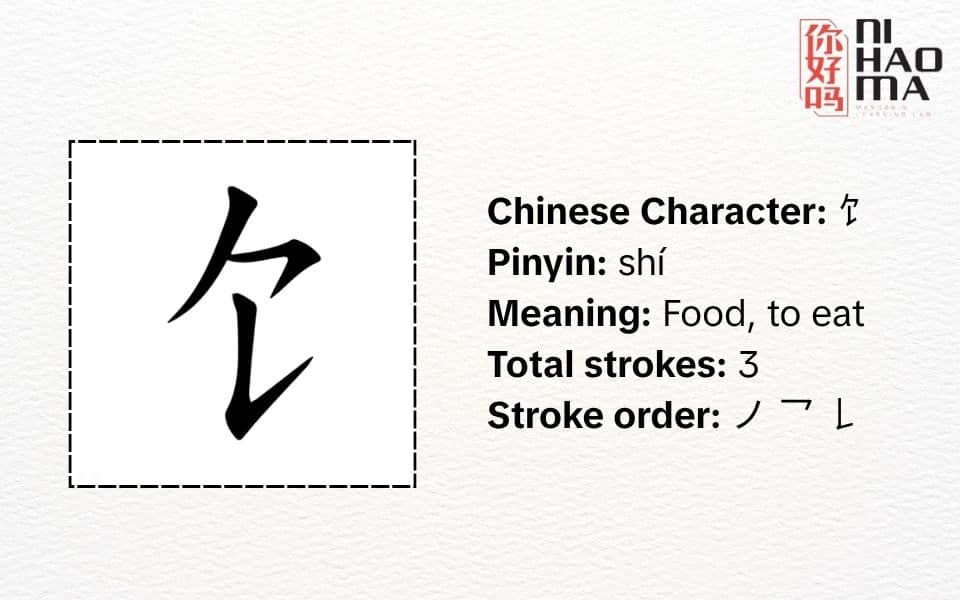
Radical 184 is written as 饣 (shí) in Simplified Chinese. It is the 184th radical in the Kangxi Dictionary’s system of 214 radicals and generally represents food, eating, meals, or nourishment.
The original form of the radical is 食, which means “to eat” or “food.” As Chinese writing evolved, the simplified form 饣 became the standard radical when it appears on the left side of Simplified Chinese characters.
Throughout Chinese history, food has symbolized far more than survival. It also represents health, prosperity, abundance, and family unity, which explains why Radical 184 appears in so many commonly used Chinese characters.
Today, Radical 184 is especially common in vocabulary related to:
- Food and meals
- Drinks and beverages
- Cooking ingredients
- Restaurants
- Dining etiquette
- Nutrition
- Cooking methods
Because of its strong semantic connection to food, recognizing Radical 184 allows learners to guess the meaning of unfamiliar Chinese characters more easily.
Examples:
- 食 (shí) — to eat; food
- 饭 (fàn) — cooked rice; meal
- 饮 (yǐn) — to drink
- 饱 (bǎo) — full
- 馆 (guǎn) — restaurant; establishment
How to Write Radical 184 in Chinese
Radical 184 in Chinese has two common written forms:
- Original Form (食): This is the original form of Radical 184. It can stand alone as an independent character meaning “food” or “to eat,” and it may also appear as a component positioned at the bottom or right side of more complex Chinese characters, particularly in Traditional Chinese.
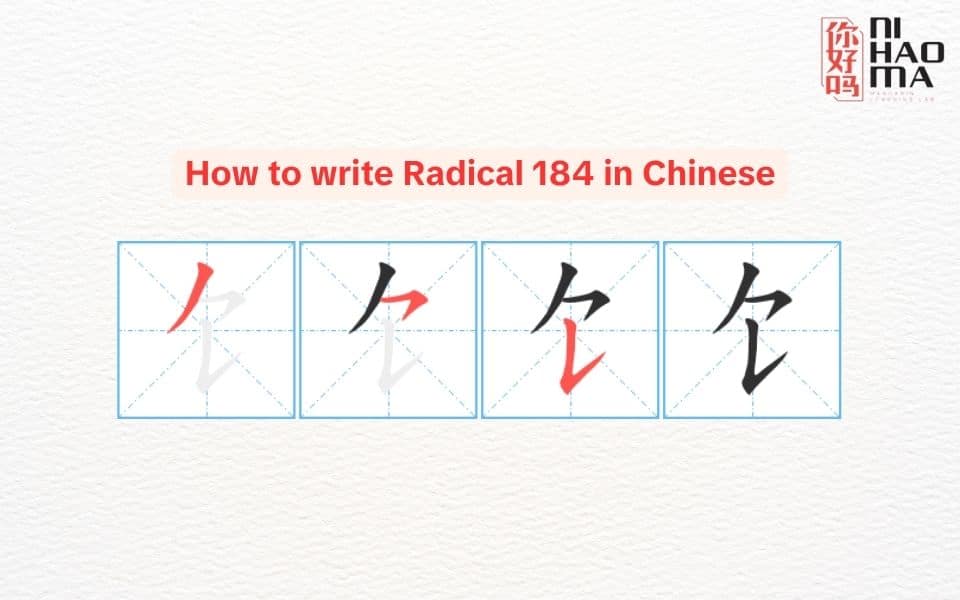
- Variant Form (饣): This is the simplified form widely used in Modern Simplified Chinese. Whenever Radical 184 appears as the left-hand component of a Chinese character, it is always written as 饣.
Stroke Order of the Original Form (食):
| Stroke Order | Stroke Name | Writing Instruction |
|---|---|---|
| 1 | ノ(Left-falling stroke) | Write a left-falling stroke from top to bottom. |
| 2 | ㇏ (Right-falling stroke) | Draw a right-falling stroke from the top toward the lower right. |
| 3 | ㇀ (Dot) | Place a dot between the first two strokes. |
| 4 | 𠃍 (Turning stroke) | Write a horizontal stroke, turn downward to form the left enclosure. |
| 5 | 一 (Horizontal stroke) | Add a short horizontal stroke inside the character. |
| 6 | 一 (Horizontal stroke) | Write a second horizontal stroke slightly longer than the previous one. |
| 7 | 𠄌(Vertical hook) | Draw a short vertical stroke with a slight hook at the end. |
| 8 | ノ(Left-falling stroke) | Write a short left-falling stroke. |
| 9 | ㇏ (Right-falling stroke) | Finish with a right-falling stroke. |
Stroke Order of the Variant Form (饣):
| Stroke Order | Stroke Name | Writing Instruction |
|---|---|---|
| 1 | ノ(Left-falling stroke) | Draw a short left-falling stroke from top to bottom. |
| 2 | 乛 (Horizontal turning stroke) | Write a short horizontal stroke, then turn downward to form a short vertical stroke. |
| 3 | 𠄌 (Vertical hook) | Finish with a short vertical hook. |
Common Vocabulary with Radical 184
Radical 184 appears in hundreds of frequently used Chinese words, especially those related to food and everyday dining. Learning vocabulary by radicals not only improves character recognition but also makes it easier to infer the meanings of unfamiliar words.
Below are some of the most useful words containing Radical 184, arranged from single-character words to compound words.
| Chinese | Pinyin | Meaning |
|---|---|---|
| 食 | shí | food; to eat |
| 饭 | fàn | cooked rice; meal |
| 饮 | yǐn | to drink |
| 饱 | bǎo | full |
| 饿 | è | hungry |
| 饼 | bǐng | pancake; flatbread |
| 饺 | jiǎo | dumpling (single character) |
| 馒 | mán | steamed bun (single character) |
| 馅 | xiàn | filling; stuffing |
| 餐 | cān | meal |
| 馆 | guǎn | restaurant; establishment |
| 吃饭 | chīfàn | to eat a meal |
| 米饭 | mǐfàn | cooked rice |
| 餐厅 | cāntīng | restaurant; dining hall |
| 炒饭 | chǎofàn | fried rice |
| 饮料 | yǐnliào | beverage |
| 水饺 | shuǐjiǎo | boiled dumplings |
| 月饼 | yuèbǐng | mooncake |
| 烧饼 | shāobǐng | baked flatbread |
| 饼干 | bǐnggān | cookies; biscuits |
| 饺子 | jiǎozi | dumplings |
| 馒头 | mántou | steamed buns |
| 馄饨 | húntun | wontons |
| 馅儿 | xiànr | filling; stuffing |
| 零食 | língshí | snacks |
| 粮食 | liángshi | grain; food supply |
| 餐馆 | cānguǎn | restaurant |
| 宾馆 | bīnguǎn | hotel |
| 食品 | shípǐn | food products |
| 食物 | shíwù | food |
| 食堂 | shítáng | cafeteria |
| 食用 | shíyòng | edible; for consumption |
| 食盐 | shíyán | table salt |
| 食油 | shíyóu | cooking oil |
| 食材 | shícái | food ingredients |
| 食谱 | shípǔ | recipe; cookbook |
| 食客 | shíkè | diner; customer |
| 饭店 | fàndiàn | restaurant; hotel |
| 早餐 | zǎocān | breakfast |
| 午餐 | wǔcān | lunch |
| 晚餐 | wǎncān | dinner |
| 快餐 | kuàicān | fast food |
| 西餐 | xīcān | Western cuisine |
| 中餐 | zhōngcān | Chinese cuisine |
| 套餐 | tàocān | combo meal |
| 博物馆 | bówùguǎn | museum |
| 体育馆 | tǐyùguǎn | gymnasium |
| 图书馆 | túshūguǎn | library |
| 领事馆 | lǐngshìguǎn | consulate |
| 大使馆 | dàshǐguǎn | embassy |
Sample Dialogues Using Radical 184 Vocabulary
One of the best ways to remember new vocabulary is by seeing it used in natural conversations. After learning the meaning, writing, and vocabulary associated with Radical 184, practice using these words in realistic everyday situations.
The following dialogues cover common scenarios such as eating with friends, ordering food at a restaurant, and discussing favorite dishes.
Dialogue 1
A: 下班了,你饿不饿?我们去吃饭吧!
Xiàbān le, nǐ è bù è? Wǒmen qù chīfàn ba!
We just got off work. Are you hungry? Let’s go eat.
B: 真的很饿!你想去哪家饭馆?
Zhēnde hěn è! Nǐ xiǎng qù nǎ jiā fànguǎn?
I’m really hungry! Which restaurant would you like to go to?
A: 公司附近新开了一家北方水饺馆,听说煎饼也很好吃。
Gōngsī fùjìn xīn kāi le yì jiā běifāng shuǐjiǎoguǎn, tīngshuō jiānbǐng yě hěn hǎochī.
A new Northern-style dumpling restaurant just opened near our office. I heard the pancakes are delicious too.
B: 太好了,那我们吃饺子和煎饼吧。
Tài hǎo le, nà wǒmen chī jiǎozi hé jiānbǐng ba.
Great! Let’s have dumplings and pancakes.
A: 好啊,今天我请客,一定要让你吃得很饱!
Hǎo a, jīntiān wǒ qǐngkè, yídìng yào ràng nǐ chī de hěn bǎo!
Sounds good! It’s my treat today – I’ll make sure you leave completely full!
Dialogue 2
A: 早上好!你吃早饭了吗?
Zǎoshang hǎo! Nǐ chī zǎofàn le ma?
Good morning! Have you had breakfast?
B: 吃了,我吃了面包和鸡蛋。
Chī le, wǒ chī le miànbāo hé jīdàn.
Yes. I had bread and eggs.
A: 你喝什么饮料?
Nǐ hē shénme yǐnliào?
What are you drinking?
B: 我喝了一杯豆浆,很好喝。
Wǒ hē le yì bēi dòujiāng, hěn hǎohē.
I’m drinking a cup of soy milk. It’s really tasty.
A: 吃饱了,我们一起去上课吧!
Chī bǎo le, wǒmen yìqǐ qù shàngkè ba!
Now that we’re full, let’s go to class together!
Dialogue 3
A: 你最喜欢吃什么食物?
Nǐ zuì xǐhuān chī shénme shíwù?
What food do you like the most?
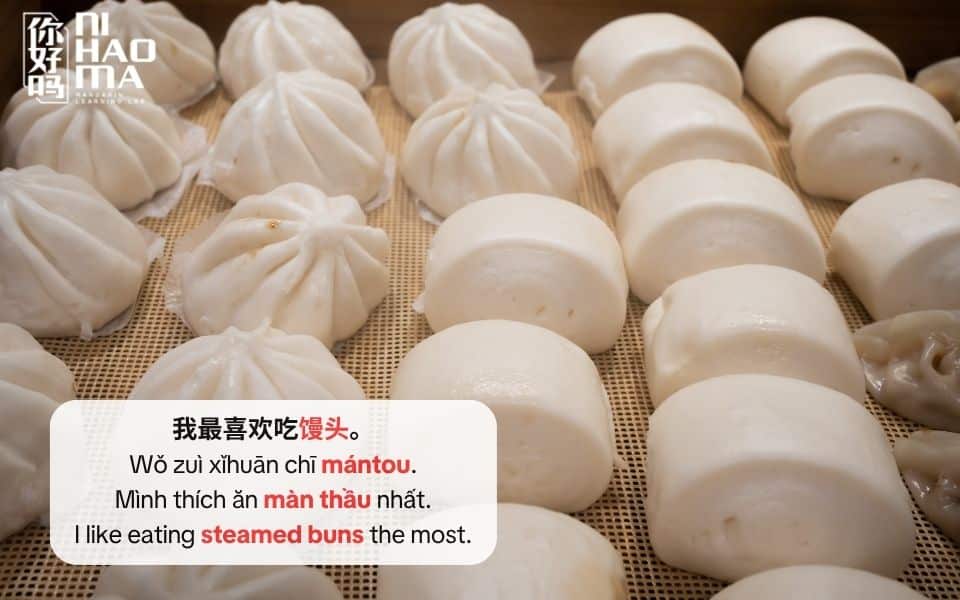
B: 我最喜欢吃饼和馒头。
Wǒ zuì xǐhuān chī bǐng hé mántou.
I like pancakes and steamed buns the most.
A: 你喜欢中餐还是西餐?
Nǐ xǐhuān Zhōngcān háishì Xīcān?
Do you prefer Chinese food or Western food?
B: 我更喜欢中餐,因为很好吃。
Wǒ gèng xǐhuān Zhōngcān, yīnwèi hěn hǎochī.
I prefer Chinese cuisine because it’s delicious.
A: 有机会我们一起去餐馆吃饭吧!
Yǒu jīhuì wǒmen yìqǐ qù cānguǎn chīfàn ba!
Let’s go to a restaurant together sometime!
Conclusion
Radical 184 is one of the most practical Chinese radicals because it appears in numerous characters related to food, meals, cooking, restaurants, and everyday dining. Mastering its meaning, stroke order, vocabulary, and real-life usage will help you recognize Chinese characters more quickly, expand your vocabulary, and communicate more confidently in daily conversations.
To remember Radical 184 effectively, study vocabulary by topic, practice writing the characters regularly, and reinforce your learning through dialogues and real-life examples. If you’re looking for a structured way to improve your Chinese, contact Ni Hao Ma today to find the course that best matches your current proficiency level.