
In the Chinese writing system, each radical is more than just a “building block”; it carries layers of cultural meaning and logic formed over thousands of years. Among these, Radical 31 is a fundamental component that appears frequently in many essential characters. In this article, we will explore Radical 31 in detail—from its symbolic meaning and correct stroke order to its application in common vocabulary.
What is Radical 31 in Chinese?
Radical 31 (囗 – wéi), often known as the “Enclosure” radical, is the 31st radical in the 214 Kangxi radicals. It primarily represents concepts related to surrounding, boundaries, limits, or enclosed spaces.
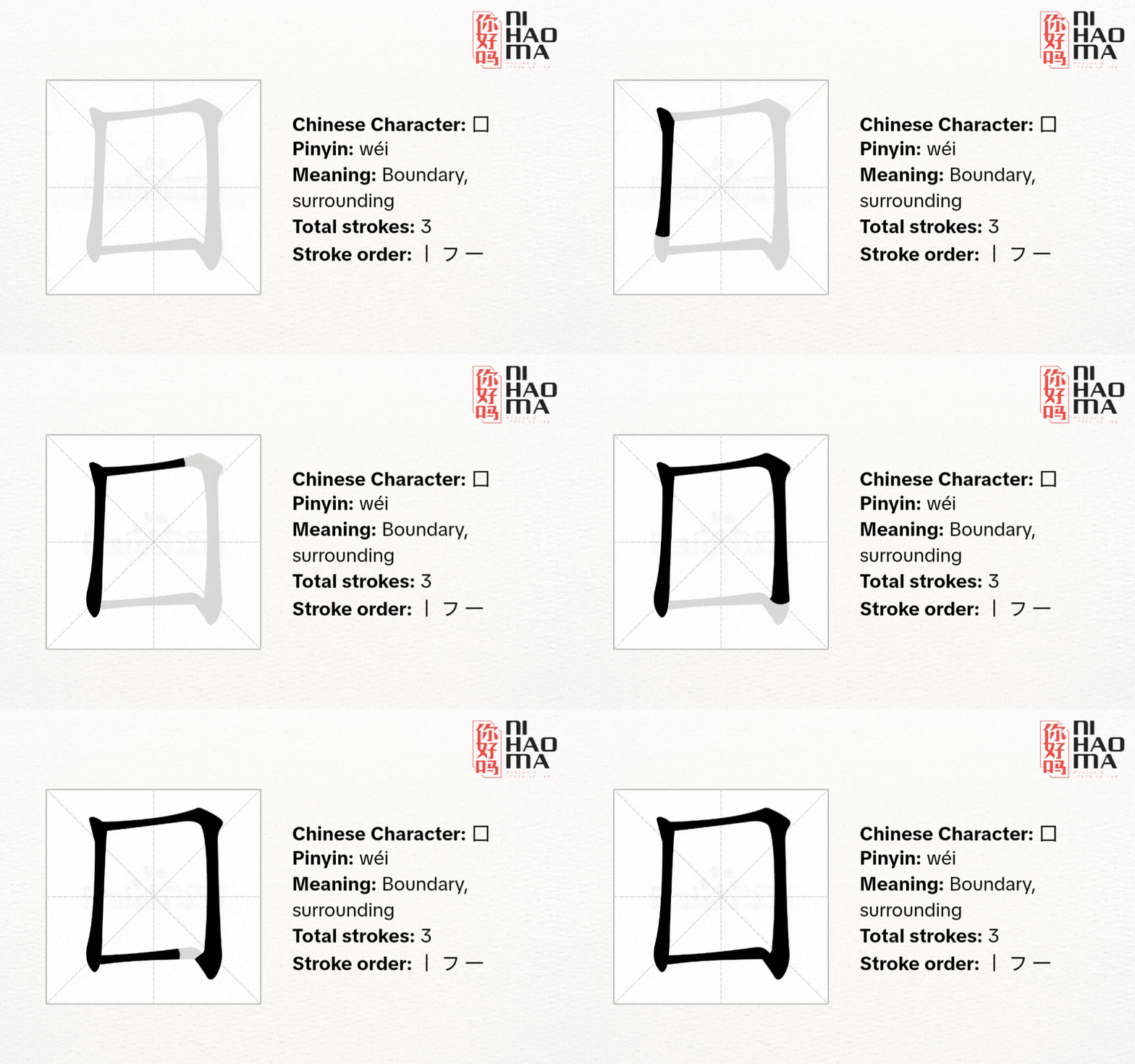
Historically, Radical 31 originated from pictograms found in oracle bone script and bronze inscriptions, mimicking the image of an area walled off or fenced in. The ideographic nature of this radical is clearly reflected in modern Chinese vocabulary.
For instance, in the character for “Country” (国 – Guó), Radical 31 surrounds the character for “Jade” (玉), implying that a nation is a sovereign territory with borders protecting its most precious values. Similarly, the character for “Garden” (园 – Yuán) refers to a space where plants are enclosed by walls or fences, while “Return” (回 – Huí) mimics the image of a vortex or returning within a closed loop.
Distinguishing Radical 30 and Radical 31
In Chinese linguistics, Radical 30 (口 – Kǒu) and Radical 31 (囗 – Wéi) are frequently confused because they both share a square shape. However, they differ significantly in meaning, size, and position.
| Feature | Radical 30 (口 – kǒu) | Radical 31 (囗 – wéi) |
| Meaning | Mouth, opening, entrance. | To surround, enclosure, boundary. |
| Size | Usually smaller, tucked into a corner. | Usually larger, enclosing other components. |
| Position | Typically on the left, right, or bottom. | Always surrounds the internal parts. |
| Strokes | 3 strokes | 3 strokes |
Conceptual Differences:
- Radical 30 (口): A pictograph of an open mouth. Characters containing this radical usually relate to oral actions such as eating, speaking, calling, or breathing (e.g., 吃 – chī: to eat; 喝 – hē: to drink).
- Radical 31 (囗): A pictograph of a city wall or a boundary. Characters containing this radical relate to limits, encirclement, or entities with defined borders (e.g., 国 – guó: country; 回 – huí: to return).
Common Vocabulary with Radical 31
Unlike many radicals that represent physical objects, radical 31 expresses an abstract concept—enclosure or scope. It often acts as a “frame” surrounding other components, shaping meanings related to boundaries or containment.
Here are some commonly used words with radical 31:
| Chinese | Pinyin | Meaning |
|---|---|---|
| 国 | guó | country |
| 团 | tuán | group, team |
| 园 | yuán | garden |
| 围 | wéi | to surround |
| 困 | kùn | trapped; difficult |
| 圈 | quān | circle |
| 图 | tú | map; diagram |
| 因 | yīn | cause; reason |
| 中国 | Zhōngguó | China |
| 外国 | wàiguó | foreign country |
| 国籍 | guójí | nationality |
| 国旗 | guóqí | national flag |
| 团结 | tuánjié | unity |
| 围巾 | wéijīn | scarf |
| 困难 | kùnnan | difficulty |
| 困苦 | kùnkǔ | hardship |
| 困扰 | kùnrǎo | to trouble |
| 囚犯 | qiúfàn | prisoner |
| 固定 | gùdìng | fixed |
| 固然 | gùrán | admittedly; indeed |
| 公园 | gōngyuán | park |
| 圆满 | yuánmǎn | complete; satisfactory |
| 原因 | yuányīn | reason; cause |
| 回家 | huíjiā | go home |
| 回忆 | huíyì | memory |
| 回答 | huídá | to answer |
| 意图 | yìtú | intention |
| 地图 | dìtú | map |
| 因为 | yīnwèi | because |
| 图书馆 | túshūguǎn | library |
| 团队 | tuánduì | team |
| 团员 | tuányuán | member (of a group) |
| 固执 | gùzhí | stubborn |
| 固守 | gùshǒu | to hold firmly |
| 园地 | yuándì | field; area |
| 圆形 | yuánxíng | circular shape |
| 因果 | yīnguǒ | cause and effect |
| 因缘 | yīnyuán | fate; destiny |
| 坚固 | jiāngù | firm; solid |
| 包围 | bāowéi | to surround |
| 围栏 | wéilán | fence |
| 范围 | fànwéi | scope; range |
| 囚禁 | qiújìn | to imprison |
Practical Dialogue Using Radical 31 Vocabulary
To master Radical 31, it is essential to see these characters in action. Contextual learning helps you remember the usage naturally. Below are three short dialogues utilizing common “Enclosure” radical vocabulary:
Dialogue 1
A: 这个项目有点赶,最近大家都挺累的。
(Zhège xiàngmù yǒudiǎn gǎn, zuìjìn dàjiā dōu tǐng lèi de.)
This project is a bit rushed, and everyone has been pretty tired lately.
B: 是啊,而且还有点困难。
(Shì a, érqiě hái yǒudiǎn kùnnan.)
Yeah, and it’s also a bit challenging.
A: 没事,我们一起想办法,别被卡住就行。
(Méishì, wǒmen yìqǐ xiǎng bànfǎ, bié bèi kǎ zhù jiù xíng.)
No worries, we’ll figure it out together—just don’t get stuck.
B: 行,那我先把图表整理一下。
(Xíng, nà wǒ xiān bǎ túbiǎo zhěnglǐ yíxià.)
Alright, I’ll organize the charts first.

Dialogue 2
A: 哇,这家店门口怎么这么多人啊?
(Wa, zhè jiā diàn ménkǒu zěnme zhème duō rén a?)
Wow, why are there so many people in front of this place?
B: 都围在那儿,估计是网红店吧。
(Dōu wéi zài nàr, gūjì shì wǎnghóng diàn ba.)
They’re all gathered around—it’s probably a trendy (internet-famous) spot.
A: 那还吃吗?感觉要等很久。
(Nà hái chī ma? Gǎnjué yào děng hěn jiǔ.)
So, should we still eat here? Feels like we’ll have to wait a long time.
B: 要不先转一圈?人少一点再回来。
(Yàobù xiān zhuàn yì quān? Rén shǎo yìdiǎn zài huílái.)
How about we walk around first and come back when it’s less crowded?
Dialogue 3
A: 你到哪了?我已经到了。
(Nǐ dào nǎ le? Wǒ yǐjīng dào le.)
Where are you? I’ve already arrived.
B: 还在路上,被堵住了,这边车都围在一起。
(Hái zài lùshàng, bèi dǔ zhù le, zhè biān chē dōu wéi zài yìqǐ.)
I’m still on the way—traffic is jammed, and all the cars are stuck together.
A: 怎么回事?
(Zěnme huí shì?)
What happened?
B: 前面好像有事故,有人被困了。
(Qiánmiàn hǎoxiàng yǒu shìgù, yǒu rén bèi kùn le.)
There seems to be an accident ahead—someone is trapped.
A: 那你慢慢来。
(Nà nǐ màn man lái.)
Alright, take your time.
Conclusion
Understanding the characteristics, structure, and role of radical 31 in Chinese can help you memorize vocabulary in a more logical and systematic way. More importantly, by combining meaning, vocabulary, and real-life context, you will gradually develop the ability to use Chinese characters more flexibly and naturally.
Start with familiar words, practice writing regularly, and apply what you learn in real conversations – this is the fastest way to turn your knowledge of radicals into practical language skills. Hopefully, this guide has helped you gain a clearer understanding of radical 31 in Chinese. Stay tuned for more useful and engaging learning content by Ni Hao Ma!