
In the Chinese writing system, radicals are not only structural components but also powerful tools that help learners understand meanings and memorize characters more effectively. The Ji radical is a familiar and frequently used component that appears in many common Chinese characters.
However, what often confuses learners is that there are actually two different Ji radicals in Chinese. Although they share the same pinyin, they differ completely in form, meaning, and usage. So what exactly are radical 49 and radical 16 in Chinese, and how can you tell them apart? Let’s explore them in detail.
What Is the Ji Radical in Chinese?
In Chinese, there are two radicals pronounced “Ji” that learners commonly mix up due to their similar names but distinct characteristics.
Radical 49: 己 (jǐ)
Radical 49 (己, jǐ) is one of the 214 Kangxi radicals and carries the meaning of self, oneself, or personal identity. It is also associated with the sixth Heavenly Stem in traditional Chinese cosmology.
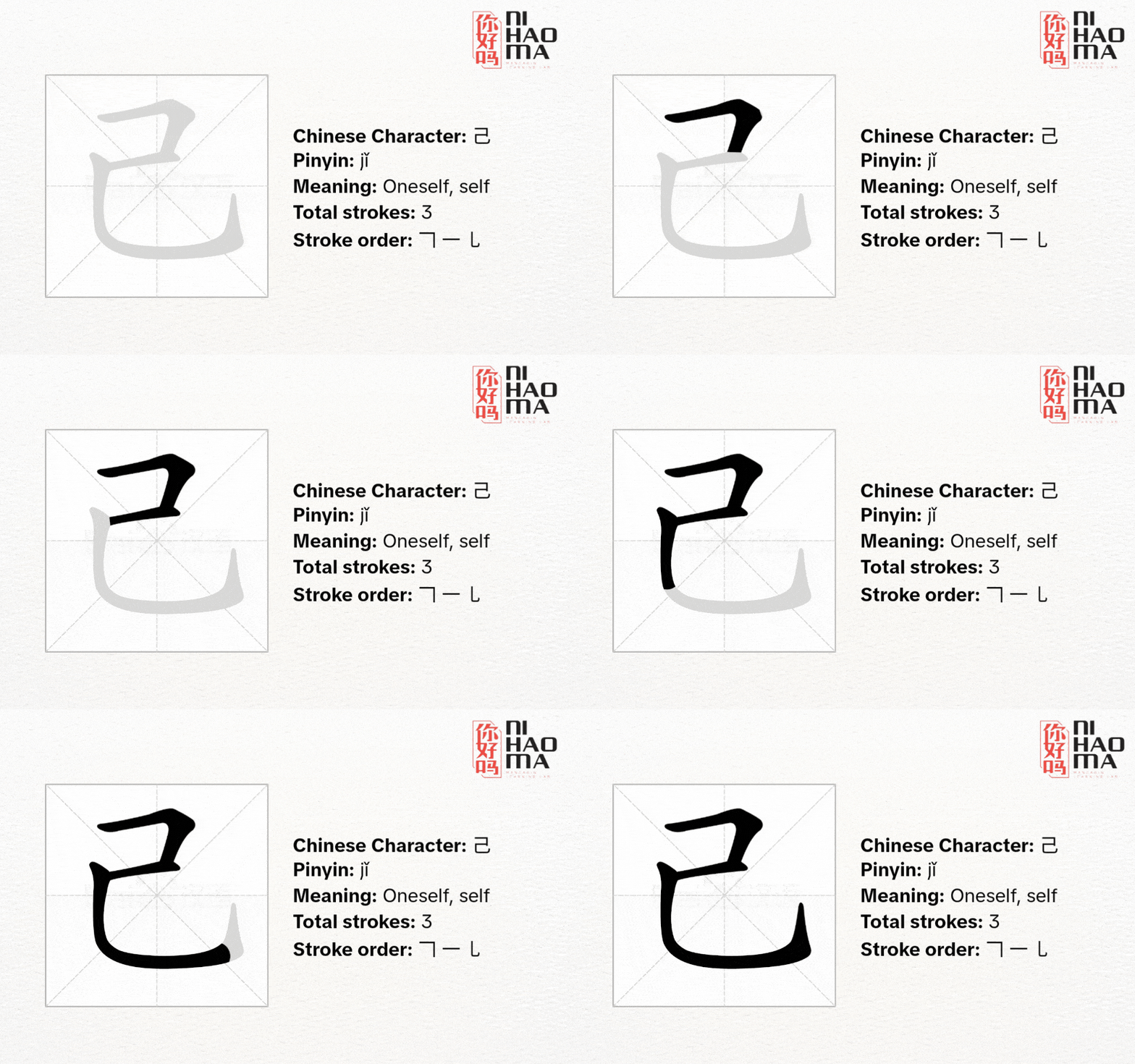
Historically, the character 己 originated from ancient pictographs found in oracle bone script and bronze inscriptions. Its curved, enclosed shape symbolizes an inward direction, representing introspection or the self.
In modern Chinese characters, the Ji radical (己) can function as a standalone radical or as a component within more complex characters. It typically conveys meanings related to the self, personal actions, or internal states.
Common examples include:
- 自己 (zìjǐ) – oneself
- 知己 (zhījǐ) – close friend, confidant
- 克己 (kèjǐ) – self-discipline
Radical 16: 几 (jī / jǐ)
Radical 16 (几, jī/jǐ) is another important Ji radical, originally depicting a small table or stool in ancient Chinese life.
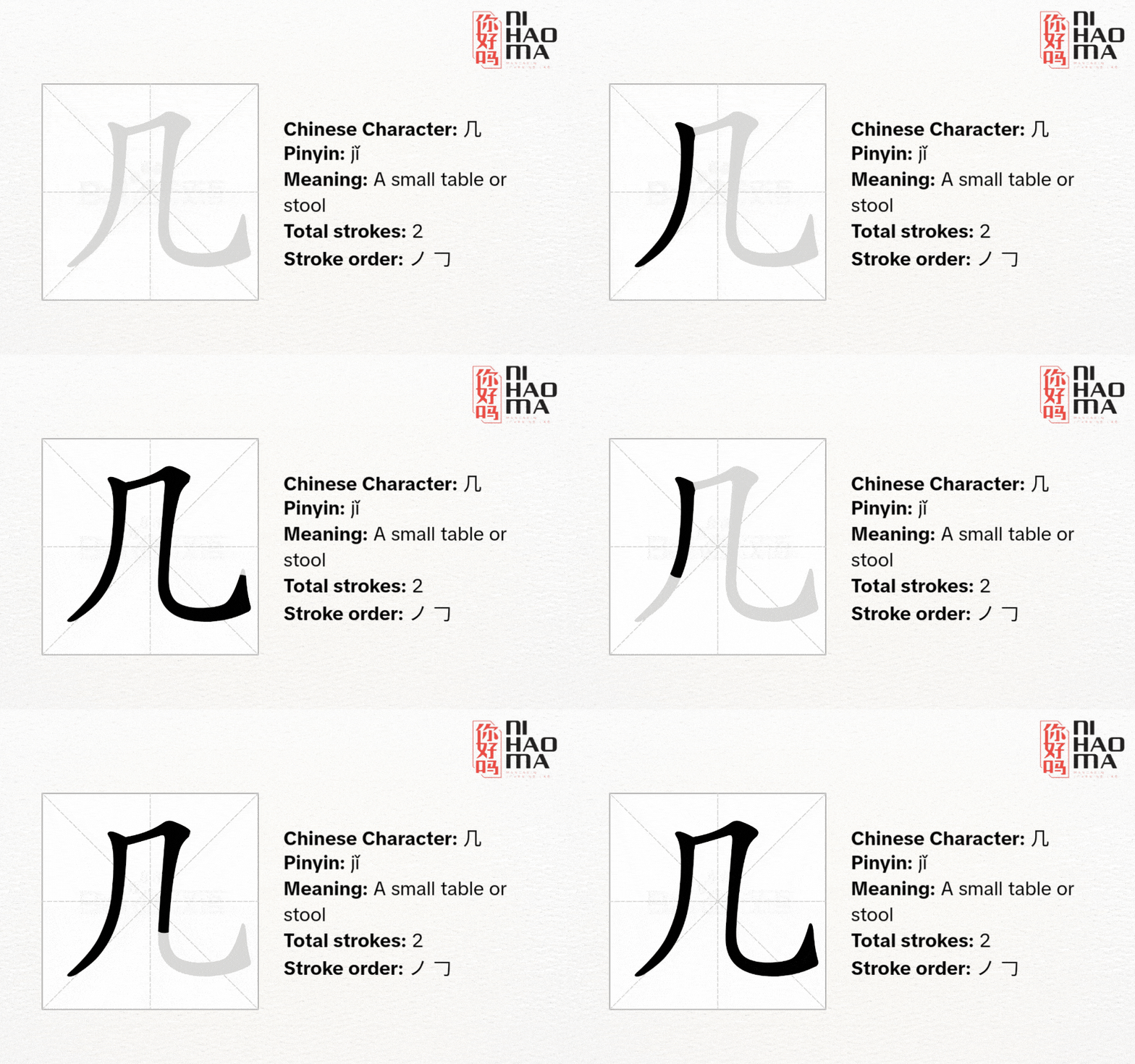
Its original meaning refers to a low table or tea table, but in modern Chinese, the character 几 (jǐ) is more commonly used as an interrogative pronoun meaning “how many” or “a few.”
This radical consists of two strokes and is visually similar to other radicals like 入 or 八, but it features a slight hook at the end, resembling the leg of a piece of furniture.
Examples of modern usage:
- 几个 (jǐ gè) – how many
- 几点 (jǐ diǎn) – what time
- 几乎 (jīhū) – almost
How to Write the Ji Radical in Chinese
Distinguishing and writing radical 49 and radical 16 in Chinese can be challenging for beginners, despite their identical pronunciation.
How to Write Radical 己 (jǐ)
Radical 己 has 3 strokes:
| Stroke Order | Stroke | Description |
| 1 | 𠃍 (Horizontal turning stroke) | Write from left to right, then bend downward slightly inward. |
| 2 | 一 (Horizontal stroke) | Add a short horizontal line in the middle. |
| 3 | 乚 (Hooked turning stroke) | Write from right to left, curve downward, and finish with a slight hook. |
How to Write Radical 几 (jī / jǐ)
Radical 几 has 2 strokes:
| Stroke Order | Stroke | Description |
| 1 | ノ (Left-falling stroke) | Write downward with a slight curve to the left. |
| 2 | 𠃌 (Horizontal turning hook) | Draw a horizontal line, bend downward, and finish with a hook. |
Vocabulary with the Ji Radical in Chinese
If radical 己 (49) is associated with “self” and internal meaning, then radical 几 (16) is often linked to meanings such as “a few,” “how many,” or appears in common nouns. Learning vocabulary by radical helps you recognize characters faster, infer meanings more accurately, and build a more systematic vocabulary base.
Vocabulary with Radical 49 (己)
| Chinese | Pinyin | Meaning |
|---|---|---|
| 记 | jì | To remember, record |
| 改 | gǎi | To change, reform |
| 忌 | jì | To avoid, be jealous |
| 起 | qǐ | To get up, begin |
| 配 | pèi | To match, pair |
| 自己 | zìjǐ | Oneself |
| 知己 | zhījǐ | Confidant |
| 利己 | lìjǐ | Self-serving |
| 记录 | jìlù | Record |
| 记忆 | jìyì | Memory |
| 记者 | jìzhě | Journalist |
| 改变 | gǎibiàn | Change |
| 改革 | gǎigé | Reform |
| 改善 | gǎishàn | Improve |
| 忘记 | wàngjì | Forget |
| 记得 | jìde | Remember |
| 日记 | rìjì | Diary |
| 登记 | dēngjì | Register |
| 世纪 | shìjì | Century |
| 纪律 | jìlǜ | Discipline |
| 纪念 | jìniàn | Commemorate |
| 起床 | qǐchuáng | Get up |
| 起来 | qǐlái | Stand up |
| 一起 | yìqǐ | Together |
| 爱己 | àijǐ | Self-love |
| 分配 | fēnpèi | Distribute |
| 己用 | jǐyòng | For personal use |
Vocabulary with Radical 16 (几)
| Chinese | Pinyin | Meaning |
|---|---|---|
| 几 | jǐ | How many |
| 几 | jī | Small table (classical) |
| 凡 | fán | All, ordinary |
| 凤 | fèng | Phoenix |
| 风 | fēng | Wind |
| 凭 | píng | Rely on |
| 凳 | dèng | Stool |
| 秃 | tū | Bald |
| 几个 | jǐ gè | How many |
| 几天 | jǐ tiān | How many days |
| 几年 | jǐ nián | How many years |
| 几点 | jǐ diǎn | What time |
| 几次 | jǐ cì | How many times |
| 几乎 | jīhū | Almost |
| 几率 | jīlǜ | Probability |
| 几何 | jǐhé | Geometry |
| 茶几 | chájī | Tea table |
| 风景 | fēngjǐng | Scenery |
| 风格 | fēnggé | Style |
| 风水 | fēngshuǐ | Feng shui |
| 风行 | fēngxíng | Popular |
| 风险 | fēngxiǎn | Risk |
| 风度 | fēngdù | Demeanor |
| 风气 | fēngqì | Social atmosphere |
| 风速 | fēngsù | Wind speed |
| 风力 | fēnglì | Wind force |
| 凤凰 | fènghuáng | Phoenix |
| 凭证 | píngzhèng | Voucher |
| 凭借 | píngjiè | Rely on |
| 凡是 | fánshì | Whenever |
| 平凡 | píngfán | Ordinary |
| 非凡 | fēifán | Extraordinary |
| 飞机 | fēijī | Airplane |
| 机场 | jīchǎng | Airport |
| 超凡 | chāofán | Exceptional |
| 风雨 | fēngyǔ | Wind and rain |
| 风暴 | fēngbào | Storm |
| 风靡 | fēngmǐ | Sweep across |
| 手机 | shǒujī | Mobile phone |
| 机会 | jīhuì | Opportunity |
| 机器 | jīqì | Machine |
| 月亮 | yuèliang | Moon |
| 巩固 | gǒnggù | Consolidate |
Sample Dialogues with the Ji Radical
In Chinese, vocabulary containing the Ji radical (己 / 几) appears very frequently in everyday communication. Learning words in isolation is not enough – you need to see how they function in real conversations. Below are two practical dialogues using radical 49 and radical 16 in Chinese, based on common real-life situations.
Dialogue 1 – Using Radical 49 (己)
A: 这次项目你完成得怎么样?
(Zhè cì xiàngmù nǐ wánchéng de zěnmeyàng?)
How did your project go this time?
B: 我觉得还可以,基本上都是我自己完成的。
(Wǒ juéde hái kěyǐ, jīběn shàng dōu shì wǒ zìjǐ wánchéng de.)
I think it went pretty well. I basically did everything myself.
A: 那不错啊,不过压力大不大?
(Nà búcuò a, búguò yālì dà bù dà?)
That’s great. But was it stressful?
B: 当然大,不过我觉得要对自己负责。
(Dāngrán dà, búguò wǒ juéde yào duì zìjǐ fùzé.)
Of course it was, but I think I need to take responsibility for myself.
A: 说得对,这样才能成长。
(Shuō de duì, zhèyàng cái néng chéngzhǎng.)
That’s right. That’s how you grow.
B: 是啊,一切还是要靠自己努力。
(Shì a, yīqiè háishì yào kào zìjǐ nǔlì.)
Yeah, in the end, it all depends on your own effort.

Dialogue 2 – Using Radical 16 (几)
A: 你们公司现在有几个人?
(Nǐmen gōngsī xiànzài yǒu jǐ gè rén?)
How many people are in your company now?
B: 不多,大概二十几个人吧。
(Bù duō, dàgài èrshí jǐ gè rén ba.)
Not many, around twenty-something people.
A: 那你每天几点上班?
(Nà nǐ měitiān jǐ diǎn shàngbān?)
What time do you start work every day?
B: 我一般九点上班,不过有时候会早一点。
(Wǒ yìbān jiǔ diǎn shàngbān, búguò yǒu shíhou huì zǎo yīdiǎn.)
I usually start at 9, but sometimes a bit earlier.
A: 你来这家公司几年了?
(Nǐ lái zhè jiā gōngsī jǐ nián le?)
How many years have you been at this company?
B: 快三年了,时间过得很快。
(Kuài sān nián le, shíjiān guò de hěn kuài.)
Almost three years. Time really flies.
Conclusion
The Ji radical (己 / 几) – specifically radical 49 and radical 16 in Chinese – is a fundamental and frequently used part of the Chinese language. These radicals appear widely in vocabulary and everyday communication.
To learn effectively, combine vocabulary memorization, stroke order practice, and real-life usage. Studying Chinese through radicals will help you expand your vocabulary and significantly improve your overall language proficiency.
Hopefully, this guide by Ni Hao Ma has provided you with valuable insights into the Ji radical in Chinese. Stay tuned for more useful and engaging Chinese learning content!