Among the 214 radicals, radical 40 in Chinese is widely considered one of the most relatable and meaningful components in the Chinese writing system. But what exactly is radical 40 in Chinese? What deep cultural meanings does it hold, and which high-frequency words use it? Let’s explore this essential building block of the Chinese language with Ni Hao Ma!
What is Radical 40 in Chinese?
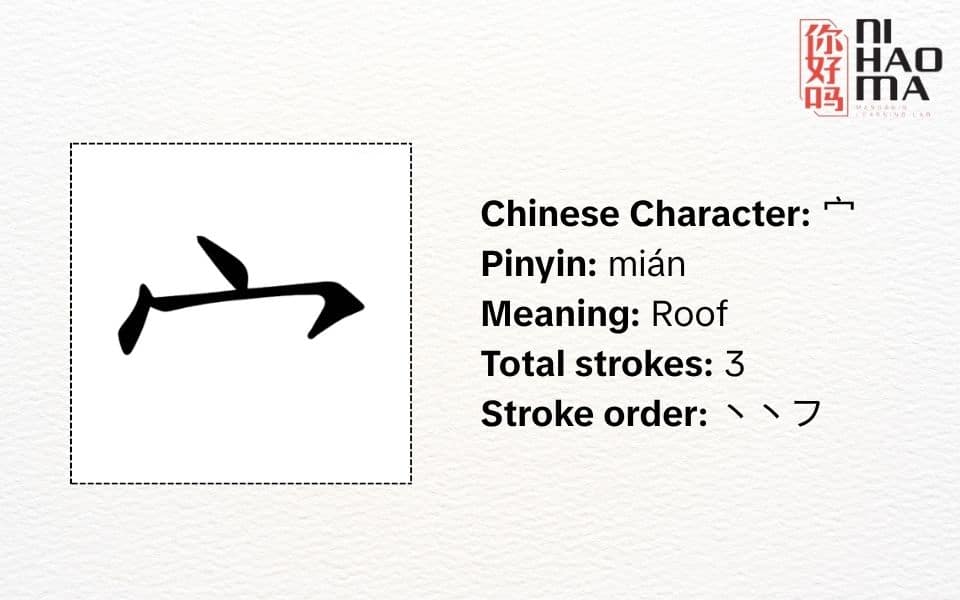
Radical 40 (宀 – mián) is the 40th radical among the 214 Kangxi radicals. This radical frequently appears in Chinese characters related to houses, residences, safety and living spaces.
According to the ancient Chinese dictionary Shuowen Jiezi, the original meaning of 宀 (mián) is roof or shelter. The shape of this radical was derived from ancient scripts, visually representing a house with a roof covering the structure below.
In Eastern culture, a roof represents far more than physical shelter; it is a profound symbol of family reunions, safety, and happiness. Consequently, Chinese characters containing radical 40 usually carry positive connotations or relate closely to human habitat and daily life.
Structurally, this radical is straightforward and easy to memorize, consisting of only 3 basic strokes. When integrated into a compound character, radical 40 almost always acts as the semantic component (the part that provides the meaning) and is consistently placed at the very top of the character.
Examples:
- 家 (jiā – Home/Family)
- 安 (ān – Peace/Safety)
- 宿 (sù – To stay overnight/Lodge)
How to Write Radical 40 in Chinese
Writing Chinese characters beautifully requires more than just drawing lines; it demands the correct stroke order. Mastering the stroke-order rules—such as writing from top to bottom and left to right – will significantly accelerate your character memorization and improve your handwriting aesthetics.
| Stroke Order | Stroke | Description |
| 1 | 丶(Dot) | Place your pen at the top center and write a short dot pressing downward. |
| 2 | 丶(Dot) | Move your pen to the lower left and write a short vertical dot slanting to the left. |
| 3 | フ (Horizontal Hook) | Start from the middle of the second stroke, draw a horizontal line to the right, and smoothly flick a sharp hook downward. |
Tip from Ni Hao Ma: When writing radical 40 in more complex Chinese characters, make sure to stretch the third stroke (the horizontal hook) wide enough. This ensures it perfectly shelters and balances the component underneath, giving the entire character an elegant, symmetrical structure.
Chinese Vocabulary with Radical 40
Radical 40 boasts an exceptionally high frequency in modern Mandarin. Many characters utilizing this radical are essential for daily conversations and appear regularly across all HSK proficiency exam levels.
Here is a comprehensive list of 60 essential words containing radical 40, systematically arranged from single characters to compound words for effortless learning and retention.
| Chinese Character | Pinyin | English |
|---|---|---|
| 家 | jiā | Home; family |
| 安 | ān | Peaceful; safe |
| 字 | zì | Character; written word |
| 完 | wán | To finish; complete |
| 室 | shì | Room |
| 客 | kè | Guest; visitor |
| 官 | guān | Official; government officer |
| 定 | dìng | To decide; fixed |
| 宜 | yí | Suitable; appropriate |
| 守 | shǒu | To guard; protect |
| 宝 | bǎo | Treasure |
| 宽 | kuān | Wide; broad |
| 富 | fù | Rich; wealthy |
| 容 | róng | To contain; tolerate |
| 察 | chá | To observe; inspect |
| 密 | mì | Secret; confidential |
| 审 | shěn | To examine; review |
| 害 | hài | Harm; damage |
| 宫 | gōng | Palace |
| 宇 | yǔ | Universe; space |
| 宙 | zhòu | Time-space; cosmos |
| 宿 | sù | To stay overnight; lodge |
| 寂 | jì | Quiet; lonely |
| 宅 | zhái | Residence; house |
| 家人 | jiārén | Family member |
| 家长 | jiāzhǎng | Parent; guardian |
| 家乡 | jiāxiāng | Hometown |
| 家庭 | jiātíng | Family; household |
| 大家 | dàjiā | Everyone |
| 安全 | ānquán | Safety; secure |
| 安静 | ānjìng | Quiet; peaceful |
| 安排 | ānpái | To arrange; arrangement |
| 完成 | wánchéng | To complete |
| 完美 | wánměi | Perfect |
| 客人 | kèrén | Guest |
| 客厅 | kètīng | Living room |
| 客气 | kèqi | Polite; courteous |
| 汉字 | hànzì | Chinese character |
| 名字 | míngzi | Name |
| 教室 | jiàoshì | Classroom |
| 办公室 | bàngōngshì | Office |
| 其实 | qíshí | Actually; in fact |
| 实话 | shíhuà | Truth; honest words |
| 宿舍 | sùshè | Dormitory |
| 宫殿 | gōngdiàn | Palace |
| 决定 | juédìng | Decision; to decide |
| 定位 | dìngwèi | Positioning; locate |
| 定期 | dìngqī | Regularly; periodic |
| 一定 | yídìng | Certainly; definitely |
| 空气 | kōngqì | Air |
| 空间 | kōngjiān | Space |
| 富有 | fùyǒu | Wealthy; rich |
| 富裕 | fùyù | Prosperous |
| 丰富 | fēngfù | Rich; abundant |
| 宝贝 | bǎobèi | Treasure; darling |
| 警察 | jǐngchá | Police officer |
| 害怕 | hàipà | To be afraid |
| 宽容 | kuānróng | Tolerant; forgiving |
| 宽敞 | kuānchang | Spacious |
| 容易 | róngyì | Easy |
| 内容 | nèiróng | Content |
| 秘密 | mìmì | Secret |
| 密码 | mìmǎ | Password |
| 审查 | shěnchá | Review; examination |
| 审核 | shěnhé | Audit; verify |
| 观察 | guānchá | To observe |
| 宇宙 | yǔzhòu | Universe |
| 寂寞 | jìmò | Lonely; loneliness |
Sample Dialogues With Radical 40
Rote memorization of standalone vocabulary often leads to short-term retention. In contrast, studying through context-rich dialogues triggers the brain’s situational memory. To help you naturally absorb and actively apply these words, practice with the following real-life dialogue samples:
Dialogue 1
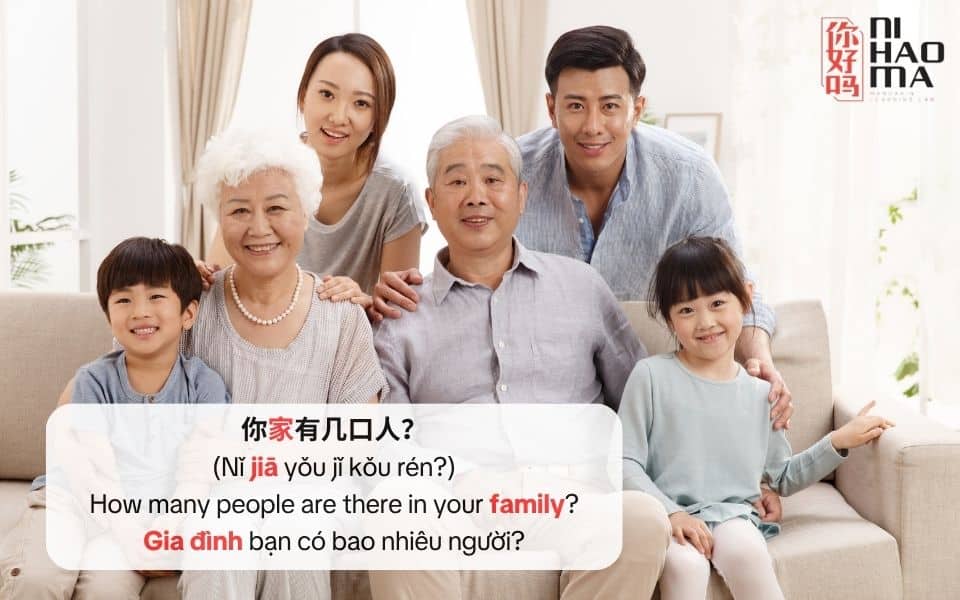
A: 你家有几口人?
(Nǐ jiā yǒu jǐ kǒu rén?)
How many people are there in your family?
B: 我家有四口人,爸爸、妈妈、姐姐和我。
(Wǒ jiā yǒu sì kǒu rén, bàba, māma, jiějie hé wǒ.)
There are four people in my family: dad, mom, older sister, and me.
A: 你家离学校远吗?
(Nǐ jiā lí xuéxiào yuǎn ma?)
Is your home far from the school?
B: 不远,而且我家附近很安静。
(Bù yuǎn, érqiě wǒ jiā fùjìn hěn ānjìng.)
Not far, and it is very quiet around my house.
A: 听起来很舒服。
(Tīng qǐlái hěn shūfu.)
That sounds very comfortable.
B: 是啊,我很喜欢现在的生活。
(Shì a, wǒ hěn xǐhuān xiànzài de shēnghuó.)
Yes, I really like my life right now.
Dialogue 2
A: 你现在住在哪里?
(Nǐ xiànzài zhù zài nǎlǐ?)
Where are you living right now?
B: 我住在学校的宿舍。
(Wǒ zhù zài xuéxiào de sùshè.)
I live in the school dormitory.
A: 宿舍有几个人?
(Sùshè yǒu jǐ gè rén?)
How many people are there in the dorm?
B: 四个人,我们相处得很好。
(Sì gè rén, wǒmen xiāngchǔ de hěn hǎo.)
Four people, and we get along very well.
A: 你们的宿舍大吗?
(Nǐmen de sùshè dà ma?)
Is your dormitory big?
B: 很宽敞,也很安全。
(Hěn kuānchang, yě hěn ānquán.)
It’s very spacious and also very safe.
Conclusion
Understanding radical 40 in Chinese helps learners realize that Chinese characters are not random symbols to memorize mechanically. Instead, they are meaningful building blocks connected by logic, culture and imagery.
By learning the theory behind radicals and practicing them in everyday conversations, you can transform vocabulary learning from rote memorization into true understanding. If you’re looking for a structured Chinese learning program with personalized guidance and experienced teachers, Ni Hao Ma is here to support your journey and help you master Chinese with confidence.