In the process of learning Chinese characters, mastering radicals is a key factor that significantly improves vocabulary retention and reading comprehension. The radical 110 (矛) is an interesting and meaningful component that appears in many familiar Chinese characters. In this article, we will explore radical 110 in Chinese, including its meaning, writing order, structure, and common vocabulary examples containing this radical.
What is Radical 110 in Chinese?
Radical 110 in Chinese (矛 – máo) is one of the 214 Kangxi radicals. It represents a spear—an ancient infantry weapon with a sharp pointed tip used for thrusting in warfare.
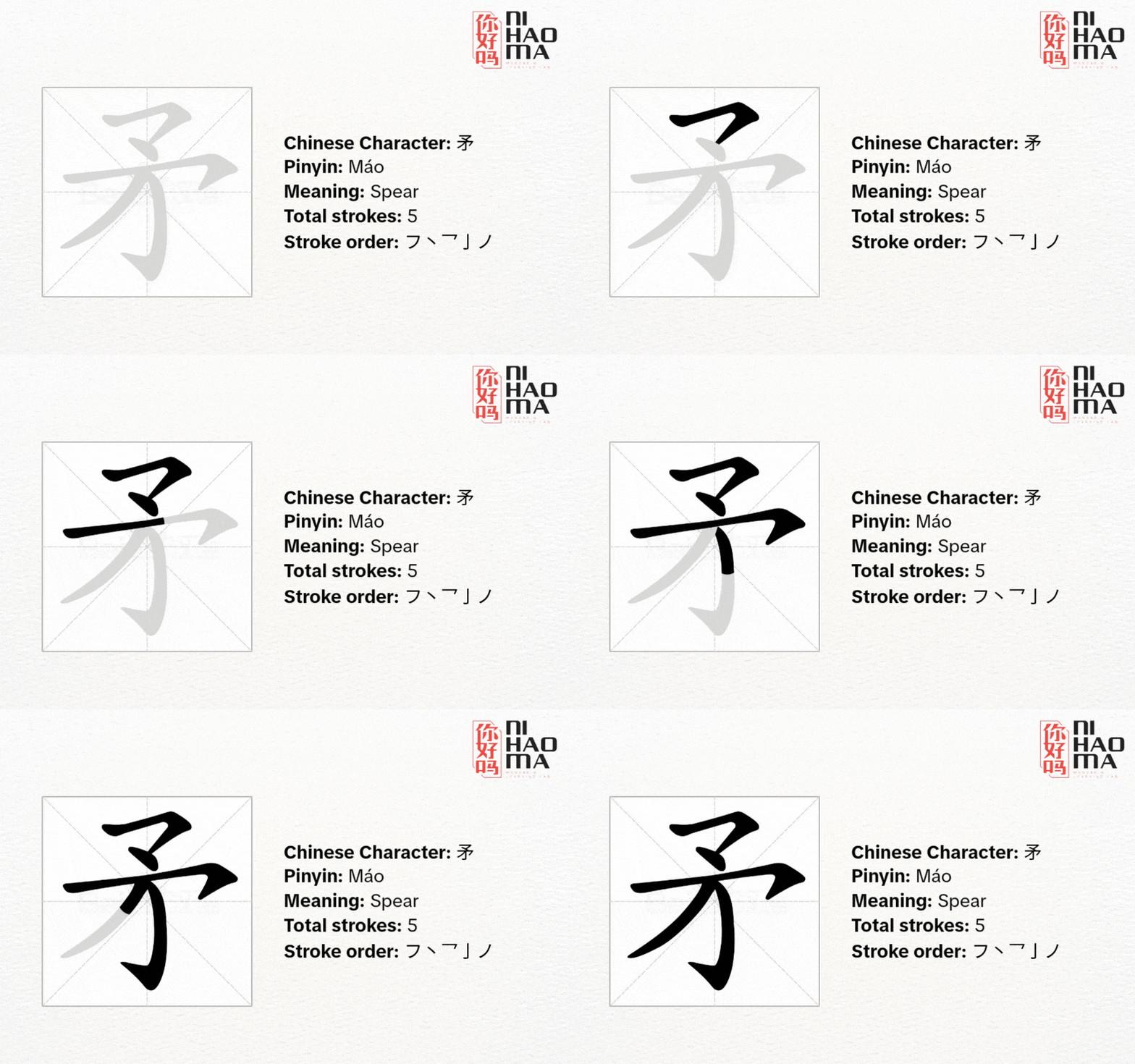
The character 矛 is a pictographic character. In ancient oracle bone inscriptions (甲骨文) and bronze inscriptions (金文), it clearly depicted a long shaft with a sharp spearhead and a handle or hook at the bottom for gripping. Over thousands of years, the form has become more standardized and simplified, but the core structure still reflects the original weapon shape.
When used as a radical in Chinese characters, radical 110 often relates to weapons, conflict, confrontation, or sharpness and strength. Many characters containing this radical reflect opposing forces or competitive situations. However, in modern Chinese, its role is mainly structural and semantic rather than directly referring to a physical weapon.
How to Write Radical 110 (矛)
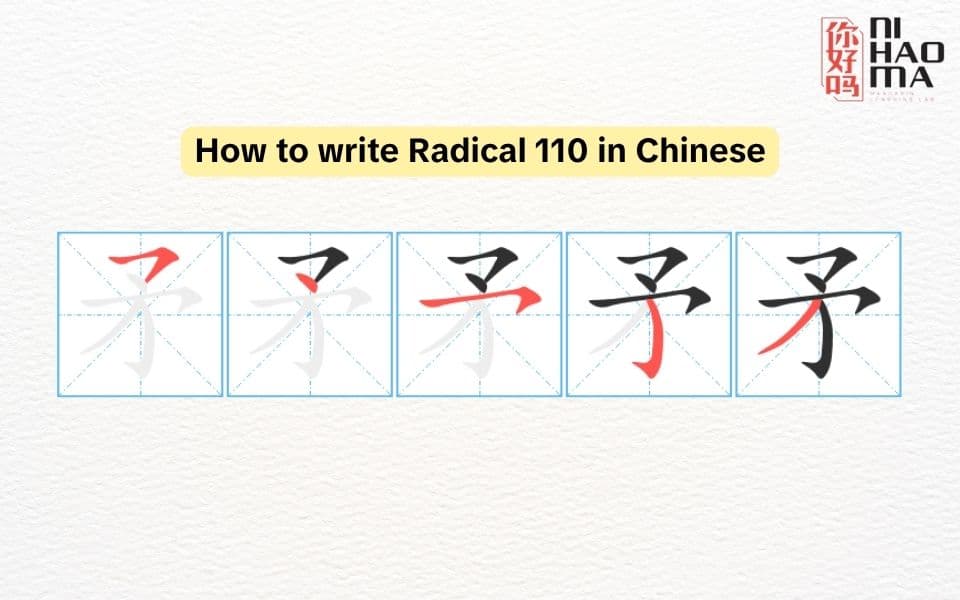
Radical 110 in Chinese is composed of 5 strokes, written in the following order:
| Stroke Order | Stroke | Description |
|---|---|---|
| 1 | フ | Start from the upper-left area, draw a short curved stroke to the right, then bend downward slightly. |
| 2 | 丶 | A short dot stroke placed near the upper center. |
| 3 | 乛 | A horizontal stroke that bends downward with a hook at the end, forming the spearhead structure. |
| 4 | 亅 | A vertical hook stroke drawn downward with a slight hook at the end. |
| 5 | ノ | A left-falling stroke used to balance the character structure. |
Vocabulary with Radical 110 in Chinese
Radical 110 (矛) is associated with the image of a spear or ancient weapon used for attack and defense. In modern Chinese, it does not frequently appear alone, but it is an important component in many abstract vocabulary words. Below are commonly used words containing this radical:
| Chinese | Pinyin | Meaning |
|---|---|---|
| 矛 | máo | spear |
| 柔 | róu | soft, gentle |
| 矜 | jīn | proud, cautious |
| 矞 | yù | piercing; auspicious clouds |
| 矛盾 | máodùn | contradiction; inconsistency |
| 温柔 | wēnróu | gentle, tender |
| 柔软 | róuruǎn | soft, flexible |
| 矛头 | máotóu | focal point; target (figurative) |
| 自矜 | zìjīn | self-important; self-conceited |
| 柔和 | róuhé | mild, gentle |
| 刚柔 | gāngróu | hardness and softness |
| 矜持 | jīnchí | reserved; restrained |
| 长矛 | chángmáo | long spear |
| 矛隼 | máosǔn | Arctic falcon |
| 柔情 | róuqíng | tender feelings |
| 柔术 | róushù | jujutsu / grappling art |
| 柔顺 | róushùn | obedient; gentle |
| 矜夸 | jīnkuā | boastful |
| 柔美 | róuměi | graceful beauty |
| 柔道 | róudào | Judo |
| 桑柔 | sāngróu | calm, gentle |
| 怀柔 | huáiróu | appeasement; conciliatory approach |
| 矜贵 | jīnguì | noble; self-respecting |
| 柔弱 | róuruò | weak; delicate |
| 轻柔 | qīngróu | light and gentle |
| 纤柔 | xiānróu | slender; delicate |
| 柔嫩 | róunèn | tender; soft |
| 不矜 | bùjīn | not conceited |
| 柔性 | róuxìng | flexibility (technical property) |
| 优柔 | yōuróu | indecisive; hesitant |
| 娇柔 | jiāoróu | delicate; graceful |
| 矜怜 | jīnlián | pity; compassion |
| 矛戈 | máogē | weapons; warfare |
| 柔肠 | róucháng | tender-hearted |
| 矛戟 | máojǐ | ancient weapons |
| 柔化 | róuhuà | soften; mitigate |
| 矜慎 | jīnshèn | cautious; careful |
Sample Dialogues Using Vocabulary of Radical 110 (矛)
Learning vocabulary through real conversational context is one of the most effective ways to retain and use words accurately. Below are sample dialogues featuring words related to radical 110 (矛) to help you apply them in real-life situations.
Dialogue 1
A: 我们需要重新讨论营销计划,我觉得有些地方不对劲。
(Wǒmen xūyào chóngxīn tǎolùn yíngxiāo jìhuà, wǒ juédé yǒuxiē dìfāng bùduìjìn.)
We need to re-discuss the marketing plan. I feel some parts are not right.
B: 是的,客户的要求和目前的预算存在很大矛盾。
(Shì de, kèhù de yāoqiú hé mùqián de yùsuàn cúnzài hěn dà máodùn.)
Yes, there is a big conflict between the client’s requirements and the current budget.
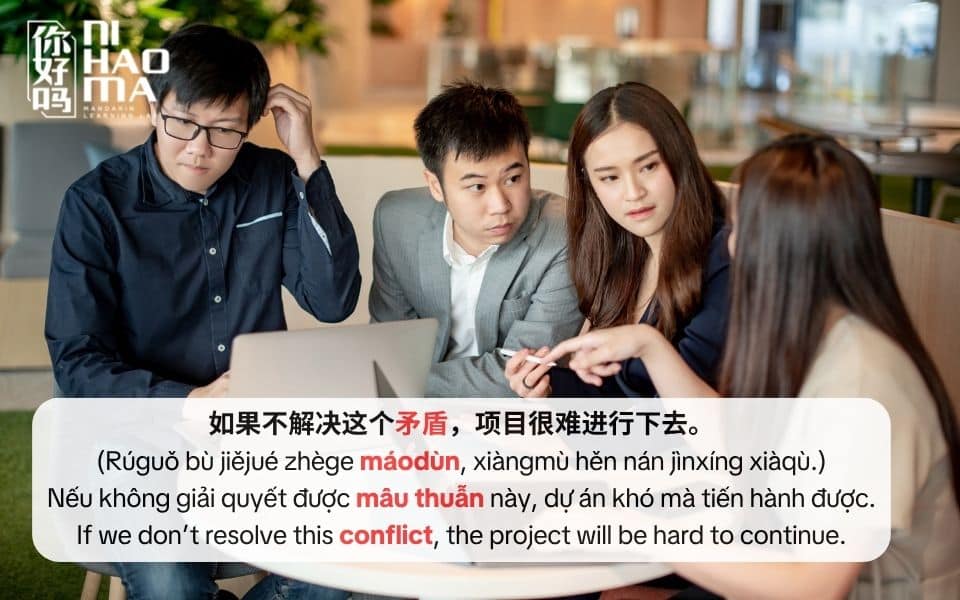
A: 如果不解决这个矛盾,项目很难进行下去。
(Rúguǒ bù jiějué zhège máodùn, xiàngmù hěn nán jìnxíng xiàqù.)
If we don’t resolve this conflict, the project will be hard to continue.
B: 我会想办法调整,以平衡双方。
(Wǒ huì xiǎng bànfǎ tiáozhěng, yǐ pínghéng shuāngfāng.)
I will try to make adjustments to balance both sides.
Dialogue 2
A: 你看新发布的手机了吗?
(Nǐ kàn xīn fābù de shǒujī le ma?)
Have you seen the newly released phone?
B: 是那种拥有柔性折叠屏的吗?
(Shì nà zhǒng yǒngyǒu róuxìng zhédié píng de ma?)
Is it the kind with a flexible foldable screen?
A: 对,这种柔性显示技术真的很令人惊叹。
(Duì, zhè zhǒng róuxìng xiǎnshì jìshù zhēnde hěn lìngrén jīngtàn.)
Yes, this flexible display technology is really amazing.
B: 但我担心它多次折叠后的耐用性。
(Dàn wǒ dānxīn tā duōcì zhédié hòu de nàiyòngxìng.)
But I’m worried about its durability after being folded many times.
Dialogue 3
A: 你觉得新来的助教性格怎么样?
(Nǐ juédé xīn lái de zhùjiào xìnggé zěnmeyàng?)
What do you think about the new teaching assistant’s personality?
B: 她说话非常温柔,但做事却很有原则。
(Tā shuōhuà fēicháng wēnròu, dàn zuòshì què hěn yǒu yuánzé.)
She speaks very gently, but she is very principled in her work.
A: 没错,这就是我们常说的“外柔内刚”吧。
(Méicuò, zhè jiùshì wǒmen cháng shuō de “wàiróu nèigāng” ba.)
Exactly, this is what we often call “soft outside, strong inside.”
B: 对,虽然她看起来柔弱,但处理危机很果断。
(Duì, suīrán tā kàn qǐlái róuruò, dàn chǔlǐ wēijī hěn guǒduàn.)
Yes, although she looks gentle, she handles crises very decisively.
Conclusion
Radical 110 (矛) originally refers to an ancient spear used in warfare in classical Chinese culture. Over time, it has expanded into many abstract meanings in modern Chinese, especially concepts related to contradiction and conflict.
Understanding its meaning, writing structure, and usage helps learners not only memorize Chinese characters more effectively but also grasp the logical structure behind the language system. We hope this guide by Ni Hao Ma has provided you valuable knowledge. Stay tuned for more interesting Chinese radicals and vocabulary lessons in the future!