Chinese radicals are one of the most important building blocks of Chinese characters. Understanding radicals not only helps learners recognize character structures more easily but also improves vocabulary retention and character comprehension.
Radical 8 (亠) is a relatively familiar component that appears in many commonly used words related to culture, language, education, commerce, and daily life. Although it is not among the most frequently used radicals, Chinese characters containing radical 8 are widely encountered in real-life communication.
So, what exactly is radical 8 in Chinese, what does it represent, and which common Chinese words contain this radical? Let’s explore everything you need to know in this guide.
What Is Radical 8 in Chinese?
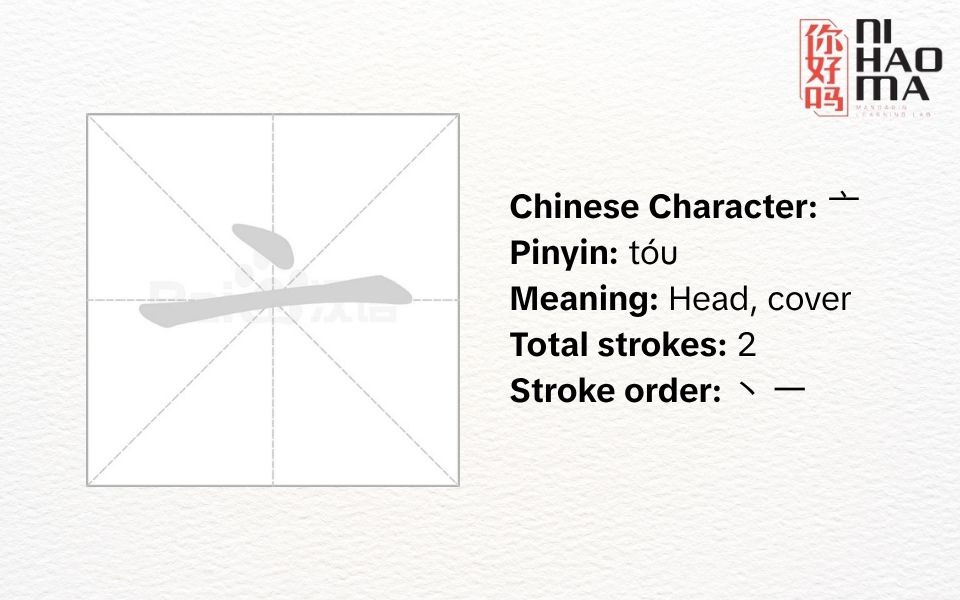
Radical 8 in Chinese (亠 – tóu) is the 8th radical among the 214 Kangxi radicals. It belongs to the group of radicals with the simplest structures and consists of only two strokes.
Traditionally, radical 8 symbolizes the uppermost part of a person or object. It carries meanings associated with the top, summit, head, highest point, or upper position.
Visually, the radical resembles a small lid or hat placed above something. In Chinese character construction, it almost always appears at the top of a character. Because of its position, radical 8 often represents the concept of a “top section” or “upper part.”
Examples:
- 文 (wén) — culture, literature, writing
- 京 (jīng) — capital city
- 交 (jiāo) — communicate, exchange
- 充 (chōng) — fill, charge
- 亮 (liàng) — bright
How to Write Radical 8 in Chinese
Correct stroke order is essential when learning Chinese characters. Following proper stroke order makes handwriting look more natural and helps improve memorization. Fortunately, radical 8 is very simple to write.
| Stroke Order | Stroke Name | Description |
|---|---|---|
| 1 | 丶 (Dot Stroke) | Write a dot stroke in the center at the top. |
| 2 | 一 (Horizontal Stroke) | Write a horizontal stroke directly beneath the dot. |
Writing tip: When radical 8 appears as part of a more complex character, such as 京 (jīng), the horizontal stroke is often written slightly wider to maintain visual balance with the components below. Practicing the correct stroke order from the beginning will help you write Chinese characters more accurately and confidently.
Common Vocabulary Containing Radical 8 in Chinese
Although radical 8 does not always contribute a clear independent meaning to modern Chinese words, it appears in many high-frequency characters used in everyday communication.
From practical words like “city” and “market” to more abstract concepts such as “change,” “night,” and “brightness,” characters containing radical 8 are everywhere in modern Chinese. Below is a collection of common vocabulary containing radical 8:
| Chinese Character | Pinyin | Meaning |
|---|---|---|
| 亡 | wáng | perish; lose; die |
| 亢 | kàng | high; excessive; overexcited |
| 交 | jiāo | exchange; communicate; associate |
| 亦 | yì | also; too |
| 充 | chōng | fill; charge; replenish |
| 亥 | hài | Hai (the 12th Earthly Branch) |
| 产 | chǎn | produce; give birth to |
| 亩 | mǔ | mu (Chinese unit of land area) |
| 享 | xiǎng | enjoy; benefit from |
| 京 | jīng | capital city |
| 亭 | tíng | pavilion; kiosk |
| 亮 | liàng | bright; shining |
| 亲 | qīn | close; dear; parent |
| 高 | gāo | high; tall |
| 市 | shì | city; market |
| 夜 | yè | night |
| 商 | shāng | commerce; trade |
| 变 | biàn | change; transform |
| 离 | lí | leave; separate from |
| 弃 | qì | abandon; discard |
| 豪 | háo | grand; heroic; luxurious |
| 衷 | zhōng | inner feelings; heartfelt |
| 衰 | shuāi | decline; weaken |
| 北京 | Běijīng | Beijing |
| 城市 | chéngshì | city |
| 超市 | chāoshì | supermarket |
| 市场 | shìchǎng | market |
| 高兴 | gāoxìng | happy; pleased |
| 高铁 | gāotiě | high-speed railway |
| 高级 | gāojí | advanced; high-level; premium |
| 交流 | jiāoliú | exchange; communication |
| 交通 | jiāotōng | transportation; traffic |
| 交朋友 | jiāo péngyou | make friends |
| 交付 | jiāofù | deliver; hand over; pay |
| 漂亮 | piàoliang | beautiful; pretty |
| 月亮 | yuèliang | moon |
| 亲戚 | qīnqi | relatives |
| 亲自 | qīnzì | personally; in person |
| 父亲 | fùqīn | father |
| 母亲 | mǔqīn | mother |
| 产品 | chǎnpǐn | product |
| 产生 | chǎnshēng | generate; produce; give rise to |
| 产业 | chǎnyè | industry |
| 变化 | biànhuà | change; transformation |
| 变成 | biànchéng | become; turn into |
| 深夜 | shēnyè | late at night |
| 夜市 | yèshì | night market |
| 商店 | shāngdiàn | store; shop |
| 商业 | shāngyè | business; commerce |
| 商品 | shāngpǐn | goods; merchandise |
| 离开 | líkāi | leave; depart |
| 离婚 | líhūn | divorce |
| 放弃 | fàngqì | give up; abandon |
| 充电 | chōngdiàn | charge (a battery); recharge |
| 充足 | chōngzú | sufficient; adequate |
| 享受 | xiǎngshòu | enjoy; take pleasure in |
| 豪车 | háochē | luxury car |
| 康复 | kāngfù | recover; rehabilitation |
| 度过 | dùguò | spend (time); get through |
| 宣布 | xuānbù | announce; declare |
Sample Dialogues Using Radical 8 Vocabulary
Learning vocabulary becomes much easier when words are placed in meaningful contexts. The following dialogues demonstrate how words containing radical 8 are used in real-life situations.
Dialogue 1
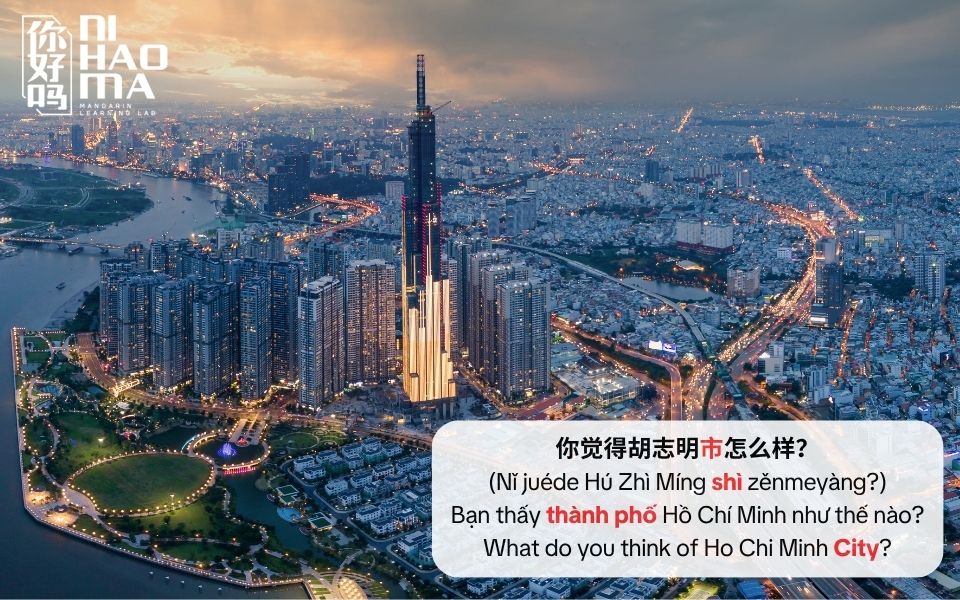
A: 你觉得胡志明市怎么样?
(Nǐ juéde Hú Zhì Míng shì zěnmeyàng?)
What do you think of Ho Chi Minh City?
B: 这里非常热闹,很有商业气息。
(Zhèlǐ fēicháng rènao, hěn yǒu shāngyè qìxī.)
It’s very lively and has a strong commercial atmosphere.
A: 我想去中心的那家商店买点东西。
(Wǒ xiǎng qù zhōngxīn de nà jiā shāngdiàn mǎi diǎn dōngxi.)
I want to go to that store in the city center to buy a few things.
B: 现在是夜里了,商店还开门吗?
(Xiànzài shì yè lǐ le, shāngdiàn hái kāimén ma?)
It’s already nighttime. Is the store still open?
A: 放心吧,那家店 24 小时运行。
(Fàngxīn ba, nà jiā diàn èrshísì xiǎoshí yùnxíng.)
Don’t worry, that store operates 24 hours a day.
B: 太好了,那里的灯光一定很亮。
(Tài hǎole, nàlǐ de dēngguāng yídìng hěn liàng.)
That’s great! The lights there must be very bright.
Dialogue 2
A: 听说你最近交了一个新朋友?
(Tīng shuō nǐ zuìjìn jiāole yí gè xīn péngyou?)
I heard you’ve recently made a new friend?
B: 是的,他是个非常自豪的人,但也很热情。
(Shì de, tā shì gè fēicháng zìháo de rén, dàn yě hěn rèqíng.)
Yes, he is a very proud person, but also very warm and friendly.
A: 你们是怎么认识的?
(Nǐmen shì zěnme rènshí de?)
How did you meet?
B: 我们是在一次文化交流活动中认识的。
(Wǒmen shì zài yí cì wénhuà jiāoliú huódòng zhōng rènshí de.)
We met during a cultural exchange event.
A: 听起来不错。你和他亲戚也见过面吗?
(Tīng qǐlái búcuò. Nǐ hé tā qīnqi yě jiàn guò miàn ma?)
That sounds nice. Have you met his relatives as well?
B: 还没呢,我们才认识不久。
(Hái méi ne, wǒmen cái rènshí bùjiǔ.)
Not yet. We’ve only known each other for a short time.
Dialogue 3
A: 你去年的假期是怎么度过的?有回老家吗?
(Nǐ qùnián de jiàqī shì zěnme dùguò de? Yǒu huí lǎojiā ma?)
How did you spend your last vacation? Did you go back to your hometown?
B: 我回了啊,这次我体验了坐高铁,很快很舒服!
(Wǒ huí le a, zhè cì wǒ tǐyàn le zuò gāotiě, hěn kuài hěn shūfu!)
Yes, I did. This time I experienced traveling by high-speed rail. It was fast and very comfortable!
A: 是吗?看你回老家回来很高兴,精神饱满。
(Shì ma? Kàn nǐ huí lǎojiā huílái hěn gāoxìng, jīngshén bǎomǎn.)
Really? You look very happy and energetic after returning from your hometown.
B: 嗯,我的老家最近有很多变化,马路扩建了很多。
(Èn, wǒ de lǎojiā zuìjìn yǒu hěnduō biànhuà, mǎlù kuòjiàn le hěnduō.)
Yes, my hometown has changed a lot recently. Many roads have been widened and upgraded.
Conclusion
Hopefully, this guide has helped you understand the structure, meaning, and usage of radical 8 in Chinese (亠). While it may look simple, this radical appears in many commonly used Chinese characters and vocabulary words related to communication, culture, business, transportation, and everyday life.
If you feel that self-studying Chinese is too difficult or want to find a smarter, easier-to-remember method for learning radicals, don’t hesitate to take the next step with us. Contact Ni Hao Ma now to get a free proficiency test and receive advice on the most suitable learning roadmap!