
One of the most effective ways to learn and remember thousands of Chinese characters is by understanding Chinese radicals. Among the 214 Kangxi radicals, radical 94 in Chinese is one of the most recognizable because it appears in many characters related to animals, instincts, and personality traits.
So, what is radical 94 in Chinese? What does it mean, how is it written, and which commonly used Chinese words contain this radical? In this article, Ni Hao Ma will guide you through everything you need to know.
What Is Radical 94 in Chinese?
Radical 94 in Chinese (犬 / 犭- quǎn) is the 94th Kangxi radical out of the traditional set of 214 Chinese radicals. Its original meaning is “dog,” although its semantic scope has gradually expanded throughout the evolution of Chinese characters.
The character 犬 is a pictograph (象形字) that originally represented the image of a dog, including its head, body, and tail. In ancient Chinese society, dogs were among the earliest domesticated animals and played important roles in guarding homes, assisting hunters, and supporting everyday life. As a result, many Chinese characters related to animals or animal behavior were created using this radical.
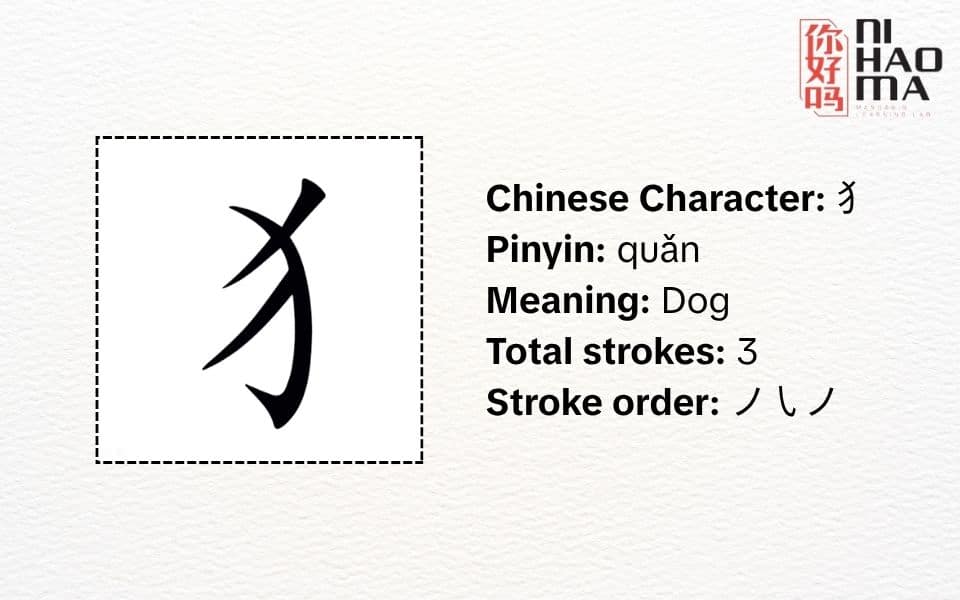
In modern Chinese writing, radical 94 in Chinese appears in two primary forms:
- Original Form (犬): This is the standalone form of the character and is typically used when the character itself means “dog.”
- Variant Form (犭): This is the simplified radical form most commonly found in compound Chinese characters. It usually appears on the left side of a character as its semantic component.
As the Chinese language developed, most characters containing radical 94 in Chinese became associated with four-legged animals, including: 狗 (gǒu) – dog, 猫 (māo) – cat, 狼 (láng) – wolf, 猪 (zhū) – pig, 猴 (hóu) – monkey. Beyond animals, this radical is also found in words describing personality traits, emotions, and behaviors traditionally associated with wild animals, for example: 狂 (kuáng) – wild, crazy; 狠 (hěn) – ruthless; cruel; 狡 (jiǎo) – cunning, crafty.
How to Write Radical 94 in Chinese
When used as a Chinese radical, radical 94 in Chinese (犭) consists of 3 strokes:
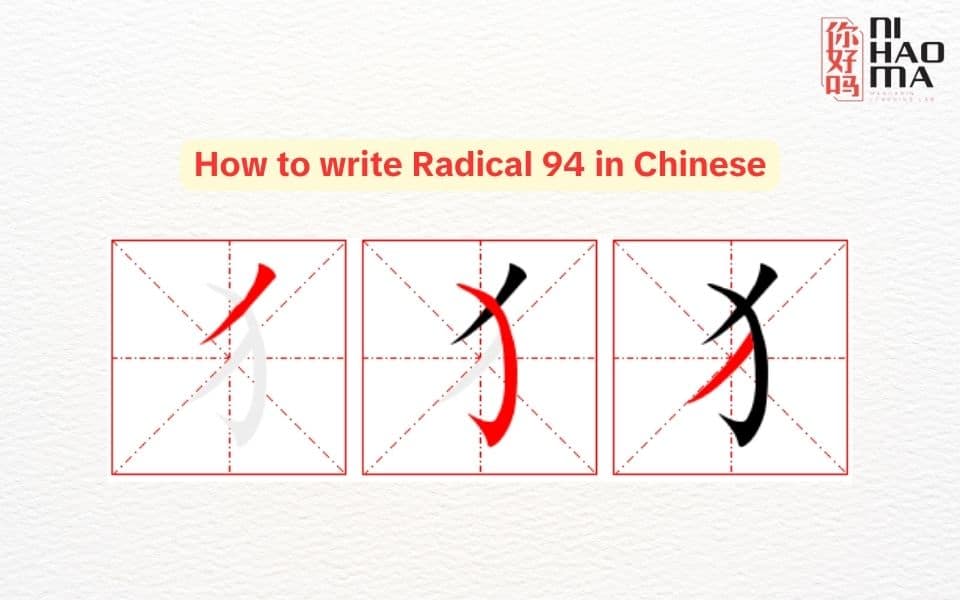
| Stroke Order | Stroke Name | Description |
|---|---|---|
| 1 | Left-falling stroke (丿) | Begin with a short left-falling stroke from the upper left. |
| 2 | Vertical hook (㇂) | Draw a slightly curved vertical stroke downward, finishing with a small upward hook. |
| 3 | Left-falling stroke (丿) | Add another left-falling stroke starting from the middle of the vertical hook. |
Vocabulary Containing Radical 94 in Chinese
After understanding the meaning and writing of radical 94 in Chinese, the next step is to expand your vocabulary. Many Chinese teachers recommend learning characters by radical rather than memorizing them individually, as this approach makes it easier to recognize patterns, infer meanings, and retain new words over the long term.
Below is a collection of more than 60 common Chinese words containing radical 94 in Chinese (犭). These words are frequently used in daily conversations and are an excellent resource for learners who want to build a stronger vocabulary.
| Chinese | Pinyin | Meaning |
|---|---|---|
| 犬 | quǎn | dog (formal/literary) |
| 狗 | gǒu | dog |
| 猫 | māo | cat |
| 猪 | zhū | pig |
| 狐 | hú | fox |
| 狼 | láng | wolf |
| 狮 | shī | lion |
| 猴 | hóu | monkey |
| 猿 | yuán | ape |
| 猩 | xīng | orangutan |
| 猎 | liè | to hunt |
| 猜 | cāi | to guess |
| 狠 | hěn | ruthless; cruel |
| 猛 | měng | fierce; powerful |
| 狂 | kuáng | crazy; wild |
| 狡 | jiǎo | cunning; crafty |
| 小狗 | xiǎogǒu | puppy |
| 小猫 | xiǎomāo | kitten |
| 狗狗 | gǒugou | doggy; pet dog |
| 狮子 | shīzi | lion |
| 猴子 | hóuzi | monkey |
| 狐狸 | húli | fox |
| 猎人 | lièrén | hunter |
| 猎犬 | lièquǎn | hunting dog |
| 猎物 | lièwù | prey |
| 猎场 | lièchǎng | hunting ground |
| 猎豹 | lièbào | cheetah |
| 猛兽 | měngshòu | fierce beast |
| 猛烈 | měngliè | fierce; intense; violent |
| 狂热 | kuángrè | passionate; fanatical |
| 狠心 | hěnxīn | heartless; cruel |
| 凶狠 | xiōnghěn | fierce; vicious |
| 猜测 | cāicè | to speculate; to guess |
| 狡猾 | jiǎohuá | cunning; sly |
| 犯错 | fàncuò | to make a mistake |
| 犯罪 | fànzuì | to commit a crime |
| 猫眼 | māoyǎn | cat’s eye; peephole |
| 狂风 | kuángfēng | gale; strong wind |
| 狂热 | kuángrè | enthusiasm; fanaticism |
| 犹豫 | yóuyù | to hesitate |
| 狠心 | hěnxīn | heartless |
| 独立 | dúlì | independent |
| 独特 | dútè | unique; distinctive |
Here are some of the most commonly used idioms:
| Chinese Idiom | Pinyin | Meaning |
|---|---|---|
| 狐假虎威 | hú jiǎ hǔ wēi | To bully others by relying on someone else’s power (The fox borrows the tiger’s might.) |
| 狼吞虎咽 | láng tūn hǔ yàn | To wolf down food; to eat ravenously |
| 狗急跳墙 | gǒu jí tiào qiáng | A cornered dog will jump over the wall; desperate people take desperate actions |
| 狼心狗肺 | láng xīn gǒu fèi | Heartless and ungrateful |
| 鸡犬不宁 | jī quǎn bù níng | Great disturbance; not even the chickens and dogs are at peace |
| 鸡犬升天 | jī quǎn shēng tiān | When one person succeeds, everyone connected benefits |
| 犬马之劳 | quǎn mǎ zhī láo | To serve someone with utmost loyalty and humility |
| 狗尾续貂 | gǒu wěi xù diāo | To spoil a fine work with a poor ending |
| 狗仗人势 | gǒu zhàng rén shì | To bully others by relying on powerful backing |
| 狗拿耗子 | gǒu ná hào zi | To meddle in other people’s affairs |
| 独一无二 | dú yī wú èr | One of a kind; unique |
See also: 100+ Popular Chinese Idioms Every Chinese Learner Should Know
Sample Dialogues Using Vocabulary with Radical 94 in Chinese
After memorizing vocabulary that contains radical 94 in Chinese (犭), the best way to reinforce your learning is by using these words in real-life conversations. Practicing vocabulary in context helps you understand how each word is used naturally, improves long-term retention, and strengthens your speaking and listening skills.
Below are several everyday dialogues featuring common words with radical 94 in Chinese.
Dialogue 1
A: 你每天都带狗出去散步吗?
Nǐ měitiān dōu dài gǒu chūqù sànbù ma?
Do you take your dog for a walk every day?
B: 对,每天早上和晚上都会出去一次。
Duì, měitiān zǎoshang hé wǎnshang dōu huì chūqù yí cì.
Yes. I take it out once every morning and every evening.
A: 它看起来很听话,从来不会乱跑。
Tā kàn qǐlái hěn tīnghuà, cónglái bú huì luànpǎo.
It looks very well-behaved and never runs around.
B: 因为我从小就训练它,所以它很乖。
Yīnwèi wǒ cóng xiǎo jiù xùnliàn tā, suǒyǐ tā hěn guāi.
That’s because I’ve trained it since it was little, so it’s very obedient.
A: 真不错,我也想养一只狗。
Zhēn búcuò, wǒ yě xiǎng yǎng yì zhī gǒu.
That’s wonderful. I’d like to have a dog too.
Dialogue 2
A: 周末我们去动物园吧!
Zhōumò wǒmen qù dòngwùyuán ba!
Let’s go to the zoo this weekend!
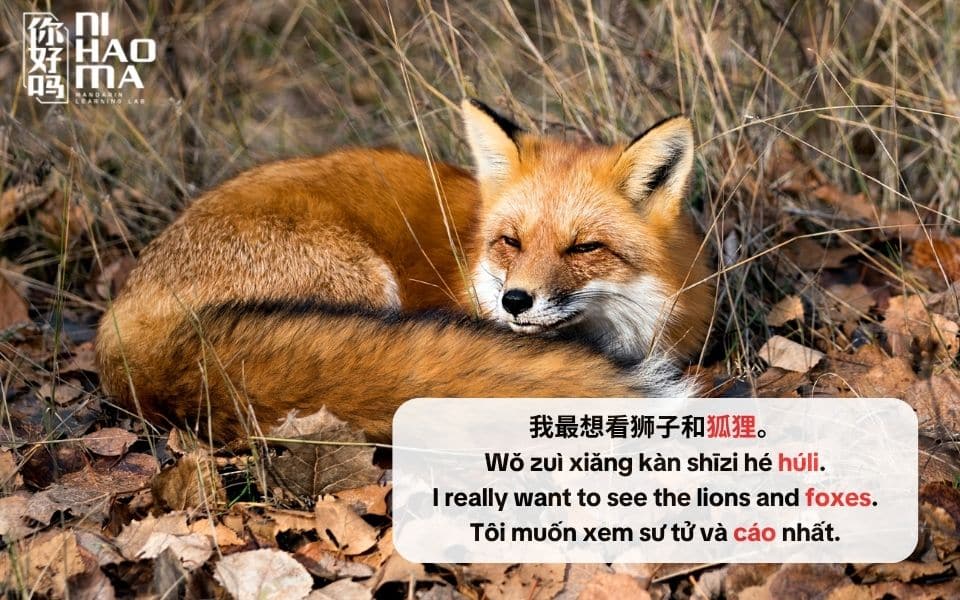
B: 好啊,我最想看狮子和狐狸。
Hǎo a, wǒ zuì xiǎng kàn shīzi hé húli.
Sure! I really want to see the lions and foxes.
A: 听说新来的狮子特别威风。
Tīngshuō xīn lái de shīzi tèbié wēifēng.
I heard the new lion looks especially majestic.
B: 我觉得狐狸也很漂亮,而且看起来很聪明。
Wǒ juéde húli yě hěn piàoliang, érqiě kàn qǐlái hěn cōngming.
I think foxes are beautiful too, and they look very intelligent.
A: 我们早点去,这样可以看到更多动物。
Wǒmen zǎodiǎn qù, zhèyàng kěyǐ kàn dào gèng duō dòngwù.
Let’s leave early so we can see more animals.
B: 好,那我们九点在门口见。
Hǎo, nà wǒmen jiǔ diǎn zài ménkǒu jiàn.
Sounds good. Let’s meet at the entrance at nine.
Dialogue 3
A: 你觉得新经理怎么样?
Nǐ juéde xīn jīnglǐ zěnmeyàng?
What do you think of the new manager?
B: 他工作能力很强,但是要求比较高。
Tā gōngzuò nénglì hěn qiáng, dànshì yāoqiú bǐjiào gāo.
He’s very capable, but he has high expectations.
A: 有人说他有一点狠。
Yǒurén shuō tā yǒu yìdiǎn hěn.
Some people say he’s a bit harsh.
B: 我觉得不是狠,只是做事很认真。
Wǒ juéde bú shì hěn, zhǐshì zuòshì hěn rènzhēn.
I don’t think he’s cruel. He’s simply very serious about his work.
A: 希望以后大家都能适应他的工作方式。
Xīwàng yǐhòu dàjiā dōu néng shìyìng tā de gōngzuò fāngshì.
Hopefully everyone will get used to his management style.
B: 我相信团队会越来越好。
Wǒ xiāngxìn tuánduì huì yuèláiyuè hǎo.
I’m sure the team will continue to improve.
Conclusion
Understanding radical 94 in Chinese is much more than simply learning another Chinese radical. It provides a powerful framework for recognizing and understanding a wide range of characters related to animals, personality traits, emotions, and behaviors.
Remember that learning Chinese radicals is one of the most efficient ways to build vocabulary and enhance character recognition. Instead of memorizing characters individually, you’ll begin to recognize meaningful patterns that make learning faster, easier, and more enjoyable.
If you’re looking for a structured Chinese learning program with personalized study plans, experienced instructors, and interactive lessons, Ni Hao Ma is here to help. Whether your goal is conversational Chinese or preparing for internationally recognized HSK exams, our teachers will support you every step of the way.
Contact Ni Hao Ma today to receive a free consultation and book a trial lesson!