The radical 163 in Chinese is one of the simpler-looking radicals, yet it carries a rich historical and semantic background. Because its shape is similar to the radical 170 (阝 on the left), many learners often confuse the two. This guide provides a complete explanation of the meaning of The radical 163, how to write it correctly, and clear examples to help you recognize it with ease.
What Is The Radical 163 in Chinese?
The radical 163 (邑 – yì) is the 163rd component among the 214 Kangxi radicals. It expresses meanings related to regions, territories, districts, or place names.
The origin of this radical comes from the character 邑, which historically meant a settlement, a fiefdom, or a territory granted to nobles in ancient China. Over time, the full form of 邑 was simplified into a three-stroke component written as 阝, which appears on the right side of characters today.
Many Chinese surnames such as 陈 (Chén), 郑 (Zhèng), and 邓 (Dèng) contain the radical 163 because these clans originated from ancient fiefdoms or territories. Therefore, this radical is not only a building block of Chinese characters but also a cultural marker reflecting China’s ancient social and territorial systems.
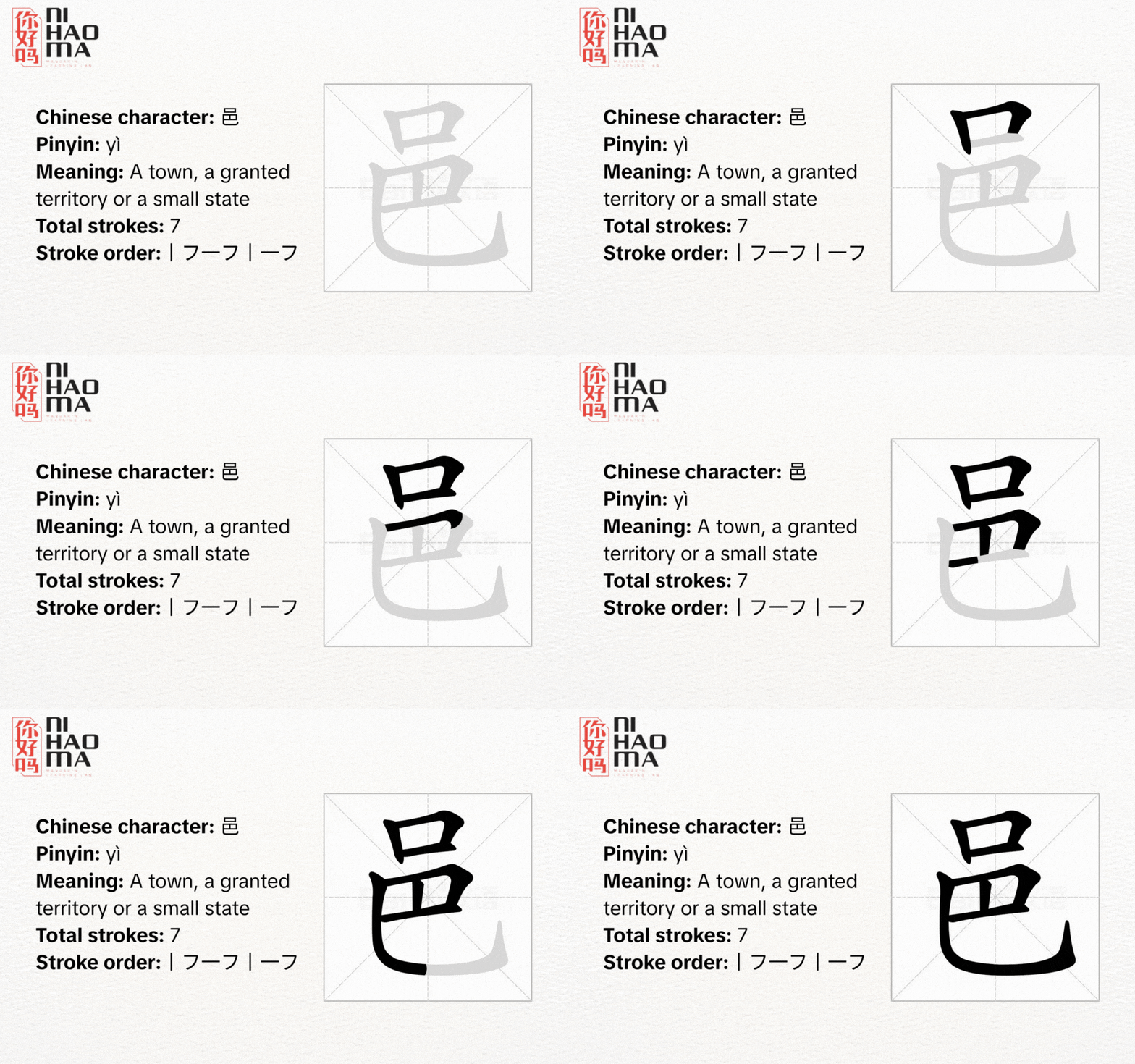
- Chinese character: 邑
- Pinyin: yì
- Meaning: A town, a granted territory in ancient times, or a small state.
How to Write The Radical 163 in Chinese
Within the 214 Chinese radicals, The radical 163 (邑 – yì) is unique because its original meaning relates to walled towns, settlements, and place names.
In modern Chinese characters, The radical 163 appears in two forms:
- Full form: 邑
- Abbreviated form: 阝 (used on the right side when combined with other components)
Below is a breakdown of how to write each form.
Stroke Order for the Full Form of The Radical 163
- Character: 邑
- Total strokes: 7
- Stroke sequence: 丨フ一フ丨一フ
| Stroke Order | Stroke Name | Description |
|---|---|---|
| 1 | Vertical line (丨) | Draw a short vertical stroke at the top. |
| 2 | Turning stroke (フ) | Draw a horizontal line, then bend downward. |
| 3 | Horizontal line (一) | Draw a short horizontal line beneath, closing the top part. |
| 4 | Turning stroke (フ) | Draw another horizontal-then-downward stroke below. |
| 5 | Vertical line (丨) | Draw a straight vertical line starting from the bend of the previous stroke. |
| 6 | Horizontal line (一) | Draw a horizontal stroke below stroke 3, connecting strokes 5 and 4. |
| 7 | Turning hook (フ) | Draw a downward stroke that bends slightly upward to form the base of the character. |
How to Write The Radical 163 in Its Abbreviated Form
- Chinese character: 阝
- Total strokes: 2
- Stroke sequence: フ丨
| Stroke Order | Stroke Name | Description |
|---|---|---|
| 1 | Turning stroke (フ) | Write a downward turning stroke with a slightly rounded bottom, followed by a short curved line. |
| 2 | Vertical line (丨) | Add a vertical stroke on the left side. |
How to Distinguish the Radical 170 and The Radical 163
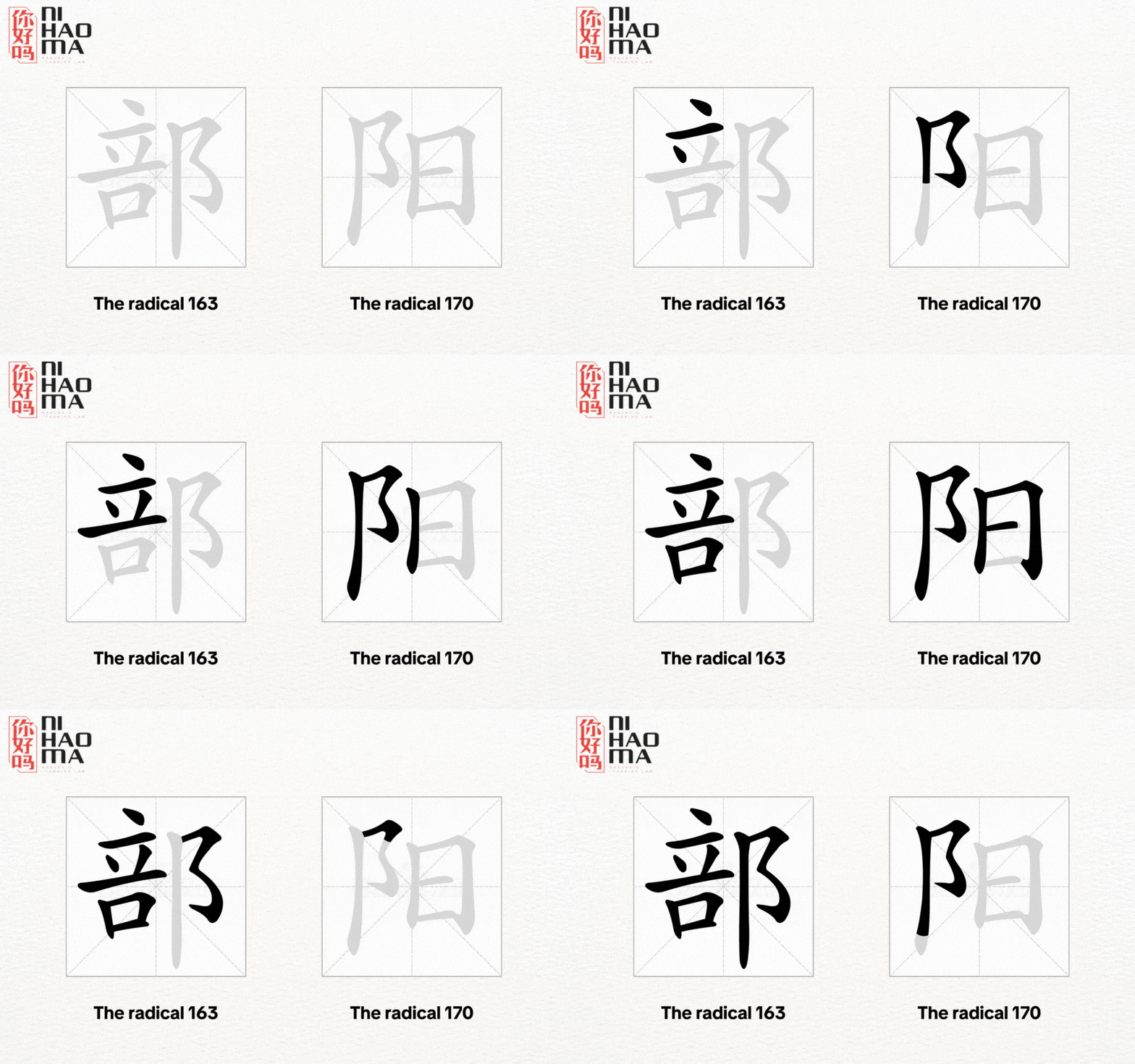
Learners often confuse the radical 170 (阜) with the radical 163 (邑) because both appear in a nearly identical abbreviated form 阝 when used inside Chinese characters. However, the easiest way to differentiate them is by position:
- The radical 170 always appears on the left side of the character.
- The radical 163 always appears on the right side of the character.
The Radical 170 (阜 – fù)
The Phụ radical originally refers to mounds, slopes, or hills—elements related to natural terrain. When functioning as a radical, it is always placed on the left side of a Chinese character.
Examples:
- 防 (fáng): to guard, prevent
- 阳 (yáng): yang, sunny side
- 降 (jiàng): to descend
The Radical 163 (邑 – yì)
The radical 163 originates from meanings related to settlements, towns, or inhabited regions. It is associated with administrative units and residential areas. As a radical, it always appears on the right side of a character.
Examples:
- 都 (dū): capital city, metropolis
- 部 (bù): department, section
- 邻 (lín): neighbor
50 Chinese Vocabulary Words Containing The Radical 163
In ancient China, the concept of yì – 邑 formed the basis of early administrative divisions, symbolizing population centers and urban development. In modern Chinese, The radical 163 commonly appears in characters related to place names, administrative units, and territorial divisions.
Below is a list of 50 useful Chinese words containing the radical 163 to help you expand your vocabulary, especially in the themes of “local areas” and “urban life.”
| Chinese | Pinyin | Meaning |
|---|---|---|
| 都 | dōu / dū | all / capital city |
| 部 | bù | department, section |
| 郊 | jiāo | suburbs |
| 郁 | yù | gloomy, depressed; lush, flourishing |
| 邻 | lín | neighbor, adjacent |
| 邮 | yóu | post office, mail |
| 邱 | qiū | hill, mound (used in names) |
| 邦 | bāng | nation, state |
| 邪 | xié | evil |
| 郭 | guō | outer city wall, outskirts |
| 那 | nà | that, those |
| 邸 | dǐ | residence, mansion; inn (archaic) |
| 郡 | jùn | commandery (ancient Chinese administrative unit) |
| 郎 | láng | young man, gentleman |
| 鄉 / 乡 | xiāng | hometown, village |
| 郊外 | jiāo wài | outskirts, suburban area |
| 邻居 | línjū | neighbor |
| 部门 | bùmén | department, division |
| 鄧 | dèng | Deng (surname) |
| 部首 | bùshǒu | radical (in Chinese characters) |
| 部下 | bù xià | subordinate |
| 全部 | quánbù | the whole, all |
| 部队 | bùduì | army unit, troops |
| 古都 | gǔdū | ancient capital |
| 首都 | shǒudū | capital city |
| 都市 | dūshì | metropolis, urban area |
| 邪恶 | xié’è | evil, wicked |
| 邪道 | xiédào | heresy, wrong path |
| 郁金香 | yùjīnxiāng | tulip |
| 邮局 | yóu jú | post office |
| 邮件 | yóu jiàn | email, mail |
| 那边 | nà biān | that side, over there |
| 郁闷 | yù mèn | depressed, frustrated |
| 鄙视 | bǐ shì | despise, look down on |
| 鄙陋 | bǐ lòu | ignorant, uncultured |
| 鄧 | dèng | Deng (surname) |
| 邢 | xíng | Xing (surname) |
| 郯 | tán | Tan (surname) |
| 邵 | shào | Shao (surname) |
| 邽 | guī | Gui (surname) |
| 郇 | xún / huán | Xun / Huan (surname) |
| 鄭 | zhèng | Zheng (surname) |
| 邯 | hán | Han (personal or place name) |
Sample Dialogues Using Vocabulary With The Radical 163
The radical 163 in Chinese frequently appears in words related to locations, districts, administrative areas, cities, and even surnames. The following dialogues place these words in real-life situations, helping you use them naturally in conversation.
Dialogue 1
A: 你住在郊区吗?
Nǐ zhù zài jiāoqū ma?
Do you live in the suburbs?
B: 对,我家在郊区,附近的邻居都很友好。
Duì, wǒ jiā zài jiāoqū, fùjìn de línjū dōu hěn yǒuhǎo.
Yes, my home is in the suburbs, and the neighbors nearby are very friendly.
A: 那里有邮局吗?
Nàlǐ yǒu yóujú ma?
Is there a post office there?
B: 有的,邮局就在我们小区的门口,很方便。
Yǒu de, yóujú jiù zài wǒmen xiǎoqū de ménkǒu, hěn fāngbiàn.
Yes, the post office is right at the entrance of our residential area. Very convenient.

Dialogue 2
A: 新来的员工分到哪个部门了?
Xīn lái de yuángōng fēn dào nǎge bùmén le?
Which department is the new employee assigned to?
B: 听说他在市场部,我们公司的人都挺欢迎他的。
Tīngshuō tā zài shìchǎng bù, wǒmen gōngsī de rén dōu tǐng huānyíng tā de.
I heard he’s in the marketing department. Everyone in the company seems to welcome him.
A: 他住得远吗?
Tā zhù de yuǎn ma?
Does he live far away?
B: 不远,就住在公司邻近的公寓里。
Bù yuǎn, jiù zhù zài gōngsī línjìn de gōngyù lǐ.
Not far, he lives in an apartment near the company.

Dialogue 3
A: 你以前不是住在邯郸吗?
Nǐ yǐqián bú shì zhù zài Hándān ma?
Weren’t you living in Handan before?
B: 对,不过去年搬到郑州了。
Duì, búguò qùnián bān dào Zhèngzhōu le.
Yes, but I moved to Zhengzhou last year.
A: 新地方怎么样?邻居好吗?
Xīn dìfāng zěnmeyàng? Línjū hǎo ma?
How’s the new place? Are the neighbors nice?
B: 挺好的,他们都很热情。
Tǐng hǎo de, tāmen dōu hěn rèqíng.
Very nice. Everyone is friendly and warm.
Summary
The radical 163 in Chinese is strongly connected to regions, territories, administrative units, and frequently appears in place names and surnames. This guide from Ni Hao Ma helps you clearly understand the essence of The radical 163, distinguish it from the radical 170, and apply it confidently when learning Chinese characters. Keep expanding your vocabulary containing this radical to improve your reading, writing and memory efficiency.