
In the Chinese writing system, every radical carries its own meaning and plays an important role in forming thousands of commonly used Chinese characters. Radical 32 in Chinese is one of the most familiar radicals and frequently appears in everyday vocabulary.
Learning Radical 32 not only helps learners memorize Chinese characters more easily, but also improves their ability to guess meanings, write characters correctly, and expand vocabulary effectively. In this article, let’s explore what Radical 32 in Chinese is, its meaning, stroke order, writing method, and a collection of common vocabulary words containing this radical for beginners learning Chinese.
What Is Radical 32 in Chinese?
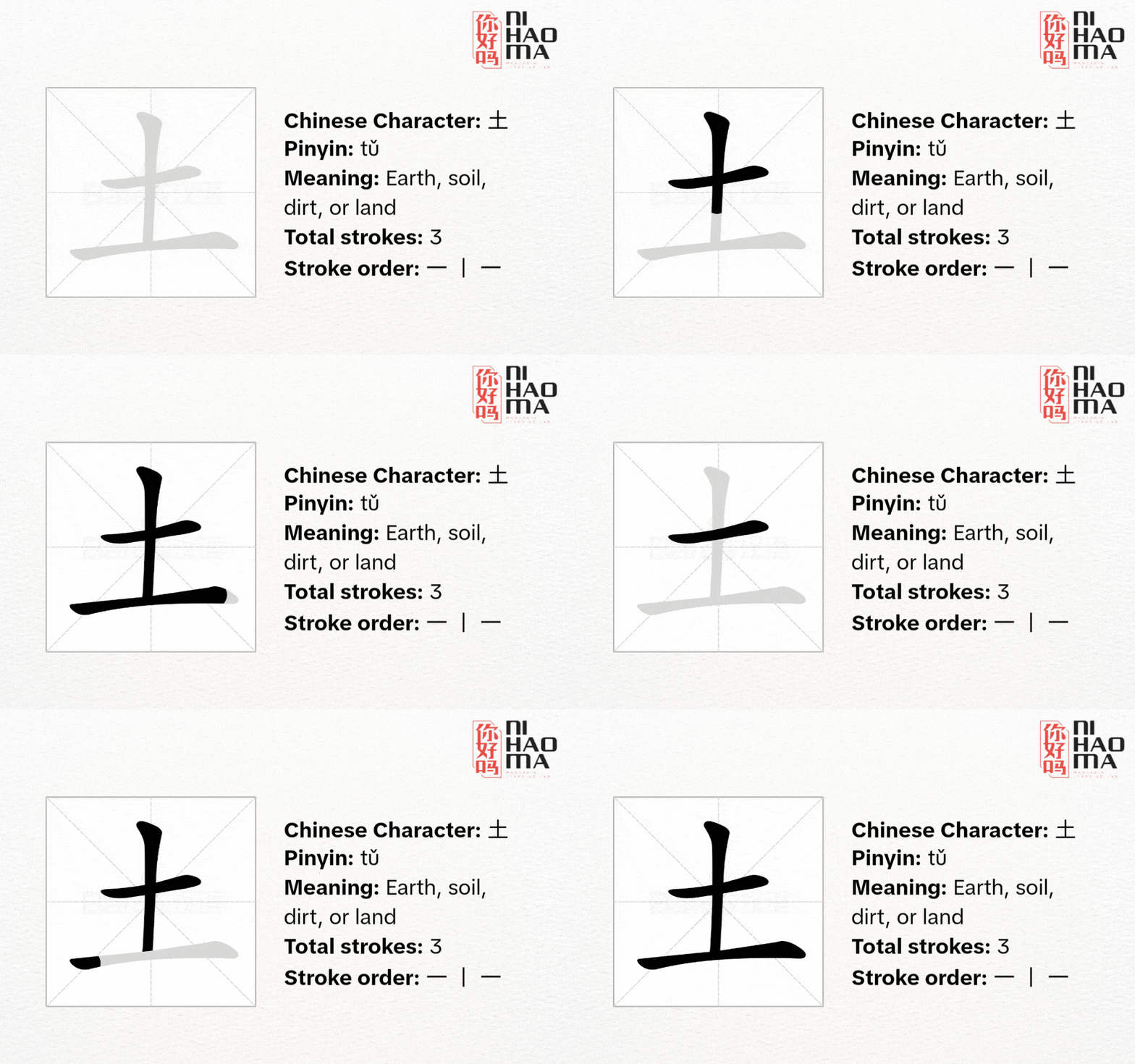
Radical 32 in Chinese is 土 (tǔ), the 32nd radical in the 214 Kangxi Radicals. It is associated with meanings related to earth, soil, land, ground, territory, or foundation.
In terms of structure, 土 is a simple character consisting of a short horizontal stroke on top, a vertical stroke in the middle, and a longer horizontal stroke at the bottom. This radical is commonly used in Chinese characters connected to nature, geography, construction, city walls, farmland, and human living environments.
When appearing inside Chinese characters, Radical 32 often provides clues about the meaning of the character. Some common examples include:
- 地 (dì) – ground, place, region
- 场 / 場 (chǎng) – field, place, venue
- 城 (chéng) – city, fortress
Beyond its role in character formation, Radical 32 also reflects traditional Eastern cultural ideas about land and agricultural life. In Chinese philosophy, “Earth” is one of the Five Elements and symbolizes nourishment, stability, and growth. As a result, many characters containing 土 carry meanings related to foundations, locations, or stability.
How to Write Radical 32 in Chinese
Radical 32 consists of three strokes written in the following order:
| Stroke Order | Stroke Name | Writing Method |
|---|---|---|
| 1 | Horizontal stroke (一) | Write a short horizontal line from left to right at the top |
| 2 | Vertical stroke (丨) | Draw a vertical line from top to bottom through the center of the first stroke |
| 3 | Horizontal stroke (一) | Write a longer horizontal line at the bottom crossing the vertical stroke |
Difference Between Radical 33 and Radical 32
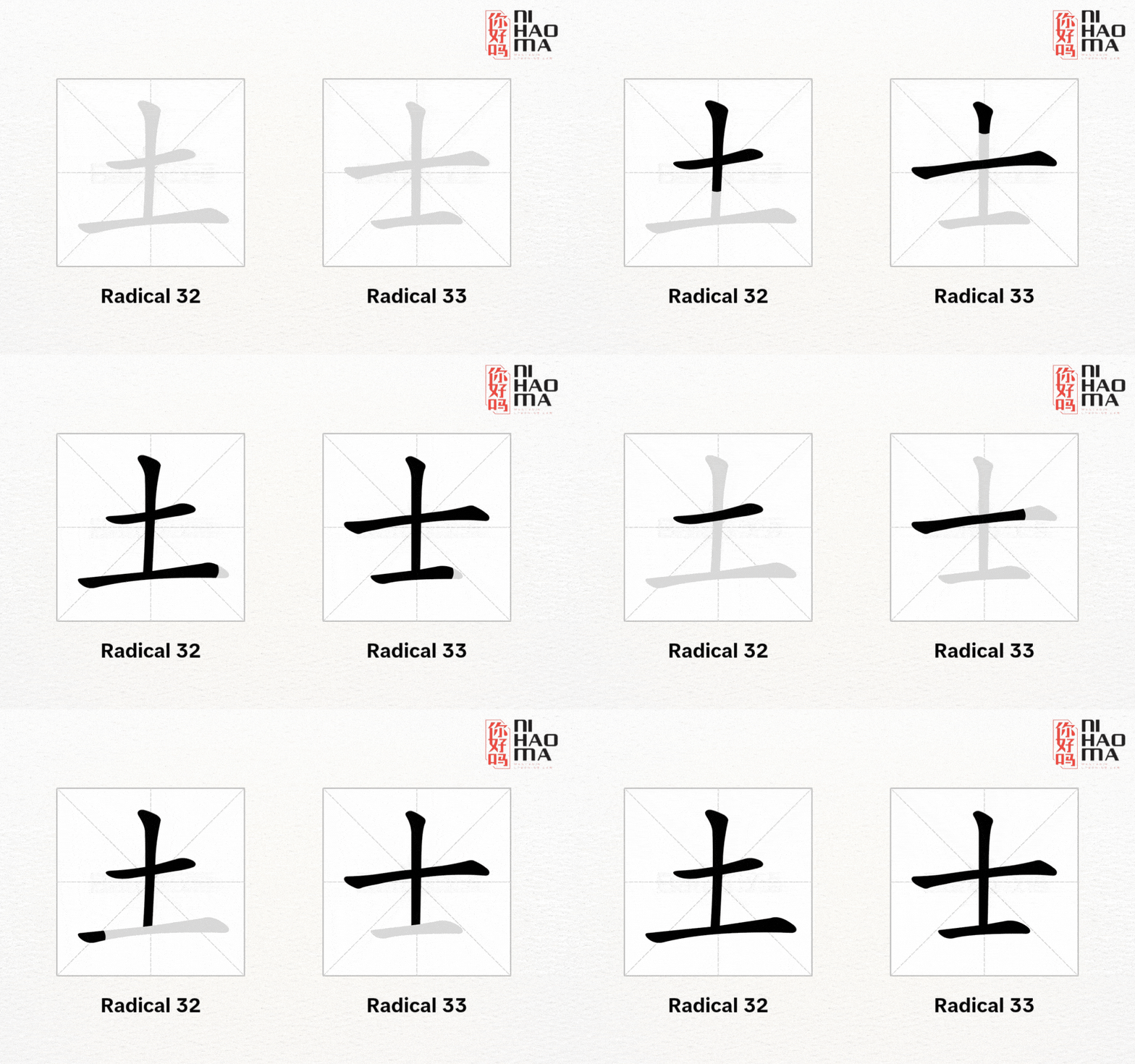
The Scholar Radical 士 and Radical 32 土 look very similar, so many Chinese learners confuse them. Both characters have three strokes and nearly identical structures, but the main difference lies in the length of the horizontal strokes and their meanings.
Difference in Appearance
The easiest way to distinguish them is by looking at which horizontal stroke is longer.
- For radical 33 (士), the top horizontal stroke is longer than the bottom one. The character looks taller and slimmer, resembling a person wearing a hat.
- For radical 32 (土), the bottom horizontal stroke is longer than the top one. The character appears more stable and grounded, like land or earth beneath the surface.
Difference in Meaning
The Scholar Radical 士 is often related to people, education, scholars, or social status in ancient China. Many characters containing this radical are associated with academics, soldiers, or professional occupations.
Examples:
- 博士 (bóshì) — doctorate, PhD
- 护士 (hùshi) — nurse
- 士兵 (shìbīng) — soldier
Meanwhile, Radical 32 土 is associated with land, geography, construction, or living environments. It commonly appears in modern vocabulary related to cities, places, and infrastructure.
Examples:
- 地铁 (dìtiě) — subway
- 城市 (chéngshì) — city
- 地图 (dìtú) — map
Common Vocabulary with Radical 32 in Chinese
Radical 32 (土) is one of the most commonly used radicals in Chinese and usually carries meanings connected to land, geography, construction, cities, or living environments. Learning vocabulary containing this radical can help learners recognize character meanings more easily and improve vocabulary retention.
In modern daily life, many frequently used Chinese words contain 土. Below is a list of common vocabulary words featuring Radical 32, arranged from simple characters to compound words for easier learning and practical communication.
| Vocabulary | Pinyin | Meaning |
|---|---|---|
| 土 | tǔ | earth, soil |
| 圠 | yà | low-lying land |
| 圣 | shèng | saint, holy |
| 圳 | zhèn | drainage ditch |
| 场 | chǎng | field, place, venue |
| 地 | dì | ground, land |
| 址 | zhǐ | address, site |
| 坂 | bǎn | slope, hillside |
| 均 | jūn | equal, even |
| 坊 | fāng | ward, lane |
| 坏 | huài | broken, bad |
| 坐 | zuò | to sit |
| 坑 | kēng | pit, hole |
| 块 | kuài | piece, block |
| 坚 | jiān | firm, solid |
| 坛 | tán | platform, altar |
| 坝 | bà | dam |
| 在 | zài | at, in |
| 坡 | pō | slope |
| 坦 | tǎn | flat, level |
| 坪 | píng | flat land |
| 垃 | lā | garbage |
| 垂 | chuí | hang down |
| 型 | xíng | model, type |
| 城 | chéng | city |
| 埃 | āi | dust |
| 域 | yù | region, area |
| 培 | péi | cultivate, nurture |
| 基 | jī | foundation, base |
| 堂 | táng | main hall |
| 堆 | duī | pile, stack |
| 堡 | bǎo | fortress |
| 塔 | tǎ | tower |
| 塑 | sù | shape, mold |
| 塘 | táng | pond |
| 境 | jìng | environment, condition |
| 墓 | mù | tomb, grave |
| 墙 | qiáng | wall |
| 壁 | bì | wall, partition |
| 壤 | rǎng | land, soil |
| 地方 | dìfang | place, locality |
| 地图 | dìtú | map |
| 地铁 | dìtiě | subway |
| 地址 | dìzhǐ | address |
| 地位 | dìwèi | status, position |
| 地震 | dìzhèn | earthquake |
| 垃圾 | lājī | garbage, trash |
| 城市 | chéngshì | city |
| 基础 | jīchǔ | foundation, basics |
| 基地 | jīdì | base, foundation |
| 培训 | péixùn | training |
| 坚强 | jiānqiáng | strong, resilient |
| Vocabulary | Pinyin | Meaning |
|---|---|---|
| 培养 | péiyǎng | cultivate, foster |
| 堵车 | dǔchē | traffic jam |
| 广场 | guǎngchǎng | square, plaza |
| 增加 | zēngjiā | increase |
| 声场 | shēngchǎng | sound field |
| 地点 | dìdiǎn | location |
| 地区 | dìqū | region, district |
| 地球 | dìqiú | Earth |
| 地铁站 | dìtiězhàn | subway station |
| 地理 | dìlǐ | geography |
| 坚持 | jiānchí | persist, insist |
| 坚定 | jiāndìng | firm, determined |
| 坚固 | jiāngù | solid, sturdy |
| 场景 | chǎngjǐng | scene, setting |
| 场馆 | chǎngguǎn | stadium, venue |
| 场地 | chǎngdì | site, venue |
| 城区 | chéngqū | urban area |
| 城镇 | chéngzhèn | town |
| 城堡 | chéngbǎo | castle |
| 城管 | chéngguǎn | urban management officers |
| 圣地 | shèngdì | holy land |
| 在乎 | zàihu | care about |
| 坏蛋 | huàidàn | bad guy |
| 堆积 | duījī | accumulate, pile up |
| 基本 | jīběn | basic |
| 增长 | zēngzhǎng | growth, increase |
| 增强 | zēngqiáng | strengthen, enhance |
| 城市化 | chéngshìhuà | urbanization |
Sample Dialogues Using Radical 32 Vocabulary
After learning vocabulary containing Radical 32 (土), practicing through conversations can help learners remember words faster and understand how they are used in daily life. Here are two short dialogues featuring common words with Radical 32.
Dialogue 1
A: 请问,最近的地铁站在哪里?
Qǐngwèn, zuìjìn de dìtiězhàn zài nǎlǐ?
Excuse me, where is the nearest subway station?
B: 从这里一直走,就能看到一个很大的广场。
Cóng zhèlǐ yìzhí zǒu, jiù néng kàndào yí gè hěn dà de guǎngchǎng.
Walk straight from here and you’ll see a very large square.
A: 地铁站就在广场旁边吗?
Dìtiězhàn jiù zài guǎngchǎng pángbiān ma?
Is the subway station next to the square?
B: 对,旁边还有一个地下停车场。
Duì, pángbiān hái yǒu yí gè dìxià tíngchēchǎng.
Yes, there is also an underground parking lot nearby.
A: 那里离市中心远吗?
Nàlǐ lí shìzhōngxīn yuǎn ma?
Is it far from the city center?
B: 不远,坐地铁十分钟就到了。
Bù yuǎn, zuò dìtiě shí fēnzhōng jiù dào le.
No, it only takes about ten minutes by subway.
Dialogue 2
A: 你现在住在哪个城市?
Nǐ xiànzài zhù zài nǎge chéngshì?
Which city do you live in now?
B: 我住在上海,一个很现代化的城市。
Wǒ zhù zài Shànghǎi, yí gè hěn xiàndàihuà de chéngshì.
I live in Shanghai, a very modern city.
A: 你家附近有什么地方?
Nǐ jiā fùjìn yǒu shénme dìfang?
What places are near your home?
B: 附近有商场、地铁站和体育场。
Fùjìn yǒu shāngchǎng, dìtiězhàn hé tǐyùchǎng.
There are shopping malls, a subway station, and a stadium nearby.
A: 那里的地理位置好吗?
Nàlǐ de dìlǐ wèizhi hǎo ma?
Is the geographical location there good?
B: 很方便,交通和基础设施都很好。
Hěn fāngbiàn, jiāotōng hé jīchǔ shèshī dōu hěn hǎo.
Yes, it’s very convenient, and both the transportation and infrastructure are excellent.
Conclusion
Radical 32 in Chinese is a fundamental radical that appears in many common words related to land, geography, cities, and modern life. Understanding its meaning, stroke order, and usage can help learners recognize Chinese characters more easily, expand vocabulary, and improve their ability to infer meanings when encountering new words.
Hopefully, this guide from Ni Hao Ma has helped you better understand Radical 32, distinguish it from similar radicals, and learn useful vocabulary and dialogues for daily Chinese communication.